

Sunday, May 19, 2013     News feed

Anti-whaling activists still angry

July 6, 2011  

A Norwegian official’s claim that the country no longer faces international protests over its commercial whaling activity has been soundly trounced by anti-whaling activists. They claim opposition to Norwegian whaling is as strong as ever.
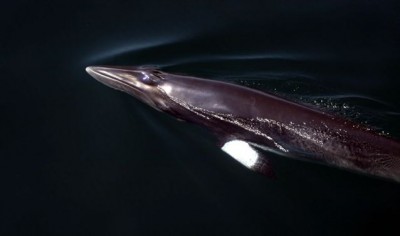
Anti-whale activists vow to continue trying to protect minke whales like this one. PHOTO: ©WDCS/Regina Asmutis-Silvia

“I respectfully disagree with former IWC Commissioner (and Norwegian diplomat) Karsten Klepsvik’s claim that anti-whaling protests against Norway have died down,” Kate O’Connell, an anti-whaling campaigner for the Whale and Dolphin Conservation Society (WDCS) in the US, told Views and News on Wednesday.

Rather, O’Connell said there’s been an increase in anti-whaling activity by both Norwegian and international non-governmental organizations (NGOs). She pointed to, among other groups, NOAH, a local animal rights organization that has conducted public opinion polls revealing growing concern, also in Norway, over the welfare of the country’s whale hunt.

Klepsvik, who has been Norway’s representative to the International Whaling Commission (IWC), had told newspaper Aftenposten earlier this week that he and others in Norway’s foreign ministry have seen a marked reduction in the number of angry protests over the whale hunt that resumed nearly 20 years ago. He chooses to believe the reduction in large-scale demonstrations and threats of boycotts is a recognition that Norway’s whale hunt is sustainable and scientifically defensible.

Not so, responds O’Connell and other anti-whaling activists who commented online about Klepsvik’s remarks. One called Klepsvik’s own comments “a great piece of campaigning” but claimed that “in reality opposition to whaling has remained high and is as resolute as it has ever been.”

The mass street protests of the 1990s, it’s claimed, have evolved into “more sophisticated campaigns” targeting actual whaling interests. Some UK food retailers and wholesalers are reportedly refusing to buy seafood from any companies with a link to whaling.

O’Connell of WDCS agreed that the whaling industry in “in a downward spiral,” with the total number of whales actually killed only a fraction of the quota allowed.

“This does not mean that the anti-whaling community has walked away from the issue,” she said. A petition against whaling (external link) that was organized by the World Society for the Protection of Animals (WSPA) attracted more than 101,000 signatures last year, O’Connell noted, from people calling for “an end to the cruelty” of the whale hunt. Because of the sheer size of whales, WSPA argued, it’s impossible for whales to be killed humanely. A video of a minke whale being harpooned by the Norwegian whaling vessel Rowenta showed the impact of the harpoon and the failure of the vessel’s crew to ensure the whale was dead for 22 minutes.

Norway is one of just three countries in the world, along with Japan and Iceland, that has continued to hunt whales. Commercial hunts are in defiance of a global ban on commercial whaling. The IWC will hold its 63rd annual meeting next week in the Channel Islands (Jersey) and O’Connell said she’ll be there, carrying on the fight against whale hunts.

Views and News from Norway/Nina Berglund
Join our Readers’ Forum or comment below.

To support our news service, please click the “Donate” button now.


  • AnimuX

    Everyone should be angry about the systematic decimation of the world’s whales carried out by nations like Norway over the course of the 20th century for nothing more than petty commerce in defiance of international conservation efforts.

  • Hideyoshi Toyotomi

    Stand firm, Norway! Don’t succumb to this sentimental nonsense from the anti-whaling rabble.

    • Harald Eide

      And you are..? Japanese..?
      So tell me.. Is Shark finning, slaughter of Dolphins in Taiji, live skinning of seals, illegal catching of blue-fin Tuna etc etc.. also “sentimental nonsense?

  • Mick

    “Norway is one of just three countries in the world, along with Japan and Iceland, that has continued to hunt whales. The hunts are in defiance of a global ban on whaling.”

    This is incorrect. The United States, Greenland and Russia are also hunting whales.

    • Hideyoshi Toyotomi

      Furthermore, Japan’s whaling is not in defiance of the global ban on whaling. It is conducted under a specific provision of the ICRW that provides an exepmtion from the ban for scientific research purposes. Perfectly legal and in compliance with the ICRW.

      • Daisuke Matsuzaka

        “a specific provision of the ICRW that provides an exepmtion (sic) from the ban for scientific research”

        The Japanese have made a mockery of a legitimate exception to the rule. Are you seriously claiming that they’re really only doing research? Give me a break! They hold up signs for activist helicopters saying “we’re collecting samples” as they slaughter a few dozen whales, and package their heavily mercury-laced remains for consumption by school children, who then get terminally ill. It’s really a pathetic display of petulant and childish behavior. It wouldn’t be so troublesome if it wasn’t endangering a species which, quite frankly, seems to be more intelligent than most humans.

        I’m all for sustainable consumption using humane methods of slaughter, but the Japanese whale and dolphin hunters are nothing short of barbaric. There’s that word again, barbaric. I’ve seen plenty of footage of Japanese hunters relishing and prolonging the suffering of the animals, just to spite the activists. How cruel and pathetic is that?

        I highly recommend that all Japanese and Norwegians watch ‘The Cove’ if they haven’t already seen it. It is an insult to every intelligent and honest person to call what the Japanese are doing “science”.

        http://www.imdb.com/title/tt1313104/

        • Hideyoshi Toyotomi

          Wow where to begin…

          Firstly, yes bona fide research is being carried out. This will be proven shortly in the ICJ. But this is actually a moot point. The true issue here is that the moratorium is an obsolete relic of the past and should be scrapped, allowing regulated and sustainable commercial harvests.

          Secondly, no child has ever taken ill from eating whale meat. Stop making things up, silly boy.

          Thirdly, there is no behaviour more childish and petulant than whining on about “protecting” a species that no longer requires protecting, based on some sentimental garbage derived from watching Free Willy too many times. What’s worse is that some degenerates take this childish nonsense and put it into violent action, throwing acid and ramming ships. It’s terrorism by imbeciles.

          Fourthly, there isn’t a shred of scientifically credible evidence demonstrating any form of elevated cetacean intelligence. Just another infantile claim made by the anti-whaling industry. John Lilly wouldn’t know scientific method if it hit him on the head like a penthrite grenade harpoon.

          Fifthly, there’s nothing comparatively barbaric about whaling. Barbaric is just a term used by anti-whaling thugs to demonise their enemy, the whalers. Modern whaling techniques are quick and humane, as acknowledged by the IWC Scientific Committee itself.

          Lastly, I highly recommend that anti-whaling types grow up a little and stop with the arbitrary, feel-good nonsense and focus some of their energy on real conservation or animal rights issues. Leave the whaling countries alone – they don’t care for your nonsense.

          • http://www.wdcs.org/stop/killing_trade/index.php Chris Butler-Stroud

            Hideyoshi Toyotomi states as fact that “Secondly, no child has ever taken ill from eating whale meat. Stop making things up, silly boy.”

            However, it was reported by New Scientist that in 2008 the Faroese ‘chief medical officers Pál Weihe and Høgni Debes Joensen announced that pilot whale meat and blubber contains too much mercury, PCBs and DDT derivatives to be safe for human consumption.

            “It is with great sadness that this recommendation is provided,” they said. “The pilot whale has kept many Faroese alive through the centuries.”

            But in “a bitter irony”, they said, research on the impact of the pollutants on the Faroese themselves has shown that mercury, especially, causes lasting damage.

            The work has revealed damage to fetal neural development, high blood pressure, and impaired immunity in children, as well as increased rates of Parkinson’s disease, circulatory problems and possibly infertility in adults. The Faroes data renewed concerns about low-level mercury exposures elsewhere.’

            Full reference here: http://www.newscientist.com/article/dn16159-faroe-islanders-told-to-stop-eating-toxic-whales.html

        • Hans M

          “heavily mercury-laced remains for consumption by school children, who then get terminally ill.”

          Citation please? And from a reputable source, thank you.

          • Daisuke Matsuzaka

            There’s plenty of evidence that Taiji residents have dangerously high levels of Mercury in their systems, as does whale and dolphin meat, and you can easily Google that for yourself. That Japanese government officials are claiming nobody fell ill due to this, is not very convincing, especially given their track record on this issue, and given that similar dosages in adults killed hundreds in the 50s. Incidentally, is there freedom of press in Taiji? Not even close, especially not for foreign media, so how can we know for sure?

            I’ll just stick with common sense and tell you that children eating up to 5000 times the safe limit of one of the most toxic substances known to man are surely getting ill, or they will soon. Or are you claiming that they’re not in fact feeding that poison to their children?

            Some Cetaceans have more complicated communication systems than us humans, and they are clearly self-aware (as in they recognize themselves in a mirror – something only a handful of the most intelligent animals can do), so it’s not too much of a stretch to imagine that they’re not too pleased when seeing/hearing their children slowly bleed to death in front of them. If doing that to an intelligent creature is not barbaric I don’t know what is.

            Whether whaling countries care for our disapproval or not is a moot point, and like I said before, I’m all for humane and sustainable methods of hunting. One would think that wouldn’t be controversial.

          • Hideyoshi Toyotomi

            Mercury is found in many forms of seafood including fish. But in any event, please don’t pretend that you have concern for the health of Japanese people. You do not. You are merely using the issue as a substitute for a credible argument in your feel-good, sentimental and utterly baseless animal rights campaign.

            Your claims about the intelligence of cetaceans are laughable. More complex communications than humans? Have a little think about that statement and I’m sure you’ll realise its stupidity. And what evidence is there that a whale can recognise itself in a mirror (for whatever that would be worth)? Not a shred.

            And for your information, pigs are social and comparatively intelligent creatures. They are butchered by the millions after being raised in brutally bruel conditions. Why don’t you kick up a fuss about that? Are they not cute enough for you?

            If you are genuinely “all for humane and sustainable methods of hunting” then get on board and support a regulated and sustainable commercial whaling programme.

      • http://www.wdcs.org/stop/killing_trade/index.php Chris Butler-Stroud

        Actually whilst Japan has an objection to the Southern Ocean Sanctuary for the taking of minke whales, in my recollection, and again according to the IWC, Japan never entered an objection for any other species and so the taking of fin whales in the Sanctuary is NOT in compliance with the ICRW.

        • AnimuX

          Chris brings up an important point.

          However, if we’re going to discuss Japan instead of Norway, it’s also important to point out that Japan has historically violated size limits, species protections, seasonal limits, all manner of quotas, and even facilitated “pirate whaling” (front companies in foreign countries illegally killing whales and smuggling the unreported meat to Japan). Japan first misused the “science loophole” in 1976 when the IWC banned hunting Bryde’s whales and Japan issued itself a “special permit” and then killed over 200 of them in the next season.

          Today, Japan merely continues its long history of regulatory violations and by abusing the “science loophole” has drawn economic sanctions from the USA, repeated calls from the International Whaling Commission to stop killing whales, world condemnation, and legal challenges from Australia for which the International Court of Justice will hear arguments over the next few years.

          Japan kills endangered Fin whales, endangered Sei whales, vulnerable Sperm whales, Bryde’s whales (population uncertain), common Minke whales in the north (up to 46% from the vulnerable J-stock), and Antarctic Minke whales in the south (some IUCN data implies this species may have declined more than 50% over the last three generations making it potentially endangered as well). Japan also imports the meat of endangered Fin whales from Iceland and encourages the killing of endangered whales as bycatch with its national laws. Coastal fishermen in Japan also kill up to 20,000 small cetaceans, like dolphins, every year.

          Norway directly supports Japan’s flouting of international resolutions to protect its own failing industry and has even exported whale meat to Japan in recent years.

      • Marie

        Japanese have long hidden behind scientific research, which much of the world knows if false. Sorry.

    • Neal

      But the difference with the US, Greenland and Russia is it’s subsistance hunting by indignious peoples not commercial hunting.

      • Paul

        And what difference does that make to the whale if I may ask.

        • Rob

          A dead whale is a dead whale. The difference is why they are killed, subsistence hunting by indigenous peoples where they need the whales to survive is a lot different from govt subsidised Norwegian and Icelandic whaling and Japans bogus scientific whaling.

      • Mick

        @Neal
        “But the difference with the US, Greenland and Russia is it’s subsistance hunting by indignious peoples not commercial hunting.”

        So killing and eating whales is okay. However killing, selling AND eating whales is not okay. So “anti-whaling” activists, in fact, do not oppose killing whales and eating their meat at all. They simply oppose killing whales and SELLING their meat.

        • Neal

          The problem in Norways case is that the govt has to subsidise the whaling indusrty, fewer and fewer people in Norway eat whale meat, so without the govt handing out the cash the industry probably wouldn’t survive, that’s the problem I have with whaling in Norway.

          I don’t agree with govt subsidies for anything, again this is another food source in Norway that is uneconomic to produce that the govt has to subsidise, I dislike my tax going towards industries which are only keep alive by govt intervention.

  • Fran

    The US does not hunt commercially but it does support Japan whaling policy at the IWC in order to get aboriginal quotas.

  • http://facebook helen howard

    Mr Toyotomi. You began your letter with a WOW where do I begin. I suggest you make a start in Taiji,no denying the barbarism there. It is well documented. I take it you have no qualms about the way in which the dolphins are captured,slaughtered visciously the majority of them,others are sold to aquariums around the world as slaves who have food withheld to “teach” them tricks, but you know that don’t you. The Japanese government cannot be trusted with the truth, or the lives of it’s citizens. Economic gain is foremost on the agenda have another look at Fukushima.Your attitude is typical and is attributed to the near exstinction of the blue fin tuna and they’re doing their darndest to hunt the whales to extinction, illegaly,horribly painfully cruely. Wake up get a conscience and be part of the solution

    • Hideyoshi Toyotomi

      Ms Howard, it seems you’re into emotionally charged Hollywood “documentaries”. In that case, I recommend you watch a film called “Food Inc”. It’s about the grotesque cruelty of American factory farming methods. What it shows is far worse than anything allegedly meted out to whales or dolphins. Perhaps if you watched it you might redirect your worries to more relevant causes?

      • NorthernVix

        Way to duck the issue and set up a strawman. We’re not discussing American factory farming here and it has crap-all to do with the topic at hand.

  • AnimuX

    Pro-whalers like to claim science is on their side despite all of the decades of whaling nations, like Norway, ignoring scientific advice to reduce whaling quotas.
    So, here is a statement from an actual scientist, Dr. Sidney Holt, marine biologist and former International Whaling Commission scientific committee member:

    “Most importantly it’s exactly eighty years since the eminent Argentine international lawyer, José Leon Suárez, proposed to the League of Nations that a sanctuary for whales be established in the Antarctic. Suarez reported that if nothing were done the fin, blue and humpback whales would be practically exterminated in the Southern Hemisphere. That took rather longer than he thought it would, but it had happened by 1959.

    Then the sei whale resource was plundered in the 1960s.

    Demolition of the minke whales was begun in the 1970s.

    The biomass of the still numerous minke whales is less than one percent of the biomass of the Southern Hemisphere baleen whales at the time Suarez reported to the League of Nations.

    Think about that. We’re talking endlessly about how to sweep up the crumbs left on the table after the feast. If anything’s dysfunctional, that’s it.

    All the NGOs for which I speak unreservedly support at this time the continuation of the moratorium, with no arbitrary catch limits being set. But they think it’s time to move on: to end all commercial whaling under unilaterally issued Special Permits, all whaling in sanctuaries, all whaling under objections. And all international trade in commodities from Appendix I CITESlisted species.

    An end is justified by the improvement of scientific knowledge about whales, using non-lethal methods, and by the increase in scale and extent of non-lethal uses of whales. Furthermore, increases in threats to the survival and welfare of whales – resulting from the intensifying and growing diversity of human activities in and around the ocean – mean that relieving the ecological stress caused by whaling is now even more urgent.

    The wondrous, vulnerable whales will never contribute substantially to the food security of humans. Nor do they threaten it. Despite insistent propaganda they’re not responsible for the troubles of the fishing industry.

    Commercial whaling is now unnecessary, is inhumane, and is even unprofitable, continuing – subsidized – for minimal financial gain.”

    –Sidney Holt

    • Mick

      @AnimuX

      “All the NGOs for which I speak unreservedly support at this time the continuation of the moratorium, with no arbitrary catch limits being set. But they think it’s time to move on: to end all commercial whaling under unilaterally issued Special Permits, all whaling in sanctuaries, all whaling under objections. And all international trade in commodities from Appendix I CITESlisted species.”

      However, the NGOs are NOT calling for an end to indigenous whaling. Greenpeace, the IFAW and Sea Shepherd do NOT oppose indigenous whaling. So, these supposedly “anti-whaling” groups do not actually oppose the killing of whales. They only oppose the killing of SOME whales by certain countries.

      • AnimuX

        In an attempt to imply hypocrisy, pro-whaling antagonists offer yet another straw man argument in asserting that anti-whaling organizations are not really “anti-whaling” because they don’t all condemn subsistence hunts by native groups too.

        This accusation ignores the fundamental difference between a limited subsistence hunt, which amounts to food for tribal people who do not have ready access to other plentiful food sources, and an industrial operation, which turns whales into another product on market shelves by killing hundreds in order to mass produce canned whale meat.

        The false equivalency pro-whalers draw between subsistence hunts and commercial slaughter is simply another attempt to distract from the principle argument.

        Whaling is not necessary for the food security or economic prosperity of any industrialized nation. Commercial whaling nearly wiped out the world’s large whale species and many remain endangered today.

        When aboriginal subsistence quotas are abused for commercial purposes, anti-whaling groups attempt to expose and protest each incident. WDCS proved this in 2010 with a report exposing Greenland for improperly allowing the sale of subsistence whale meat in grocery markets.

        • Mick

          @AnimuX

          “In an attempt to imply hypocrisy”
          “anti-whaling organizations are not really “anti-whaling” because they don’t all condemn subsistence hunts by native groups too.”

          There is no ‘implication’ of hypocrisy. It IS hypocrisy.
          When an organization claims to be against killing whales for ethical reasons, yet makes exceptions and excuses for the killing of whales by some groups, then they are, in fact, being hypocritical.

  • Daisuke Matsuzaka

    @Toyotomi

    Maybe I should have been more specific, by communication systems I meant language, their aural communications, I didn’t mean computer networks.

    For your information, I saw Food inc. years ago, and I am more than happy to do all I can to end factory farming and other cruel practices in the US. However, how does this in any way detract from my legitimate objection to cruel whaling practices in Japan? In a discussion about whaling, do I have to list all my objections to all the bad behavior in all the countries in the world, before I can get to the topic at hand? The red herrings and the ad hominems aren’t getting you anywhere.

    There is plenty of evidence to support my contention that cetaceans (including dolphins) are intelligent creatures that suffer greatly at the hands of the Japanese, but it’s clearly not going to be possible to convince you on a comments page. If you want me to compile a white paper on this topic with citations etc. and all the ample evidence, you’re going to have to wait a few months.

  • Rebekah

    I like eating whale and I have also had seal, but then again I do come from a country that eats the animal that appears on its coat of arms.

  • Rob

    Roo is a tasty treat isn’t it, but then again there are millions of them bouncing around, eating a few isn’t going to cause much harm.
