

Some of Norway’s most popular rivers for wild salmon fishing haven’t only closed for the season, but possibly for several years to come. A combination of disease, climate change and hydro-electric operations are forcing drastic measures to save the wild salmon and the sport.
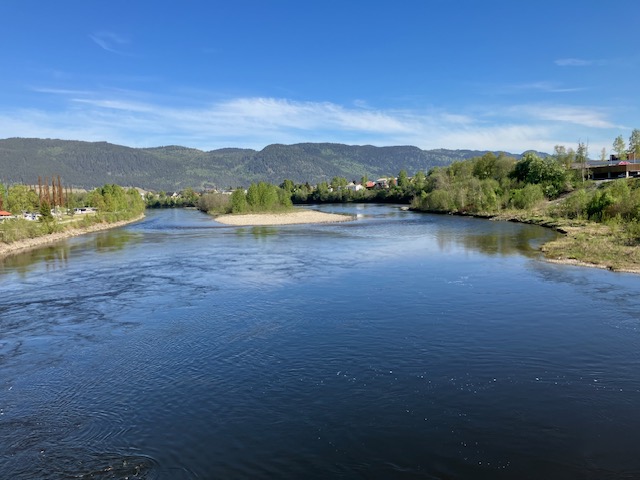
“Now it’s just a matter of saving what’s left (of the wild salmon),” Helge Dyrendal of Norway’s environmental directorate (Miljødirektoratet) told newspaper Dagens Næringsliv (DN) last week. Not only has the catch fallen dramatically in recent years, officials and those out fishing have discovered worrisome amounts of both sick and dead fish in two of Norway’s biggest and most important rivers for salmon fishing: the Orkla and the Gaula in Trøndelag.
DN reported that the fish-skin illness known as UDN and the saprolegnia parasite have taken the lives of most of the spawn and young salmon in both rivers, also the sjøørret (ocean trout) that could be found at the mouths of rivers, in the fjords and in open sea. Researchers told DN they found more dead than live fish and spawn in the Orkla, and stocks need to be completely built up again.
“What we’re seeing now is that illness is wiping out both spawn and many young salmon,” said Øystein Aas, a professor at NMBU who has also worked at the Norwegian Institute for Nature Research. He told DN that “two of not only Norway’s but the world’s largest and most important rivers with Atlantic salmon are on their death beds.”

There have been many efforts over the years to save Norway’s salmon rivers, but Aas worries that only now is the wild salmon decline being widely viewed as a “crisis situation.” He called on state authorities to act quickly and provide funding needed “to follow up the major crisis that’s now playing out.”
There had been some optimism when Norway’s wild salmon fishing season started on June 1st, after several years of historically strict limitations on fishing in both the rivers and the sea. More than 30 rivers including the Orkla and Gaula were closed to fishing in 2024, but stocks in the Gaula were still determined to be down by 80 percent compared to last year.
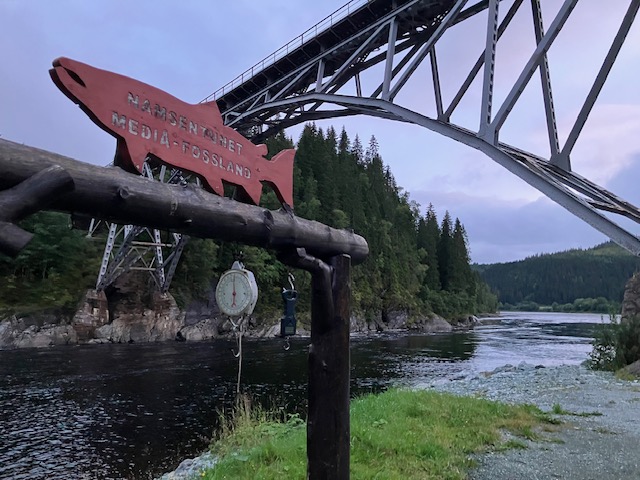
Rivers in Trøndelag and Nordmøre seem to be hit hardest, while salmon stocks in Østlandet, Rogaland and Agder were a bit better this year than last. In the famed Namsen River, however, this year’s catch was just 58 percent of last year’s. Quotas were reduced from five salmon to three by the local group of those owning the river.
“Wild salmon is in a critical situation, and we must do what we can to secure the next generations of salmon,” stated Torfinn Sørensen of the state environmental agency (Miljødirektoratet) already in July. Fishing hours were cut in Nordmøre and Trøndelag. Nor was the season very good in Finnmark and Troms in Northern Norway, while fishing was better in Nordland, especially in the Fusta and Vefsna rivers.
The government is launching a new effort to save wild salmon after recognizing that the effects of climate change, expansion of hydro-electric power plants and fish farming have in sum “been greater than the wild salmon tolerate.” The government has no plans, however, to reduce Norway’s hydro-electric industry.
Renewed calls are going out, meanwhile, to protect wild salmon stocks. The organizations Norske Lakseelver (Norwegian Salmon Rivers) and Reddvillaksen (Save Wild Salmon) are, for example, hosting a showing of the film “Superfish Salmon” at Litteraturhuset in Oslo on November 12, along with a public discussion of Norwegian nature management.
NewsinEnglish.no/Nina Berglund
