

NEWS ANALYSIS: Norwegians haven’t seemed so proud, happy and unified since the end of World War II, even after losing to England in Saturday night’s World Cup quarter-finals. Never before had their homeland advanced so far in the World Cup, and few were upset that Norway lost to one of its otherwise closest allies in everything from defense to sports.
“I’ve never seen Oslo, or Norway in general, so unified as now,” Ole-Jacob Richardsen told newspaper Klassekampen as Norwegians gathered in stadiums, bars, homes, gardens and before large outdoor screens set up in towns and cities nationwide. “The entire country seems to be like one huge entity, and it’s really beautiful to see.”
The 26-year-old Richardsen had found his way to a pub in Oslo’s multi-ethnic Grønland district, where football fans bonded and strangers became friends. Richardsen said he probably would never have met other fans like Yusuf Noor, age 25, at the table they shared, if it hadn’t been for the football match that night between Norway and Brazil, which Norway won.
Three young women sitting close by said much the same. “Norwegians are good at supporting one another when it comes to sports,” Itt Deeon told Klassekampen. “We’re good at coming together when important things happen in a small country like ours. You feel like you’re part of something, and it’s refreshing to feel that we’re together in this.” On Sunday, many were calling the World Cup experience as a huge step forward for integration.
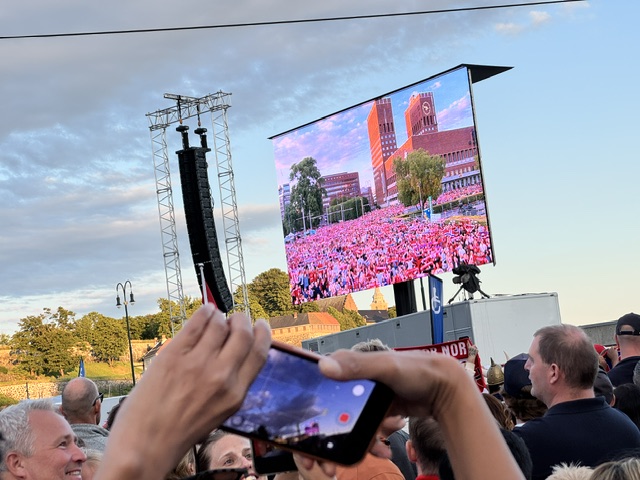
The high spirits dominated through Norway’s four-week run at the World Cup, during which the Norwegians beat Iraq and Senegal, lost to France but then beat Brazil before losing to England 2-1. The match against England in Miami didn’t even begin until 11pm local time in Norway on Saturday night, but hundreds of thousands of Norwegians stayed up to follow it as they had earlier, and cheerfully gathered afterwards despite the loss.
Norway had scored first against England, when Andreas Schelderup kicked in the first goal, only to see England’s Jude Bellingham score shortly thereafter, leaving it at 1-1 by the half-time break. Then a goal by Norway’s Torbjørn Heggem from Trondheim was annulled after a protest by England. Norwegian superstar Erling Braut Haaland had knocked down England’s Elliot Anderson during England’s defense attempt, and a controversial Video Assistant Referee (VAR) decision prevented Norway from taking the lead.
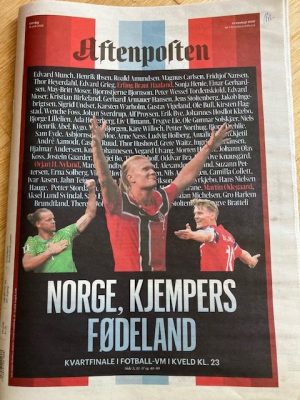
Even though the VAR decision was called a “scandal” and “a total farce” by some experts, England scored again shortly after that, giving them the victory. Despite the controversy over the VAR decision, Norwegian fans kept cheering their heroes on, and there was little if any animosity on the field when it was all over, either in Miami or at home in Norway. Tens of thousands spontaneously headed into downtown areas to celebrate Norway’s World Cup performance, also after Norway lost to England. English and Norwegian players, many of whom play professionally on the same teams, hugged and chatted on the field in Miami, and lots of Norwegian football fans have their own favourite clubs in England.
The British press was also full of praise for Norway after the match, with The Independent claiming that “Norway can be proud of themselves” and secure in their feeling that they could have done even better. For the Norwegians, the run-up to the World Cup and Norway’s strong performance in it has been as much about fellowship as football.
Sociologist Mads Skauge, who specializes in athletic performance, said Norway’s participation in the World Cup has also had a lot to do with national identity. “We’re not only celebrating the country’s national football team,” Skauge told newspaper Dagsavisen earlier last week. “We’re celebrating fellowship, and the national team is a symbol of that.”
He also noted that while fellow Scandinavian countries Sweden and Denmark have often participated in the World Cup, “for many Norwegians, this is something completely new.” They weren’t born when Norway last played in the World Cup in 1998. Norway has long excelled in winter sports, and more recently can claim international stars in sports including chess, golf, tennis and cycling. Now it has football stars, too.
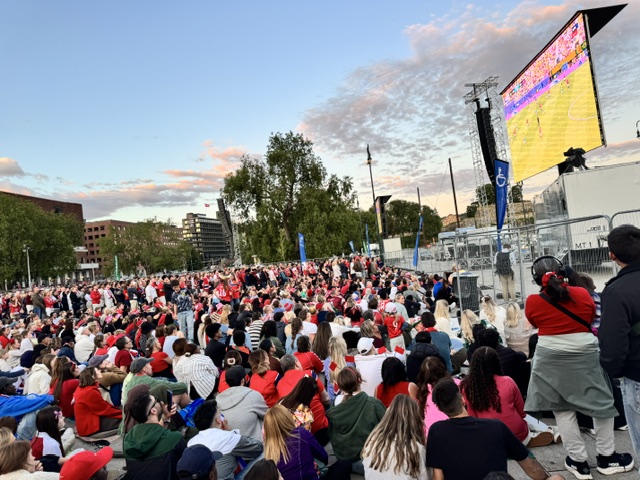
There’s no doubt the Norwegians in the stands and watching back home were proud indeed, despite all the concerns, complaints and criticism about the World Cup before it began. There’s so much money involved in the huge international event, and prices soared for everything from broadcasting rights, tickets and not least travel expenses and hotel rates in the cities where World Cup games took place. Many Norwegians had complained about how bars, cinemas, stadiums and other public gathering places were charging thousands of kroner to watch the action on big screens.
Most of that died down when local governments started setting up large screens for free outdoor viewing in Norwegian towns and cities. Newspaper Dagens Næringsliv (DN) reported that Norwegians’ credit cards were also reflecting “a clear increase in usage,” though, according to the national organization that tracks such activity (Norsk Gjeldsinformasjon).
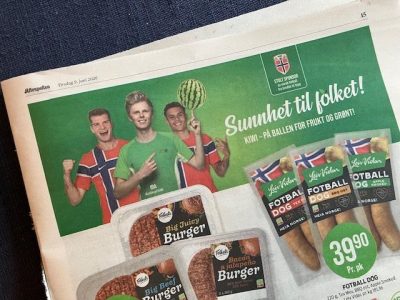
There was also criticism over all the commercial promotion for such grocery store items as “football potatoes,” World Cup burgers, even potato chips rebranded with the team’s logos or players’ photos. The relentless advertising for such products “can strangle everything that was once so beautiful about football,” wrote Lars West Johnsen in newspaper Dagsavisen. Last-minute specially arranged flights to New York and Miami, after the national team advanced in the qualifying rounds, also carried high fares: NOK 20,000 for an economy-class ticket and up to NOK 75,000 for a business class seat.
Then there was all the criticism over some football stars’ high incomes, with Haaland being paid more than 21 of the other players on the Norwegian team combined. Haaland’s income from his club, Manchester City, alone was estimated at nearly NOK 339 million, plus bonuses, sign-on fees, sponsor income and other commercial income. Newspaper Aftenposten’s estimate was attributed to figures available from the Norwegian tax authority (Skatteetaten) and other sources.
There was also some initial criticism over various gimmicks used by the Norwegian Football Federation to literally drum up enthusiasm for the team, including the now world-famous drum beats for rowing to victory as the Vikings once did. The federation’s Viking promotion, however, turned out to be highly successful, propelled by social media.
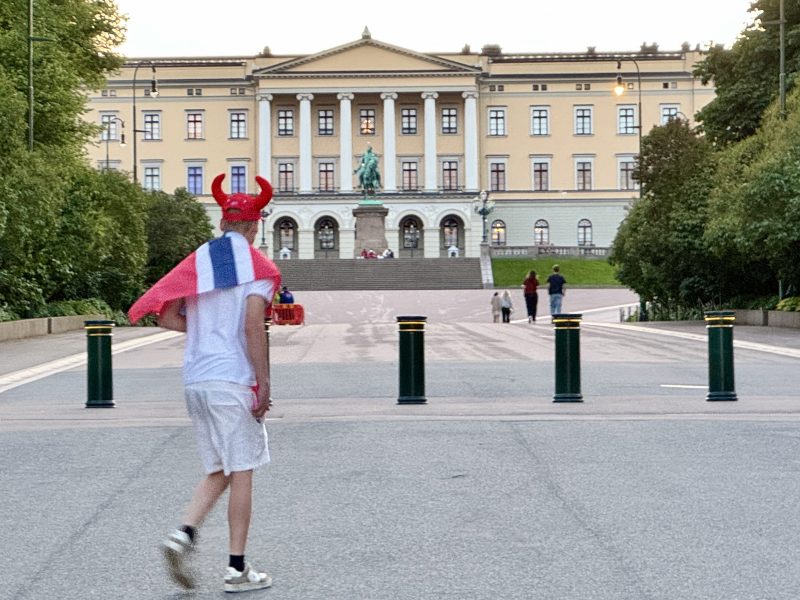
There’s no question that Norway’s long-sought qualification for the World Cup, followed by the country’s performance at the event, has been a huge public relations success for Norway. The Norwegian team and its Viking image has sparked more international interest in Norway and may further boost tourism and business deals.
“We’ve registered increased curiosity in Norway, especially its Viking history,” Aase Marthe Horrigmo, a director at Innovation Norway, told Aftenposten. While some Norwegians and Swedes have criticized alleged exploitation of the Viking era, others loved it, and view the rowing exercises as a reflection of cooperation, common purpose and shared values.
One Norwegian sociologist has claimed that Norway’s national football team created better promotion of the country than any travel industry campaign could ever achieve. “It’s impossible to put a price on this,” Trond Blindheim told Aftenposten. He thinks it’s put Norway on the international map, as if wasn’t already there. “This has surely contributed to Norway’s position,” said Blindheim, adding that it’s also important to win.
Most agree the last few weeks of what the Norwegians call a folkefest (mass public celebration) have been extraordinary. “I haven’t seen anything like this earlier,” sociologist Mads Skauge said. “This is something very different from arranged celebrations. This was spontaneous.” And it may be another 30 years before such “collective effervesence” bubbles over again.
NewsinEnglish.no/Nina Berglund
