

It’s now officially been 100 years since city and state officials changed the name of the Norwegian capital back to its original “Oslo,” from the end of the Viking age. No longer would the name of the biggest city in the still-newly independent Norway reflect former Danish rulers.
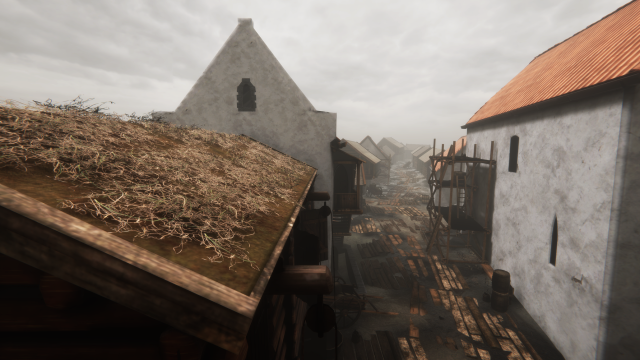
It was on Thursday January 1 1925 that residents of the Norwegian capital woke up to living in “Oslo” and not “Kristiania,” or “Christiania” even before that. It was an international event of sorts, since it’s not every day that a rapidly growing national capital changes its name.
The newspaper Norges Handels og Sjøfarts Tidende, forerunner to newspaper Dagens Næringsliv (DN), noted at the time that British newspapers published lengthy reports and photos of Oslo, wished it well and even made a few jokes about the name change. It would, reported London’s Daily Herald, at least be easier for school children to write and spell. The name change could also, other commentators wrote, even set an example for Iceland.
Behind the name change was a lot of Norwegian pride in Norway’s rising prosperity at the time, its polar exploration accomplishments and relatively recent emergence as its own sovereign nation with its own new royal family. Norway had broken out of an unhappy union with Sweden just 20 years earlier, in 1905. Before that, Norway had been under Danish rule since its own former monarchy and clergy had been mostly wiped out by the plague that hit in 1349.
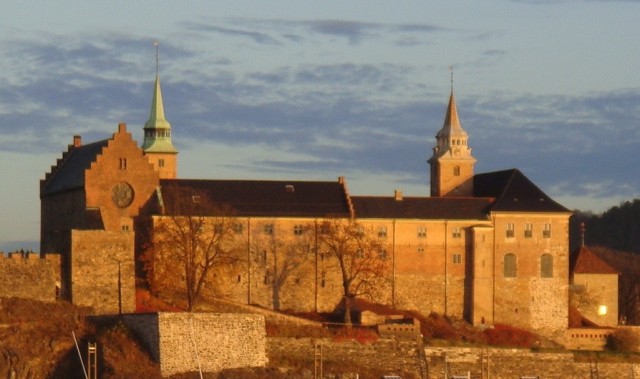
Norway’s centuries under foreign rule have been referred to as its “400-year-long night.” Bergen had been its major port and city during the Hanseatic era, until the plague is believed to have arrived there first and then spread around the country. Oslo, meanwhile, was also a major settlement with roots back to Viking times, and is where Norway’s historic fortress and royal residence Akershus was built at the top of the Oslo Fjord, still a direct sail north from Copenhagen.
The Danish rule that eventually gripped Norway was firmly controlled from Copenhagen, when Denmark was also often at war with Sweden. Oslo became especially important for exports of everything from cobalt to granite and timber to Denmark.
It continued to be called Oslo through the Middle Ages until 1624. That’s when King Christian IV, one of Denmark’s many rulers over Norway, decreed that the original city be rebuilt directly behind behind Akershus after another devastating fire, and named after him. Oslo thus became “Christiania” and remained so well into the 1800s. That’s when Oslo residents and officials began to spell it with a “K” that was considered more Norwegian.

Debate over the capital’s name arose in earnest during the late 1800s, when historian PA Munch claimed that “Oslo” was the city’s most natural and historic name. Many Norwegians who had moved from rural areas of Norway to the capital in search of better jobs seized on the idea, viewing “Oslo” as better reflecting Norway’s long history than “Kristiania” did.
The capital’s own longtime residents, though, wanted to retain the name of the city where they were born as “Kristiania.” Historian Kirsti Gulowsen, in charge of Oslo’s city archives, wrote in newspaper Dagsavisen this week that they thought “Oslo” was “perhaps too short, snobbish and strange.” Oslo, Gulowsen noted, was also already the name of the oldest neighbourhood within the capital, now known as Gamlebyen, literally “the old city.”
When the capital faced its 300th anniversary as Christiania/Kristiania in 1924, the name issue came to a head amidst plans for a jubilee. The city council, aware that any name change had to be verified by state law, thought debate had flown for long enough. The vote ended in a tie. When the issue was decided upon in Parliament in June 2024, those favouring “Oslo” ultimately won over more conservative votes.
The name change took effect from January 1, 1925. There was no lavish jubilee for the capital during the course of 1924, but various historic events were held, also last year when the city celebrated its past 400 years.
City officials have paid more attention in recent years to the city’s thousand-year celebrations held in 2000. An exact founding date for Oslo hs never been established, but archaeologists date settlements and English convents to well before 1000, the first marketplace, homes and church to the late 900s and the first royal compound (kongsgården) in Oslo to the reign of Harald Hardråde around 1048.
NewsinEnglish.no/Nina Berglund
