

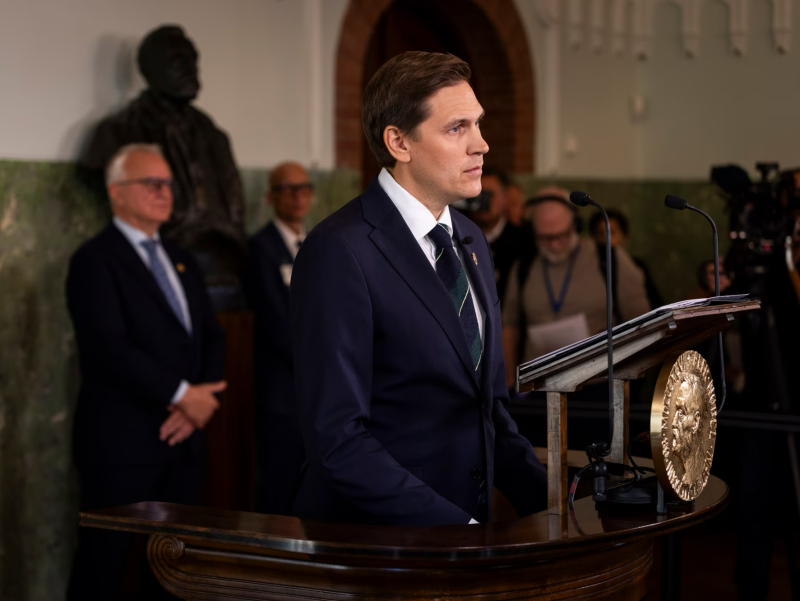
Praise, criticism and some vicious reaction were all rolling in after the Norwegian Nobel Committee announced it was awarding this year’s Nobel Peace Prize to human rights advocate Navi Pillay, a judge on the International Court of Justice. While most applauded the committee’s choice, Israel’s foreign ministry was furious because a UN commission that Pillay led has concluded that Israel has carried out genocide in Gaza.
“Now that the Nobel commission (sic) has rewarded the biggest lie of the 21st century, Joseph Goebbels is certainly applauding from hell,” wrote Israel’s foreign ministry on social media Friday afternoon. The ministry was referring to the Nazi German propaganda minister from 1933 to 1945, when Nazi Germany carried out genocide against Jewish citizens in Germany and other countries it conquered.
The Israeli ministry further claimed that Pillay’s Nobel Peace Prize “isn’t a recognition of justice. It’s the grotesque weaponization of an award to legitimize anti-Israel hatred and prejudice.” The Israeli government was reacting to how Pillay, after leading the United Nations’ Independent International Commission of Inquiry on the Occupied Palestinian Territory from 2021 to 2024, concluded that Israel has itself committed genocide against the Palestinians. Israel strongly disagrees, despite all the tens of thousands of Palestinians killed by Israeli forces after Gaza’s Hamas had killed or taken hostage nearly 2,000 Israelis just over the border in a surprise attack.
The five-member Norwegian Nobel Committee based its Peace Prize decision, however, on the 85-year-old Pillay’s long legal career that has included the defense of Nelson Mandela against apartheid in South Africa and her work on the International Criminal Tribunal for Rwanda. She’s most recently been a judge on the International Court of Justice at the Peace Palace in The Hague, where Myanmar stands accused of genocide, and has long been a champion of universal legal principles and the Rule of Law.
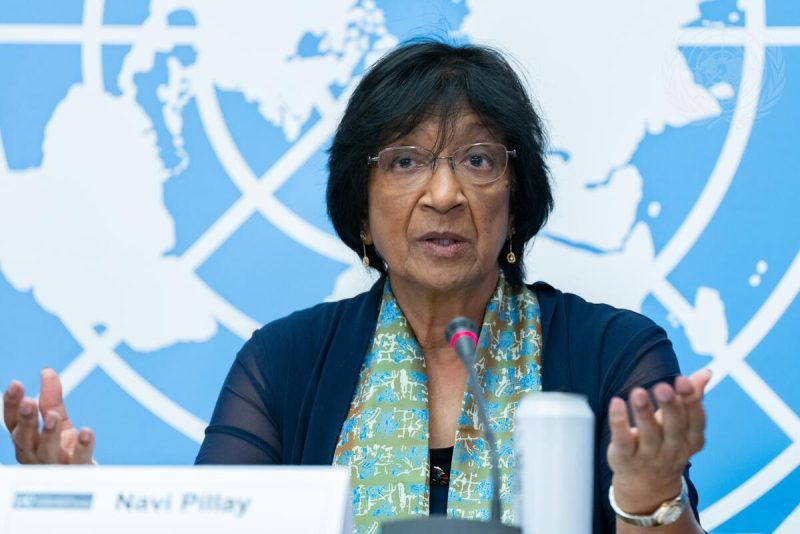
Pillay was attending a conference in Nuremburg where the post-war trials against Goebbels and other Nazi war criminals were held, when the Nobel Peace Prize announcement was made. The leader of the Norwegian Nobel Committee hadn’t managed to get Pillay on the phone to inform her of her award before the traditional announcement at 11am on the Friday of the first full week in October.
It was unclear whether she was aware that the Israeli foreign minstry was also accusing her of playing a role “in the relentless, politically motivated demonization of Israel,” but she repeated her UN commission’s findings at the conference. “The last thing I did (as UN commission leader) was to deliver the report on Gaza,” she said in remarks at the conference picked up by the Associated Press. The UN commission’s report declared “that what’s happening there is genocide,” she said, and was met by more applause.
“At this venue, your applause means a great deal to me,” she said in her spontaneous reaction to winning the Nobel Peace Prize. “You don’t want to receive an award or a prize or anything unless people agree that you deserve it.” She joked, though, that “as a lawyer and a judge, I still want to verify it,” indicating she still hadn’t been in direct touch with the Norwegian Nobel Committee in Oslo.
Instead she received news of her Peace Prize from colleagues, who asked her to sit down “and I expected the worst news, that something had happened to my children,” but instead she’d won the Peace Prize. She called it “so unexpected,” adding that she’d been honoured in many ways during her life, “but you don’t expect something like this at the age of 85.” She added that it was “the biggest and best” prize she’d ever received.
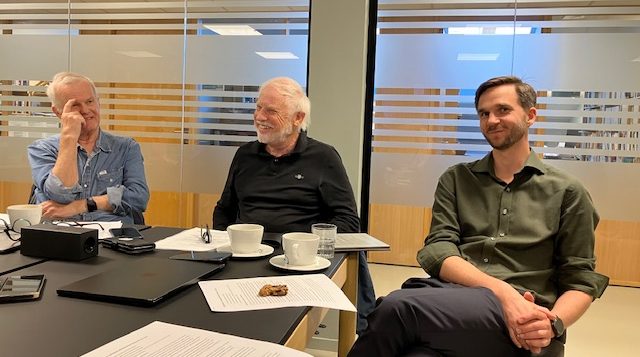
Reaction in Norway, meanwhile, was highly positive. Haakon Gjerløw, director of the Peace Research Institute Oslo (PRIO), called it “a solid and timely choice by the Nobel Committee” that “highlights how a stable and legal world order is necessary to promote peace.” Gjerløw and his colleagues at PRIO were among those including the international courts in their lists of top candidates. He thinks the prize to Pillay “sends a clear message that peace depends not only on political leadership, but on strong, credible international institutions and courageous people who dedicate their lives to defending them.”
Prime Minister Jonas Gahr Støre of the Labour Party stated that he hopes the prize will strengthen the battle to preserve international law and protect human rights. “Through her long career, Ms Pillay been a clear voice for justice and peace, for example in connection with the situation in Palestine, the struggle against apartheid in South Africa and the post-genocide justice and reconciliation process in Rwanda,” Støre said.
He called the prize “highly relevant,” as did many others, at a time when lthe US, China and several other countries are trying to undermine international law and dismiss international court decisions. Erik Møse, a Norwegian lawyer who led the UN tribunal on genocide in Rwanda, said Pillay made a great contribution, has broad experience and was always highly engaged in every task she took on. “I also enjoyed her sense of humour,” he told state broadcaster NRK.
Opposition leader in Parliament, Ine Eriksen Søreide of the Conservative Partu, called Pillay “a fearless champion of fundamental rights,” while the president of the Norwegian Parliament also hailed Pillay’s ongoing work to preserve international law and rules. “At a time when both are under pressure over large parts of the world, Pillay’s lifetime work reminds us how important (international law) is,” said Søreide.
NewsinEnglish.no/Nina Berglund
