

Norway’s national veterinary institute has determined that both a young polar bear and a walrus found dead on Svalbard were victims of bird flu. It’s the first time the virus has been confirmed in a polar bear.
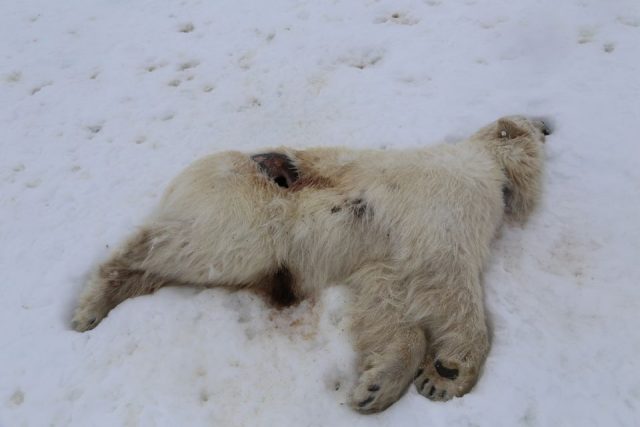
Both the walrus, who was fully mature, and the polar bear were initially found dead earlier this month in Svalbard’s Raudfjord by tour guides, according to an announcement from Norway’s Veterinærinstituttet on Tuesday. They alerted authorities, who determined that the strain of the virus had also been found earlier on the Arctic archipelago among seabirds in 2022, another walrus in 2024 and mountain foxes in 2025.
The virus has also earlier been found among red foxes, otters and a badger on the mainland, all of them determined to have been infected by wild birds. A bird flu epidemic in the Northern Norwegian counties of Finnmark and Troms killed killed thousands of seabirds in 2023.
Now the virus is raising concern on Svalbard, which is under Norwegian control and often thought to be far away from sources of infection on the mainland. After the tour guides alerted authorities, the Norwegian Polar Institute contacted the state veterinarians. The guides had reported that they also observed two other polar bears limping and appearing to have problems with their hind legs, a possible sign of neurological trouble linked to a virus.
“That raised fears of serious infectious disease, and two of us from the institute traveled to Svalbard to help local authorities with the testing of the dead animals,” said Knut Madslien, who specializes in wild animal health. He said the use of helicopters helped them find the polar bear and walrus quickly.
Madslien said they didn’t see any other dead or sick polar bears from the air. Test results, though, confirmed the HPAI strain of bird flu in both the dead polar bear and the walrus. The dead animals were also tested for rabies, but results were negative.
The results otherwise confirm what Ragnhild Tønnessen, bird flu coordinator at the veterinarian institute, called a “development” in which bird flu infection is rising among mammals in Europe. “At the same time, the virus is spreading to new areas including the Arctic, where it can have consequences for vulnerable species and ecosystems,” Tønnessen said. “It’s important to maintain surveillance over the situation to understand the development and address the risk.”
Mammals can be infected through direct contact with birds or other mammals already infected by the virus. Institute officials urged the public to report observations of dead or sick birds and animals to either police or the state food regulatory agency Mattilsynet. Symptoms of the virus can include limping, problems with an animal’s neck or animals moving in circles.
The virus can also be transmitted to humans, and the institute warned against any direct contact with dead animals.
NewsinEnglish.no/Nina Berglund
