

Norway’s national mourning period following the death of King Harald V last week has stymied political debate, not least over another sudden rise in fuel prices. Attempts were made to extend months of fuel tax relief, but it ended on September 1 and now the oil-producing nation’s prices for gasoline and diesel are once again among the highest in Europe.
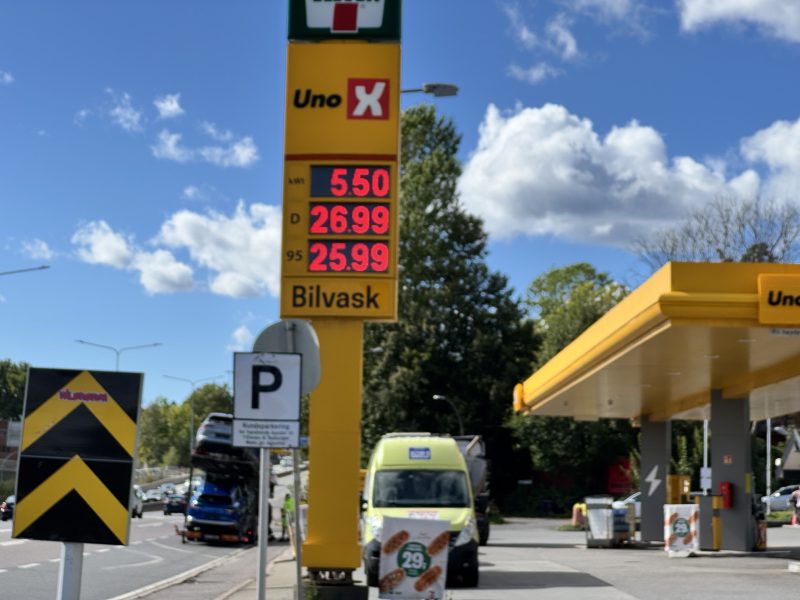
“These fuel taxes (on top of higher oil prices) can really hurt,” one motorist told state broadcaster NRK as he filled his tank in Ryfylke in Western Norway on Tuesday. Diesel cost nearly NOK 28 per liter (USD 12 per gallon) and unleaded fuel cost NOK 26.84 per liter, also in Ålesund where one customer had to pay NOK 1,659 (USD 178) to fill up his vehicle.
The higher prices are blamed not just on higher oil prices but also on the suspension from September 1 of fuel tax cuts imposed last spring when oil prices also jumped. The fuel taxes amounting to NOK 4.71 per liter for unleaded gasoline and NOK 4.51 per liter for diesel starting being charged once again from midnight on Monday and immediately became a pocketbook issue.
The resumption of the fuel taxes came just after new tensions in the Middle East sent oil and gas prices up again. The Center Party, which appeals to voters in outlying areas where fuel prices are high and public transport is poor, tried to gather other parties for political discussions in an attempt to extend the tax cuts, but failed. The monarch’s death on Friday and the Labour-led government’s decision to impose a period of national mourning stymied any debate.
Not even Labour’s opposition parties on the conservative side were keen to renew political discussions, or extend the fuel tax cuts that had taken a big chunk out of the state budget. Center Party leader Trygve Slagsvold Vedum had also run into trouble for congratulating Iceland for voting against a proposal to enter into membership discussions with the European Union. That was also viewed as a violation of the “political peace” meant to show respect for the late King Harald.
Vedum ended up having to cancel his plans for a meeting on the political peace itself. “We register that a majority of the other parties don’t see a need for any meeting,” said Center’s secretary general Ole André Myhrvold. What amounts to a two-week suspension of political proposals or debate will continue until after King Harald’s funeral next Wednesday.
Not everyone was happy about that, with some calling it “cowardly” and others complaining that the country’s top politicians didn’t even want to comment on other various issues that have come up. A majority in Parliament continued on Wednesday to back the government’s decision to suspend political debate or even any “political communication” that wasn’t viewed as necessary. No one in the finance ministry, for example, would even comment on the fuel tax controversy or other issues either.
Only the small Liberal Party had accepted Center’s invitation for a meeting, with its secretary general claiming it would still be good “to talk together.” Prime Minister Jonas Gahr Støre defended his government’s initiative for the 12-day political moratorium.
“I stand behind it,” Støre told newspaper Dagens Næringsliv (DN). “Our democracy can tolerate a pause from sharp debate. Other qualities can come forward, and we can dwell on the (late) king’s speeches, what it means when the (new) king adopts the motto Alt for Norge (Everything for Norway).
“I don’t have any other reason for the pause in political debate than that I think it’s right,” Støre said. Political debate will resume in Norway after the king’s funeral on September 9.
NewsinEnglish.no/Nina Berglund
