

Norway’s Labour Party government followed through this week on promises that it would gain control over the recent and huge expansion of controversial data centers. Critics of the massive data center expansion were relieved, and the crackdown may help Labour get its state budget proposal through Parliament.
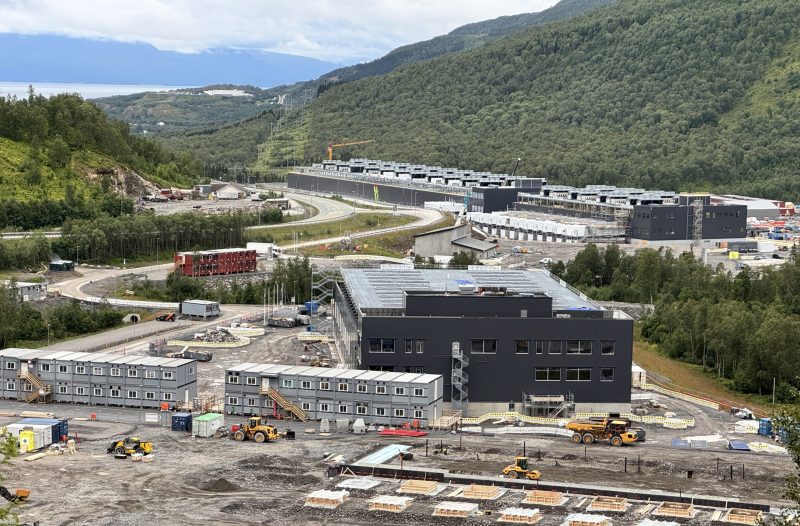
The data centers have been springing up near scenic fjords, on forest land and what used to be hilltops, razed to make room for their large buildings that house enormous amounts of computer equipment used to store data. The Norwegian government is responding to both energy- and environmental concerns after its new minister in charge of digitalization, Torgeir Micaelsen, took over after Karianne Tung.
Tung had claimed just last autumn that data centers “require space, power, technology and labour,” and noted how Norwegians “interact with at least 40 data centers a day when we are online. That’s why it’s important that we have secure data centers in Norway, and that the data center industry is sustainable and contributes to jobs.”
Her strategy highlighted security requirements for data centers, “and better utilization of excess heat,” along with a “temporary prohibition” on establishment of those that “mainly engage in energy-intensive cryptocurrency mining.”
The measures clearly didn’t go far enough, even though Tung called for data centers that would also “strengthen local communities and contribute to value creation at the local and national levels.” Nor have they become “sustainable” with “a low climate- and environmental footprint:” Alarms rang just recently after state energy officials warned of an energy shortage within just a few years if the data center boom continued. Monthly electricity bills could soar even more than they already have.

Construction of the centers alone has also raised labour concerns for Norway’s
minority Labour Party government, given all the out-sourcing tied to the construction and assembly process. Companies building data centers often engage a string of sub-contractors, and not all of them have abided by Norwegian labour laws. Job creation numbers have also been disappointing, especially given all the energy consumption involved.
Tung was recently replaced as digitalization minister by Torgeir Micaelsen, and this week both he and Energy Minister Terje Aasland announced a new set of measures meant “to ensure controlled growth of data centers in Norway,” and that they be “as beneficial to society as possible,” not just in terms of local security. The government launched a new licensing regime for the data centers that, they acknowledged, “constitutes one of the fastest-growing power consuming industries globally.”
Aasland, facing an energy crunch in the years ahead, said it no longer is “desirable or possible to accommodate the electricity demand from all the data centers seeking to establish in Norway.” He said the government “must ensure sufficient power is available, in the right locations, for purposes that serve the public interest.”

Even in a power-producing country like Norway, with its waterfalls that have produced relatively cheap hydroelectric power for many years, the ministers admitted that data centers pose “overall demand for electricity and grid capacity” that “significantly exceeds what is realistically possible for the Norwegian power system to accommodate.” Micaelsen acknowledged that data centers “are part of our critical infrastructure,” and can “contribute to value creation, secure digital services and greater digital independence for Norway,” but he felt a need for a pause in the process.
The country now needs to be more careful, through the new licensing regime that will “establish requirements and conditions for the establishment and operation” of data centers, according to his ministry. Work has begun on the licensing process that aims to establish requirements and conditions for data center operations by the autumn of next year. Data centers used for “cryptocurrency-related activities” aren’t likely to be granted a license, because the Norwegian government does not regard their activities as “beneficial to society.”
In the meantime, the state energy transmission system operator Statnett won’t be granting any new reservations of grid capacity for data centers. Its mission is to ensure reliable power supply in Norway by building, operating and maintaining the transmission grid. The moratorium on data centers is due to be lifted no later than August 1, 2027.
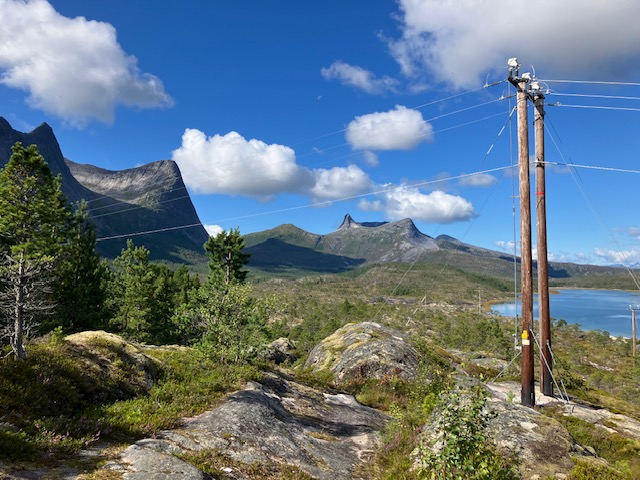
“Data centers represent large volume capacity,” said Peer Olav Østli, in charge of systems operations and market for Statnett, which is government-owned through the energy ministry. At the same time, the data centers have an impact on secure and stable operations of the power system. Statnett won’t reserve new demands on the power grid from data center developers, nor will it handle new applications for approval of data center functions. Applications already accepted will be put on hold until next August as well.
“The suspension is necessary,” Østli said, while Statnett gets a new framework in place that will secure new connections and make sure their consequences can be handled by the power system. He stressed that there’s no overall halt to data center development, nor will energy capacity be distributed to other customers at the expense of data centers already in line.
There are currently 112 registered data centers in Norway, and the electricity they consume has more than doubled just since 2023, reported newspaper Dagens Næringsliv (DN) in September. Like elsewhere in the world, not least the United States, there have been neighbourhood issues, power issues, labour issues and environmental issues around the boom in data centers.
The pause in data center expansion was predictiably not well-received within the industry, which worried it will “create uncertainty.” It was applauded, however, by other businesses worried about power supplies and by wind power advocates that eye more opportunities of their own. Praise also came from other political parties on both the left- and right sides of Norwegian politics.
For the Labour Party, the moratorium and licensing system may win them other support from parties on which it relies to get, for example, its state budget through Parliament. The Reds, Greens and Socialist Left parties had all called for state approval of new data center projects, not just that from local zoning authorities and municipal governments. They applauded the Labour government’s effort to gain control and ensure power supplies, as did the Center Party that once supported data centers but is now more skeptical.
Even the far-right Progress Party has worried about the energy consumption of data centers, and feared the energy deficit that loomed before the moratorium and new licensing procedure was announced. “The government has finally come up with something, and that’s good,” said Tor Mikkel Wara, Progress’ energy policy spokesperson. “It’s reasonable to have a licensing process and prioritize those applying.” The Conservative Party has also called for a licensing system to control data center growth and preserve the energy supply.
NewsinEnglish.no/Nina Berglund
