

At a time of war in Europe and the Middle East, questions had been raised over whether the Norwegian Nobel Committee would actually award the Nobel Peace Prize this year. Its five members in Oslo don’t have to, but they were determined to stress the frightening and suddenly more alarming prospect of nuclear war, and honour a Japanese organization with the credibility to help fend it off.
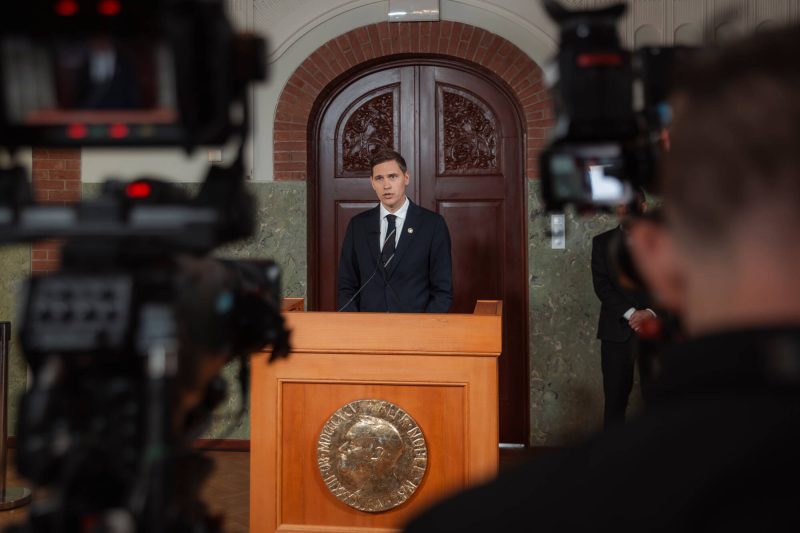
The committee’s prize to Nihon Hidankyo, a grassroots movement of atomic bomb survivors from Hiroshima and Nagasaki, also aims to support those survivors and their younger assistants who “have worked tirelessly to raise awareness about the catastrophic humanitarian consquences of using nuclear weapons.” The Nobel Peace Prize carries with it a large cash award, international recognition and is likely to “put nuclear weapons back on the agenda,” said Raymond Johansen, secretary general of the relief organization Norwegian People’s Aid.

The prize to Nihon Hidankyo surprised many, and the committee hadn’t managed to get in touch with the organization before it was announced, as usual on the first Friday of the first full week in October. Speculation over prospective winners over the past few weeks had centered on various international organizations, UN leader Antonio Guterres and others promoting peace, democracy and fair elections.
The Norwegian Nobel Committee, however, opted to focus on renewed threats of nuclear war and how the uniquely credible members of Nihon Hidankyo have demonstrated “through witness testimony that nuclear weapons must never be used again.”
After learning that Nihon Hidankyo had won the Peace Prize, one of its elderly leaders, Toshiyuki Mimaki, told news bureau AFP that “I had never dreamed we would get the Nobel Prize.” He said that atomic weapons can never bring peace, he warned Russia against using them in Ukraine and that they can fall into the hands of terrorists. Mimaki also said that children in Gaza are now living under conditions similar to those in Japan at the end of World War II.
New Nobel Committee leader Jørgen Watne Frydnes noted in his first announcement of the Nobel Peace Prize how Nihon Hidankyo’s efforts over the years have contributed to the development of “a powerful international norm” that stigmatizes the use of nuclear weapons “as morally unacceptable.” That norm, Frydnes said, has come to be known as “the nuclear taboo,” backed by the testimony of the Japanese survivors of the attacks on their cities in 1945.
The survivors are also known as Hibakusha, historical witnesses to the devastating consequences of nuclear war. Aided by younger assistants devoted to fending off nuclear war, they thus have a “unique” ability to “help us to describe the indescribable, to think the unthinkable and to somehow grasp the incomprehensible pain and suffering caused by nuclear weapons,” said Frydnes, himself the youngest leader of the Norwegian Nobel Committee ever.
Current wars and conflicts, however, have led to new threats of nuclear war, not least from Russian President Vladimir Putin. Two-and-half years after invading Ukraine and failing to conquer it, Putin has been making ominous references to Russia’s nuclear arms almost regularly. The Norwegian Nobel Committee did not name Putin specifically, but noted how “the nuclear powers” are modernizing and upgrading their arsensals, new countries appear to be preparing to acquire nuclear weapons” and that “threats are being made to use nuclear weapons in ongoing warfare.”
Now, nearly 80 years after two American atomic bombs killed an estimated 120,000 people in Japan, Frydnes said it’s “worth reminding ourselves what nuclear weapons are: The most destructive weapons the world has ever seen.” They’ve also become even more destructive, can kill millions and have a catastrophic impact on the climate. “A nuclear war could destroy our civilization,” Frydnes said.
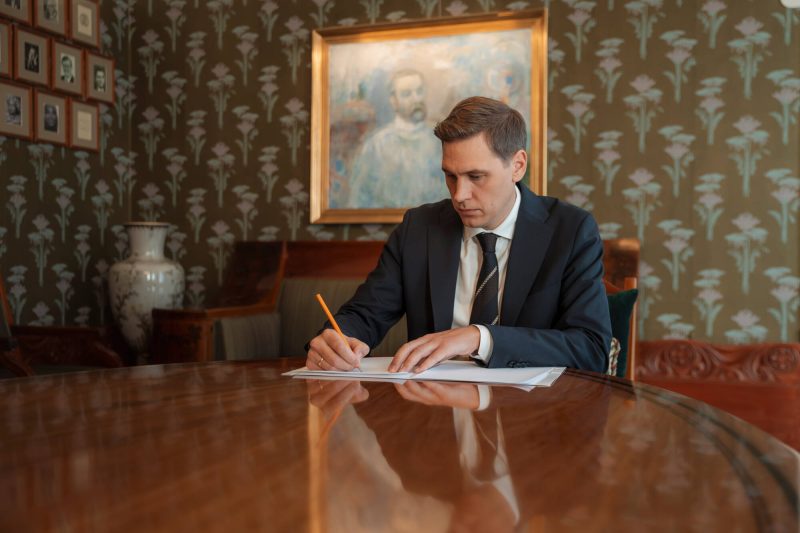
The committee that awards the Nobel Peace Prize once again justified its decision as being in line with the terms of prize benefactor Alfred Nobel. “The core of Alfred Nobel’s vision was the belief that committed individuals can make a difference,” Frydnes said. Speaking on behalf of his fellow Norwegians on the committee, he also said the choice of Nihon Hidankyo was “securely anchored” the will and joins a “distinguished list” of Peace Prizes previously awarded to champions of nuclear disarmament and arms control.
The prize itself is traditionally and ceremoniously awarded in Oslo on December 10, the anniversary of Alfred Nobel’s death. The prime ministers of both Norway and Japan said they found the Nobel Peace Prize to Nihon Hidankyo “extremely meaningful.” Norwegian Prime Minister Jonas Gahr Støre, who leads a government that’s actively supported Ukraine, told Norwegian Broadcasting (NRK) that the suvivors of the atomic bomb attacks on Hiroshima and Nagasaki “know better than anyone” that “these are weapons that no one wants to see used.” He said the prize also was “a reminder about why we still must work towards disarmament and against spreading of atomic weapons.”
NewsinEnglish.no/Nina Berglund
