

NEWS ANALYSIS: From its strategic Arctic areas in the far north, to its border to Russia in northeastern Finnmark and vast offshore territory in the west and south: Norway is battening down the hatches. New defense and preparedness plans “will affect every one of us,” declared Prime Minister Jonas Gahr Støre while rolling out the government’s latest proposals for everything from new bomb shelters and military activity to compulsory national service in the event of crisis and war.
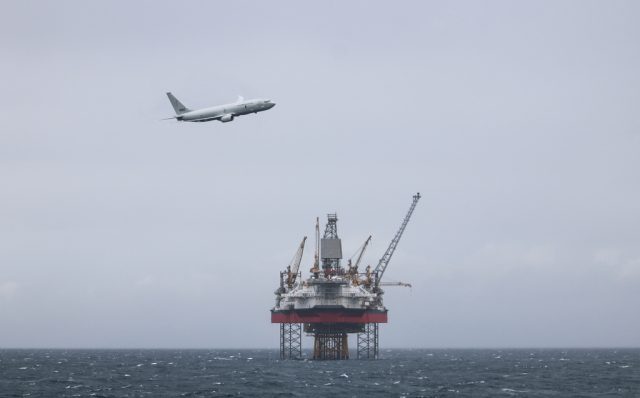
Both Støre and Norway King Harald V had already been issuing ominous new warnings, not least in their New Year’s addresses to the nation. Støre noted how the optimism of the post-Cold War period is gone (external link), and how “walls are no longer being torn down, new ones are being raised. Countries are not seeking disarmament, we are increasing our stockpiles.” Before that, Støre had told newspaper Aftenposten in November that “we can’t be naive” about threats to Norway’s energy sector, its borders both on- and offshore, government systems and individual civilians.
King Harald, while noting how his own family is caught in another sort of crisis, stressed the high conflict level worldwide, how “war is simply terrible” and how Norway (which was invaded and under enemy occupation during his own youth) “shall strengthen preparedness at all levels, so we can know ourselves that we are resistant people.” The monarch stressed the need for resilience and hope in his remarks, to a degree never heard before.
Støre, meanwhile, is a seasoned diplomat who was correct in his early warnings before Christmas 2021 of an imminent invasion of Ukraine by Russia. Just before this past Christmas he issued new warnings, some of which weren’t immediately picked up by Norwegian media: “We must, from here on, be prepared for serious incidents, also on Norwegian territory. We face various threats, hybrid threats … as a neighbour to Russia, we are of course not immune.”

Støre added that “Norway isn’t threatening anyone, NATO (of which Norway is a member) isn’t threatening anyone, but it is my responsibility as prime minister, and the government’s, that no one should threaten us.” That’s led to, among other things, expansion of direct Norwegian military and maritime cooperation with Baltic and Nordic countries, not least after a recent string of alleged sabotage against pipelines and cables in both the Baltic and the Barents seas. NATO is also strengthening its defense presence in the Baltic Sea.
The suspected sabotage has been linked to Russia’s so-called “shadow fleet” of often old oil tankers, sailing under flags of convenience and unclear ownership, that continue to export oil from Russia in defiance of sanctions. A few have been halted and boarded by Nordic maritime officials on charges they’ve dragged their anchors and cut important communications cables running from, for example, Finland to Estonia. Now such ships, including Chinese vessels suspected of carrying oil from Russia, have also been tracked along Norway’s coast. Norwegian authorities are also concerned over how some Norwegian-owned ships are still sailing with Russian captains and foreign crews.
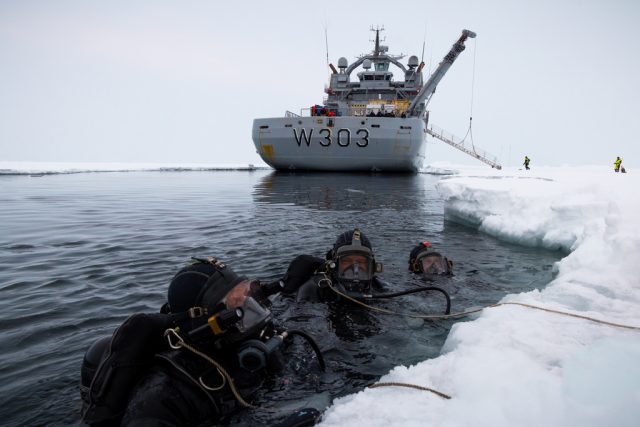
On Wednesday, Norwegian Broadcasting (NRK) reported on the Norwegian Shipowners Association’s concerns about ships from Russia’s “shadow fleet” sailing along the Norwegian coast. NRK reported (external link to NRK, in Norwegian) that one old tanker tracked off Norway’s west coast is, according to the association, in bad shape, lacks insurance and threatens both polar ice and the environment, along with violating sanctions. At least five other such ships sailing from Russia have passed Norway’s North Cape during the past month.
The Norwegian Parliament, acutely aware of heightened defense costs, recently approved another major increase in the overall defense budget that now may reach 3 percent of GNP within the next five years, at least by the early 2030s. Support for Ukraine also remains high, and will rise, Støre says. The major question now, according to Støre, is “how the Americans will choose their own policies,” especially defense policy, after Donald Trump takes over as US president next week.
All this has been mounting a massive reality check nationwide, as Norwegians are now constantly being urged to take new and ongoing threats against their nation seriously. “We are subject to espionage, hacking, manipulation and conspiracies,” claims Støre, as are individual Norwegians. His defense minister, Bjørn Arild Gram, stressed earlier this month how defense challenges for both Norway and NATO were lining up as the year began: “There’s a new seriousness now, and we have to prepare ourselves that the unthinkable can occur.”
Støre has repeatedly urged that everyone in Norway be “vigilant and wide-awake” and report any “suspicious activity,” from drones flying around important infrastructure and mysterious ships sailing along the coast, to unusual curiosity from representatives of foreign governments or companies, not least at Norwegian universities.
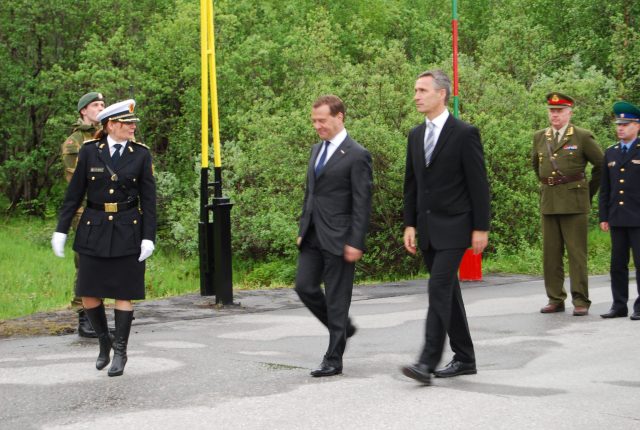
The threats began several years ago, when national security officials started expressing their concern more regularly about cyber attacks, GPS jamming, unusual maneuvers by Russian fighter jets and espionage involving Russia, China and various other countries. Russia’s invasion (which it called an “annexation”) of Ukraine’s Crimea right after it hosted the Olympics in 2014 severely damaged relations between Norway and Russia, which had been viewed as fairly good since the Berlin Wall fell and the Cold War ended. Norway’s border to Russia east of Kirkenes had even opened up for relatively easy crossing for Norwegians and Russians living in the region, and former Russian and Norwegian leaders not only came to terms over ongoing cooperation, they ceremoniously walked over their border together as late as 2013.
Norway’s relations with Russia have steadily deteriorated since 2014 as threats have risen. Early warnings of the threats linked to both Russia and China came in 2015, and Norway started building up both its conventional- and cyber defense, but it’s only since Russia’s invasion of Ukraine nearly three years ago that security alarms really started ringing. Now Norway’s prime minister, defense minister, justice minister and many others are openly and often calling on Norwegians to prepare for crisis and war. “We’re in a much more serious security policy situation now,” Gram said earlier this month.
“We’ve had to put behind us the period of time since the 1990s (after the Berline Wall fell), when preparedness was based on deep peace,” added Justice Minister Emilie Enger Mehl at a press conference late last week, when she and Støre unveiled their latest plans. “From now on, we need to plan for a new era.”
Norwegians are thus being urged once again to raise their own personal readiness and preparedness for crises in the form of extreme weather, natural catastrophes, a new pandemic, data attacks and war to a new level. In addition to their military build-up, Støre and his government rolled out more “Total Preparedness” proposals and warnings last week that include:
*** requiring real estate developers to build bomb shelters in residential and commercial buildings again
*** imposing not just a military draft but “civilian work duty” to respond to a national crisis
*** increasing Norway’s degree of self-sufficiency to 50 percent by 2030
*** strengthening national control over sales of property where national security may be involved, and creating a new register of property that’s already under foreign control
*** boosting civil defense at the local government level
*** improving control in cooperation with the military over harbours and the maritime sector
*** improving and coordinating cyber defense and systems for fending off desinformation
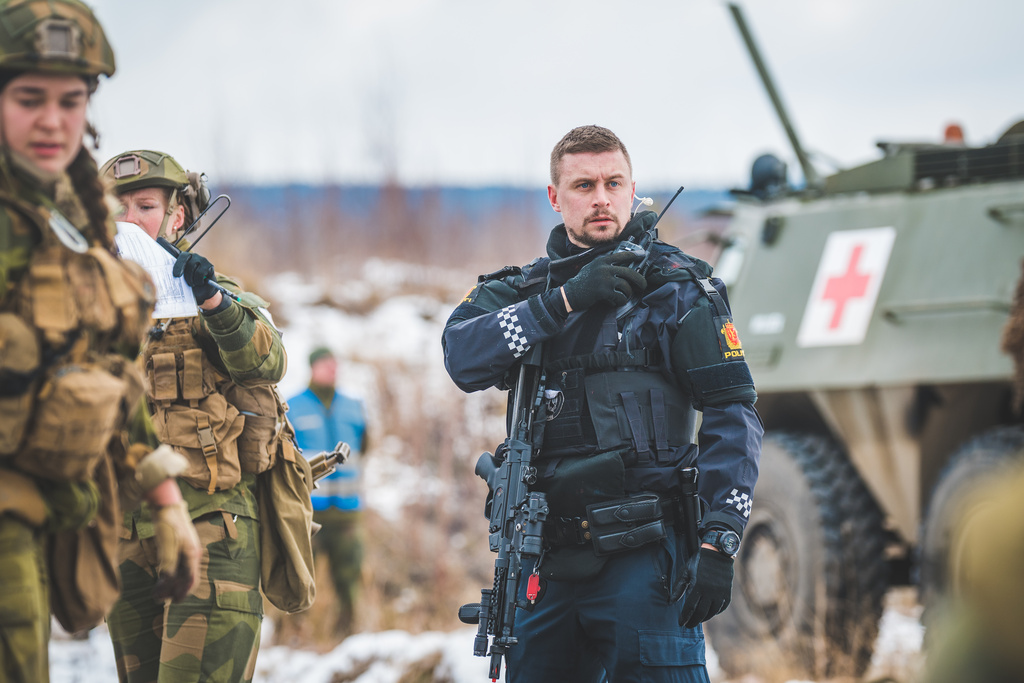
“We have to wake up from our peace bubbles,” read the headline on a commentary in newspaper Dagens Næringsliv (DN) this week, written by leaders of Norway’s northern counties of Nordland, Troms and Finnmark. They’re by far the most vulnerable to attacks from sea and from Russia in the far northeast. They raised, for example, the question of what would happen if both of Northern Norway’s two rail systems (Nordlandsbanen from Trondheim to Bodø and Ofotbanen, which runs from Sweden to Narvik) both suffered derailments or sabotage, or whether the main E6 highway that connects Northern- and Southern Norway was blocked for several weeks. Such disruptions have occurred already, and recently, but not for so long.
Cyber attacks, arson, cable and railroad sabotage and even assassinations have also been occurring around Europe, warned commentator Sverre Strandhagen in DN this week, and can also occur in Norway. He noted how that prompted Prime Minister Støre to also team up with German Chancellor Olaf Scholz and get NATO to set up a center to strengthen protection of underwater infrastructure, like pipelines and cables.
Peace and not least prosperity in Norway have been accused of lulling Norwegians’ security instincts over the past three decades. State broadcaster NRK reported on Thursday that a majority of Norwegians still have set up their own emergency supplies of water and other essential items that were recommended last spring.
Both defense officials and politicians have woken up, though, to the dangers that now loom: There’s a lot more military presence in Sør-Varanger, the region of Finnmark in the northeast that’s closest to the Russian border. The number of soldiers stationed Garnisonen in Sør-Varanger has grown significantly in recent years, billions have been invested in new infrastructure and military property, and they’ve received new and more advanced weapons.
Newspaper Klassekampen reported last autumn that instead of just patrolling the 197-kilometer border, Norwegian forces are now trained to fend off attacks, halt tanks and shoot down drones and helicopters. There’s also a newly formed Finnmark Brigade based in Porsanger farther to the west.
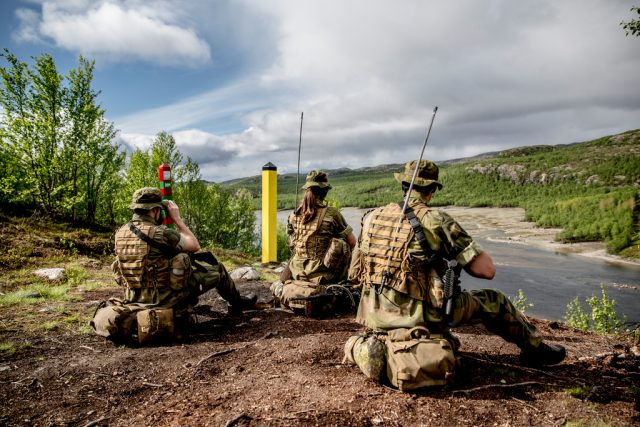
“The situation here changed dramatically when Russia chose to go to war against Ukraine,” batallion chief Audun Jørstad told Klassekampen. He said it takes time to rebuild defense forces that were cut way back when the Cold War ended, but thinks central authorities are prioritizing defense in Northern Norway and listening to local needs. Around 400 Russians still live in Kirkenes, and some “support Putin and his war,” Jørstad said. “We have close contact with PST (Norway’s domestic intelligence agency).”
There’s also the increased patrolling along Norway’s coast by the Norwegian Navy, Norway’s new F35 fighter jets are scrambling often, and NATO is conducting far more exercises off Norway and elsewhere in the Nordic area. It’s no coincidence that even Oslo has recently had three visits from huge American and British aircraft carriers, along with all their escort vessels. They’ve also been on patrol around Norway’s offshore oil and gas installations in the North Sea, and trying to track Russia’s large and growing fleet of submarines.
Submarines are another major issue around the Arctic archipelago of Svalbard, where Norway has authority but where many nations are represented including Russia. Not only is Svalbard’s ice melting at a record rate, and deeply affected by climate change, it’s also been the site of recent conflicts involving Russian settlements and China’s keen interest in boosting its political, economic and even military presence in the Arctic. China and Russia have already trained together in the Arctic, and allegedly bullied Norwegian fishing boats out of Norway’s own economic zone.
There also have been regular disputes between Norway and Russia over the issue of military presence on and around Svalbard. Last week the leader of Norway’s Christian Democrats party said he thinks it’s time to station military vessels and personnel on Svalbard, which some local officials on Svalbard’s main island of Spitsbergen have requested. The international treaty that regulates activity of its 44 signatories forbids any permanent military installations on the archipelago, though, and any proposals for military presence are viewed as provoctions by both Russia and Norway. When an earlier one flared up in December, Russia warned that any Norwegian military presence on Svalbard would prompt them to send soldiers to the Arctic. The Kirkenes-based Barents Observer (external link) follows the situation closely.

In the southern part of Norway, meanwhile, Norwegian soldiers were also training last fall for urban warfare in Oslo itself. They used an empty building in Oslo’s Løren district to “train for armed conflicts in heavily populated areas,” an officer from Norway’s well-regarded Telemark Batallion told newspaper Dagsavisen at the time. “We want to increase the complexity our soldiers may face.”
Norway is also trying to limit Russian aggression elsewhere in Europe, by continuing to support Ukraine and building much stronger ties with some of Ukraine’s vulnerable neighbours like Moldova. Norway signed an agreement late last year to strengthen defense cooperation with Moldova, and the two small countries have exchanged high-level visits during the past year. Hopes are rising for peace talks between Russia and Ukraine.
Norway’s King Harald, meanwhile, recently and ceremoniously welcomed a new Russian ambassador to Oslo, not long after the previous ambassador went home but two years after some Russian diplomats had been expelled, also from Norway’s own embassy in Moscow. The king is supposed to stay above politics, and graciously smiled and shook hands with Nikolay Korchunov when he officially presented his credentials at the Royal Palace. It’s likely no coincidence that Korchunov has long specialized in Arctic issues and advised Russian President Vladimir Putin on Arctic issues.
NewsinEnglish.no/Nina Berglund
