

UPDATED: Investigations of two former Norwegian foreign ministers’ ties to the late financier and convicted sex offender Jeffrey Epstein continue, not least after one of them lost his criminal immunity. Thorbjørn Jagland, who also was briefly prime minister and held other lofty posts in Norway, had criminal immunity as a former head of the Council of Europe, but it’s now been withdrawn.

The probes follow revelations about the former government ministers’ relationships with Epstein that were more extensive than either had initially revealed. Jagland is suspected of serious corruption, after Norway’s economic crime unit Økokrim announced it was launching an investigation into Jagland’s dealings with the billionaire Epstein. Jagland had claimed last autumn that he only had “normal diplomatic contact” with Epstein, who committed suicide in prison in 2019 after being arrested for the second time on charges of sex offenses and human trafficking.
The US Department of Justice’s release earlier this month of Epstein’s extensive correspondence and other documents, however, revealed years of emails between Jagland and Epstein tied to meetings, dinners, holidays and even Epstein’s payment of a doctor’s appointment for Jagland in New York. It’s already been revealed that Epstein pre-paid airline tickets and luxury hotels for the Jagland family, and hosted them at his lavish estate in Palm Beach, Florida.
Økokrim is most concerned about whether Jagland accepted benefits in the form of gifts, travel and even an alleged loan while he was both leader of the Norwegian Nobel Committee and secretary general of the Council of Europe in Strasbourg. Økokrim chief Pål K Lønseth noted that the case involves an extensive amount of material to go through and that it will take time to evaluate it all.
Norwegian state broadcaster NRK now reports that the Council of Europe has lifted the criminal immunity Jagland was under, also after he left the council. His immunity had raised questions about whether the investigation could proceed, but now it can after the council’s ministerial committee agreed that Jagland should no longer be protected from criminal prosecution following media reports tied to the so-called “Epstein files” made available by the US.
Jagland’s defense attorneys also claim it will “take time” to dig up other documentation “because this is about events that took place up to 10 years ago.” Anders Brosveet, one of Jagland’s lawyers, told state broadcaster NRK, though, that “based on the information we have found so far, we think it will be quite simple to clarify that this is not about gaining any special advantages. We will deliver (to Økokrim) our central findings and the documentation we have as quickly as possible.”
Brosveet later was harshly criticized himself after telling NRK that it was “much better for Økokrim to investigate this … instead of a whole horde of journalists playing investigator and demanding answers for everything around the clock.” Norway’s largest newspaper Aftenposten was quick to publicly correct Brosveet in its main editorial the next day: “They are not playing investigator,” wrote Aftenposten, “they are working with critical, investigative journalism that’s of vital importance in an open and free democracy. Of course it can plague (those involved) but the people have a right to know” what Jagland and others involved with Epstein were doing. That includes Norway’s Crown Princess Mette-Marit.
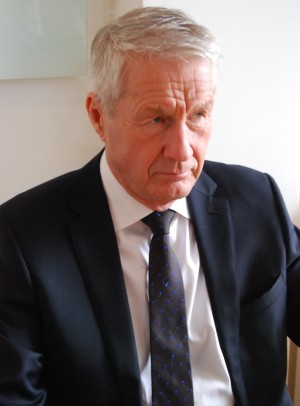
Jagland has earlier denied any wrongdoing, even though his acceptance of paid holidays and other favours from Epstein could also have violated the Council of Europe’s own strict rules about what its employees can accept in the form of gifts and favours. Council staff has reportedly begun its own investigation of Jagland and announced on Thursday that it would assist the Norwegian officials’ probe. Økokrim had also asked the council to lift the immunity that protected Jagland as its leader.
The Norwegian Nobel Institute in Oslo, meanwhile, is also worried that Jagland may have violated its own ethical guidelines while he was leader of the Norwegian Nobel Committee from 2009 to 2015 and continued as a member until 2020. New regulations imposed in 2014 covered impartiality, confidentiality and restrictions on gifts, travel and anything resembling a bribe.
“We must be careful not to prejudge, but if Jagland has accepted advantages or gifts from Epstein in the time he was a member of the committee, it’s clearly in conflict with our regulations,” Kristian Berg Harpviken director of the Norwegian Nobel Institute, told reporters this week. “We expect to be told of any transactions, gifts and relations that can influence committee members’ judgment and decisions.” That’s unlikely to have any consequences for Jagland now, though, since he left the committee six years ago.
Prime Minister Jonas Gahr Støre, a longtime Labour Party colleague of Jagland, repeated to news bureau NTB on Thursday that Jagland’s relations with Jeffrey Epstein “have raised a series of new questions that must be answered.” He said the criminal investigation now launched into Epstein’s alleged generosity with Jagland “shows how serious this case is.”
Meanwhile, the World Economic Forum (WEF) has also launched an independent investigation of its Norwegian leader Børge Brende’s interaction with Jeffrey Epstein. Brende is also a former Norwegian foreign minister in the Conservatives’ government, serving from 2013 to 2017, when he was tapped to become president of WEF.
Brende told NRK that he had asked for an evaluation of his ties to Epstein, which he claims amounted to three dinner meetings in New York that also were attended by other business leaders. Brende also claimed to be unaware of Epstein’s criminal background.

In addition to the meetings, Brende also had contact with Epstein via email and phone messaging that has turned up in the recently released Epstein files. Their correspondence had a friendly tone and Brende has been criticized for reacting positively to a proposal from Epstein that WEF could potentially replace the United Nations as an international meeting place. Brende has declined further comment pending results of WEF’s investigation, and cancelled a video appearance at his former Norwegian Conservative Party’s national meeting this weekend. He’ll be attending the Munich Security Conference instead.
Brende and other top WEF officials are also under investigation by authorites in Switzerland, where WEF is based, over the size of their salaries. Oslo newspaper Dagens Næringsliv (DN) reported that Brende’s annual salary nearly doubled, from USD 1.1 million in his first full year (2018/2019) to USD 1.9 million in 2023/2024. That’s equivalent to nearly NOK 20 million, a hefty raise from his years as foreign minister with a salary of around NOK 1.5 million.
The Swiss probe, initially reported by Swiss paper Neue Zürcher Zeitung (NZZ), was sparked by concerns over salaries paid by organizations or foundations that can be viewed as illegal enrichment. Brende referred DN to a WEF spokesperson, who said that salaries are set by WEF’s board and are in line with comparable salaries in Switzerland.
Both Jagland’s and Brende’s association with Jeffrey Epstein has struck a nerve in Norway, along with that of two former top diplomats and Crown Princess Mette-Marit, has struck a nerve in Norway. Norwegians generally have great confidence in their leaders, but the revelations in the Epstein files have shocked and disappointed many.
“It’s actually quite frightening that rich and powerful people discuss replacing the UN with a private billionaires’ club in Davos (where WEF holds its annual gathering),” Mimir Kristjansson, a Member of Parliament for the Reds Party, told NRK. “This shows a type of anti-democratic attitudes within the global elite, where also Norwegian are involved, that’s deeply worrisome.”
He doesn’t buy some of their initial arguments that documents in the Epstein files are taken out of context. “There’s no doubt about what’s in those emails,” he said.
NewsinEnglish.no/Nina Berglund
