

Norway’s spring strike season started off fairly well this year, with settlements that left industrial workers and many others with pay raises averaging 4.4 percent. Employers also agreed to cover sick pay until state workers’ compensation clicks in, but not those within the hotel and restaurant sector, and that sent thousands of their workers out on a strike that’s expanding nationwide.
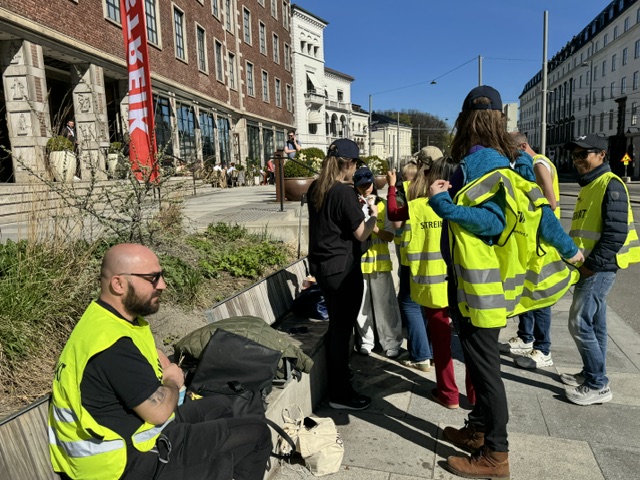
Surprised tourists found some hotels closed and service affected at others. The trade union federation Fellesforbundet initially pulled around 2,000 workers off the job at some major hotels in Oslo and Bergen. On Thursday another 1,000 hotel and restaurant workers went on strike at more hotels in Trondheim, Tromsø and Sandefjord.
The 4.4 percent pay raise was a victory for the labour movement in Norway since it’s higher than the inflation rate, offers some real wage growth and sets the tone for other labour negotiations that run through May. Some fear the pay hike will further prompt Norway’s central bank to raise interest rates, though, and the money involved for relatively low-paid hotel workers isn’t nearly as much as what higher-wage industrial workers will get.
TBU, the state agency that calculates Norwegian pay levels, has set hotel workers’ average annual pay at NOK 486,700 (USD 44,700), which is hard to live on in Norway. It’s also NOK 150,000 a year less than average industrial workers’ pay. While a 4.4 percent raise will yield an industrial worker an extra NOK 28,045 a year, a hotel worker will only get NOK 21,414 before tax.
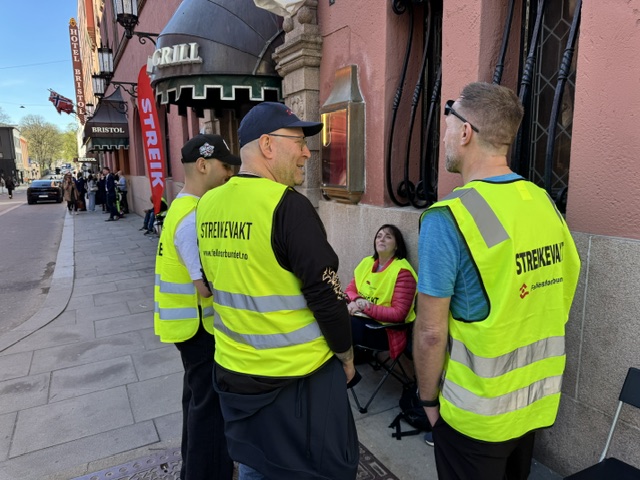
The biggest issue in wage negotiations this year, however, concerns sick pay. Norwegian employers are expected to cover the first 16 days of a worker’s sick leave, at which point state welfare agency NAV becomes responsible for compensating them. The problem is that NAV is rarely prepared to take over from the 17th day because, they argue, there’s so much documentation involved. Workers’ trade unions thus want employers to keep paying their employees until NAV steps in and ultimately refunds them.
Employers in other sectors have already agreed to that, but the hotel employers’ organization representing them in labour negotiations balked. NHO Reiseliv broke off mediation with Fellesforbundet on the grounds that especially their restaurant-owning members don’t have the same resources as a large industrial firm has.
“We fully understand that it’s problematic for a sick or injured worker to not receive sick pay in time, but that’s the state’s (NAV’s) responsibility,” claimed Magne Kristiansen of NHO Reiseliv. He called it “unreasonable” to expect hotel- and restaurant owners to cover such compensation.
The government minister in charge of labour issues, Kjersti Stenseng of the Labour Party, said efforts were underway to get NAV to take over its sick pay responsibility from the 17th day. NAV still claims it lacks staff and resources to do so on a regular basis.
Commentators expect the strike to drag on and keep expanding, just as the weather improves and tourists keep pouring into Norway. The trade union federation has a large strike fund and some of its members may even earn more out on strike than they would working. Restaurants forced to close, meanwhile, faced losing revenues especially from outdoor cafés that otherwise would be packed in the sunny weather.
The leader of the popular Dr Wiesener bar and restaurant in Bergen, though, seemed to be taking it in stride. Even though he estimates Dr Wiesener is losing NOK 100,000 a day, Rolf Nitter told newspaper Bergens Tidende (BT) that he’s proud of his employees and that they’re socially and politically engaged. “The most important resource we have are those who work for us,” Nitter told BT, and he supports their cause.
NewsinEnglish.no/Nina Berglund
