

Norwegian government ministers just had a busy week at the United Nations, and share concerns that it’s caught in crisis. Foreign Minister Espen Barth Eide urged reforms when he addressed the UN’s 81st General Assembly during the weekend.
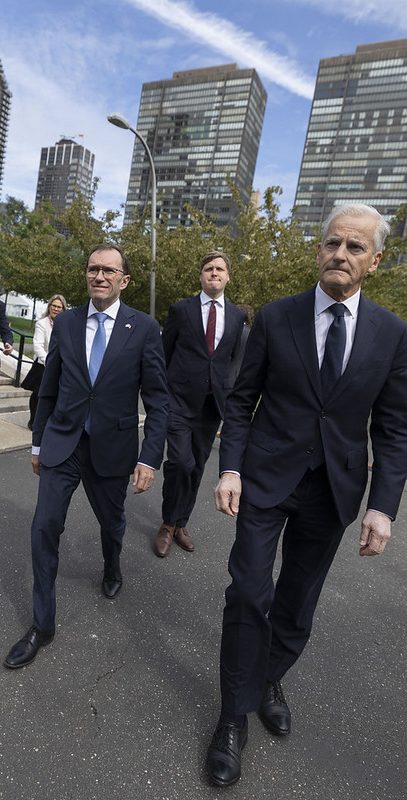
Eide, who delivered Norway’s statement on Saturday, noted that the UN is facing its “most serious challenge” at a time “when we need it most.” He cited an “erosion of respect for international law, a loss of confidence in the merits of cooperation, a loss of financing and effectiveness.” That’s why it’s crucial, Eide said, “to make some tough calls … not because the United Nations has failed, but because it matters.”
Norway already supports the so-called “UN80 initiative” and its “concrete proposals” for reform. Eide referred to efforts to rationalize mandates, streamline reporting and ensure more broad, effective participation, “but we also need structural change,” he said, through merger of UN organizations that overlap. “Unfortunately,” Eide said, member states too often show vested interests, engage in turf battles and fear change.
He called for a new “strong, independent secretary general” who will advocate the principles of the UN Charter “with integrity and authority.” Norway also promotes reforms in the composition of the UN Security Council to make it more “open, transparent and accountable in its deliberations.” Eide claimed the absence of an African country with a permanent seat on the Security Council “is but one striking example” of the reforms needed.
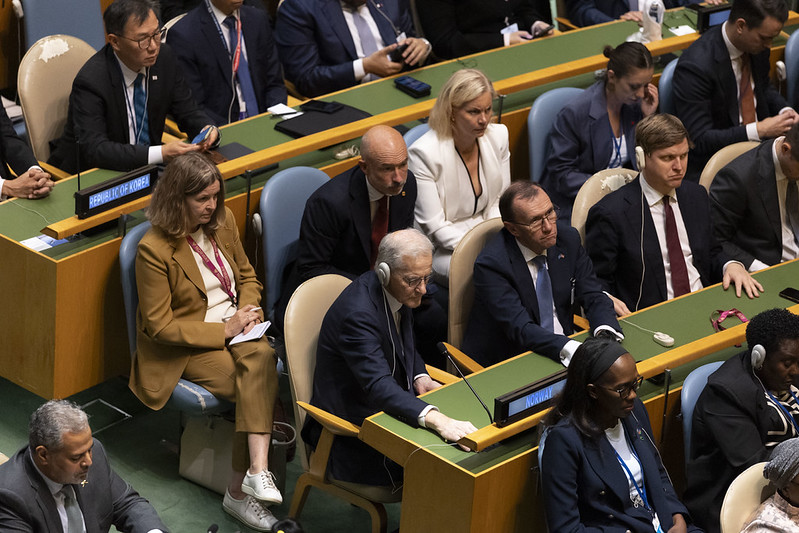
Eide stressed how the UN was founded “by leaders who had lived through two world wars, a devastating economic collapse and the rise of facism and naziisim.” They knew how nations suffer in war and conflict, “and when international cooperation fails.” He warned how “we, too, are now living in turbulent times,” and how instability grows when rules are undermined, and spreads when cooperation weakens.
That’s why he and his fellow ministers were also speaking with other worried leaders, to ward off what Eide calls a “triple crisis” of ongoing wars, the number of which is “alarmingly high,” a “financial crisis” caused by major contributors withholding or delaying payments to the UN and “an institutional crisis” because of “excessive complexity.” He thinks the UN must simplify its systems and improve its capacity to deliver and have more impact.
Even though all the current wars and tension worldwide dominate the agenda, Eide also said the UN must also “take better care of the planet on which we all depend.” Even though Norway is an oil-producing nation and often accused of contributing to climate change, Eide claims that emissions are being reduced both in Norway and elsewhere, and that renewable energy costs are falling.
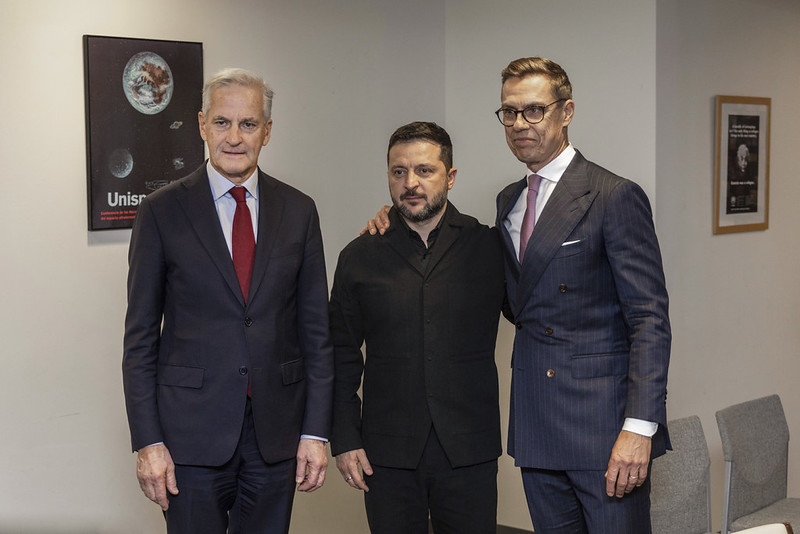
In addition to speaking at the UN and listening to others do the same, Eide and his Norwegian colleagues held dozens of meetings with their counterparts, with Prime Minister Støre meeting with, among others, Iran’s president, Moldova’s prime minister, the UN secretary general, the president of Ukraine, the king of Jordan, the mayor of New York, and the president of the European Union. Before arriving in New York, Støre also met with Canadian Prime Minister Mark Carney again, this time in Ottawa for their latest session on new cooperation in a wide range of fields, not least defense.
Many breathed a sign of relief when the US president finally sat down with the leaders of Denmark and Greenland to sign agreements that may finally end his own “Greenland grab” that shocked NATO allies and much of the rest of the world. Scandinavian commentators were quick to assess the new agreement as an attempt to help the US save face while ensuring the control it already has over military bases on the huge Arctic island.
Most important of all, Eide thinks, is acknowledging that “when law gives way to force, everyone loses. When cooperation collapses, everyone pays. When institutions fall, chaos follows. UN founders built the institution, he said, “because they understood mankind is not perfect.” Eide cited how Italian philosopher Antonio Gramsci wrote from one of Mussolini’s prison cells in the 1930s that “the old world is dying, and a new world struggles to be born: now is the time of monsters.”
Eide urged current UN members to take responsibility for the UN and launch the reforms needed. “The time for reports has passed,” he said. “The time for action is now. It’s our turn to face the monsters of our time.”
NewsinEnglish.no/Nina Berglund
