

Reaction was swift and furious after a state commission handed over its proposals on Thursday for changes in the ethical framework and management of Norway’s huge sovereign wealth fund, known as the Oil Fund. The commission proposed investing in some companies tied to nuclear weapons, and that led to verbal blasts from critics.
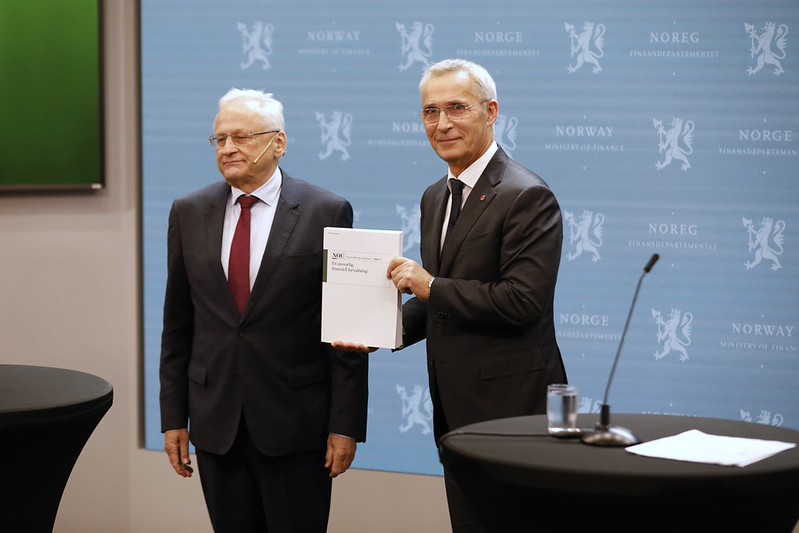
“That’s completely crazy,” claimed Oda Indgaard of the Greens Party, one of the left-leaning parties in the Norwegian parliament that have supported Norway’s minority Labour government. It was Labour’s finance minister Jens Stoltenberg, a former NATO chief, who had asked the commission to evaluate ethical investing issues including stakes in companies involved in nuclear weapons.
Norway’s Oil Fund has long banned such investments, and got in trouble last year over its stakes in some Israeli companies that were involved in the destruction of Gaza. Those stakes were later sold off, but Stoltenberg called for a re-evaluation of the ethical guidelines that apply to Oil Fund investments, not least since the world is no longer as peaceful as it was when the original guidelines were put in place.
“Norway is a member of NATO,” Stoltenberg stressed at a press conference in Oslo on Thursday, noting that NATO’s strength and power rest on the nuclear weapons held by some of its members. “At the same time, we have a pension fund (the Oil Fund) that can’t invest in the companies that make NATO’s nuclear deterrent credible. That’s a paradox.”
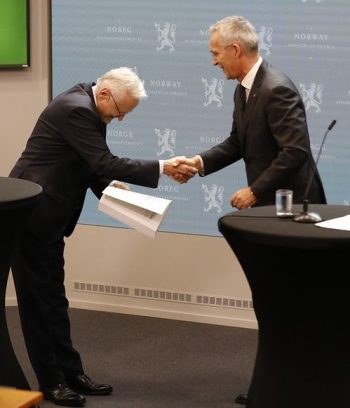
Stoltenberg would clearly like to allow the Oil Fund to invest in weapons producers that are a central part of NATO’s defense. He’s caught criticism for such, however, also from fellow Labour Party colleagues. Many remain opposed to investing in companies tied to nuclear weapons, as do other anti-nuclear parties and government partners like the Socialist Left Party (SV) and the Reds (Rødt).
They include Labour veteran Raymond Johansen, a former state secretary in the foreign ministry, party secretary and mayor of Oslo. “If anyone now thinks that nuclear weapons are an investment opportunity, I don’t think they’ve understood the risk these weapons pose in the reality we live in today,” Johansen said on Thursday.
The leader of Labour’s own youth organization, Fawzi Warsame, was also critical.”Responsibility and (investment) results are not diametrically opposed,” Warsame told newspaper Dagens Næringsliv (DN). “We can’t rely on earning money at the risk of wiping out humanity.”
Labour Prime Minister Jonas Gahr Støre was traveling in Rogaland on Thursday, but seemed to try to calm party fellows down. He told state broadcaster NRK that all issues that spark engagement create noise and discussion.
“I have respect for that,” Støre said. He noted that the report will now go through a hearing process “and then the government will form an opinion and put out a proposal on it,” and a decision will be made.
Many already have an opinion, including Indgaard of the Greens and SV leader Kirsti Bergstø. Labour needs support from both parties to get its budget through Parliament.
“This just shows what a mistake it was to put the (Oil Fund’s) Ethics Council on pause,” Bergstø told reporters on Thursday. It was suspended when Stoltenberg called for a re-evaluation of its role and of the ban on investments in nuclear weapon makers. Bergstø stressed that the world now needs more nuclear disarmament, “not more investment in weapons of mass destruction.”
The Liberal Party called the commission’s recommendation to allow such investment “enormously problematic,” while the Conservative Party merely said that the commission’s report formed “a good starting point” for further work on the subject.
Only the right-wing Progress Party was positive towards allowing the Oil Fund, which is run by Norway’s central bank, to decide on its investments and pull out only when doubts are high. “It’s meaningless that the Oil Fund can’t invest in British, French and American companies from which Norway (otherwise) buys defense capacity and equipment,” said Progress’ Hans Andreas Limi. “The Oil Fund is means to secure the welfare of our children and grandchildren, not be an instrument of foreign policy.”
NewsinEnglish.no/Nina Berglund
