

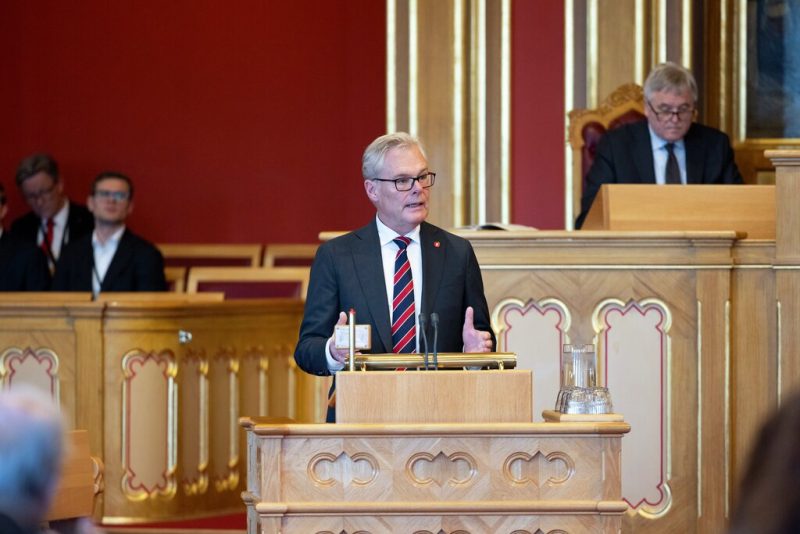
UPDATED: Norwegian Finance Minister Jens Stoltenberg faced widespread criticism from his own allies in Parliament on Tuesday, who accused him of undermining the investment ethics he helped establish for Norway’s Oil Fund when he was prime minister more than two decades ago. The former Labour Party leader still wanted to change the fund’s ethical investment rules, though, and secured a majority from conservative parties to do so.

“This is a huge concession to the right-wing from the Labour Party,” claimed an unhappy Kirsti Bergstø, leader of the Socialist Left Party (SV), one of the left-wing parties that Labour otherwise needs to support its state budget proposal. She accused Stoltenberg of easing up on the ethical framework that has guided the Oil Fund since its inception.
As pro-Palestinian demonstrators protested outside the Parliament building, Bergstø stressed how “we stand at an historic turning point, when our goal is to make sure the Oil Fund isn’t invested in genocide, occupation and serious war crimes.” Norway has been under pressure, also from the United Nations to refrain from investing in companies that fuel Israel’s war effort.
Norway’s Oil Fund managers did sell off stakes in some Israeli companies last summer, but Stoltenberg recently told Parliament that it was time to review the Oil Fund’s ethical guidelines and how investments are made. He argued that the current guidelines can now lead to paradox and dilemmas.
Stoltenberg, who once led Norway’s Labour Party and served three terms as prime minister, had initially resisted such sales and recently told Parliament that he thinks the fund’s ethical guidelines are outdated. He argues the current practice of them is also inconsistent, claiming it’s a paradox that Norway can, for example, buy defense material from a company but not invest in it because of current ethical guidelines. His bottom line: The Oil Fund isn’t meant to be a political instrument but primarily a means of ensuring pensions for Norwegians for generations to come.
The current Labour government, which won re-election last month not least because of Stoltenberg’s return after 10 years leading NATO, has since proposed that the Oil Fund’s Ethics Council suspend its evaluations until new guidelines are in place. That won support from three of the most conservative parties in Parliament (Progress, the Conservatives and the Christian Democrats) and the Labour government’s former partner, Center. With 85 votes in favor and only 17 against, the government can now set aside the Oil Fund’s Ethics Council until a “a new ethical framework” is decided upon.
The leader of the Ethics Council, former Hydro CEO Sveing Richard Brandtzæg, supports the measure. He stated that “the political discussion” around the council has been somewhat “unprecise,” while global developments expose challenges. Therefore the council “supports a new review of the framework.”
Stoltenberg failed to win any support from Labour’s own allies on the left side of Norwegian politics, which may make upcoming state budget negotiations more difficult. Like Bergstø, MP Maria Sneve Martinussen, leader of the left-wing Reds Party, was also highly critical of Stoltenberg’s proposed review of Oil Fund ethics. “It’s shocking that Labour, after two years of genocide and a long string of revelations over direct ties between the Oil Fund and Israel’s war machine, now wants more of that,” Martinussen said.
Arild Hermstad, leader of the Greens Party, called Stoltenberg’s maneuver “extremely disappointing.” He said it was “bad style to basically decide on this with the Progress Party while we’re on our way into budget negotiations.” Hermstad added that Labour “spent the entire election campaign warning against the Progress Party. Now they’re handing Progress a big victory. Everyone who thought that Labour would stand up for the Rule of Law and against war crimes has been slapped in the face.”
When Norway’s huge sovereign wealth fund was first set up, to save the country’s oil revenues for future generations, its Ethics Council was an important part of how the country’s riches would be invested. The fund threatened to pull out of Wal-Mart stores many years ago over labour issues, for example, and urged Monsanto to review its child labour policies. Now Stoltenberg, widely viewed as one of the Oil Fund’s founders, is accused of being more concerned about objections from conservative Republicans in the US (who criticized the Oil Fund’s recent sales of shares in Israeli companies) than his own government’s potential partners.
That’s because new investment rules are likely to make it more difficult for the Oil Fund to throw companies out of the fund. Even Labour’s own youth organization, AUF, is critical of Stoltenberg’s proposal: “This totally misunderstands the times we’re in,” acting AUF leader Nimrah Ramzah told Norwegian Broadcasting (NRK). Putting the Ethics Council on paus is really not something we need right now.”
Stoltenberg’s finance ministry, however, claims it’s simply responding to current times. The security situation in Europe, for example, “has changed considerably” since the fund’s ethics council got down to work in 2004, says State Secretary Ellen Reitan. She noted that the division between tech firms’ military- and civilian technology has also become less clear. At the same time, it emerged Tuesday that the Oil Fund will once again vote against Elon Musk’s enormous compensation package at Tesla.
Stoltenberg wants the Oil Fund to remain “a broad, diversified fund” with “a goal of earning the highest possible returns at an acceptable risk.” He stresses that the government will ensure that Norway, through its investments in the fund, “doesn’t violate its obligations under the Rule of Law.” He also thinks it’s important that Oil Fund rules are redefined quickly, which is why the government was pushing through voting on it at the end of just one day of debate in Parliament.
During a live debate on NRK’s morning debate program Politisk kvarter, Stoltenberg also stressed that the government should be able to halt any possible sell-downs in high tech companies like Microsoft or Amazon. “If Norway pulls out of the biggest companies in the world, we will no longer have a broad global index fund. Then we’d have a fund with lower returns.” He wants high returns while still “securing a good balance between important considerations.”
NewsinEnglish.no/Nina Berglund
