

Erna Solberg has been one of Norway’s most powerful politicians for nearly four decades. After stepping down as the Conservative Party’s leader over the past 22 years, eight of them as prime minister, she’s written a book that’s been branded as nothing less than a “character assassination” of Sylvi Listhaug, who now leads the bigger and more conservative Progress Party that was Solberg’s former government partner.
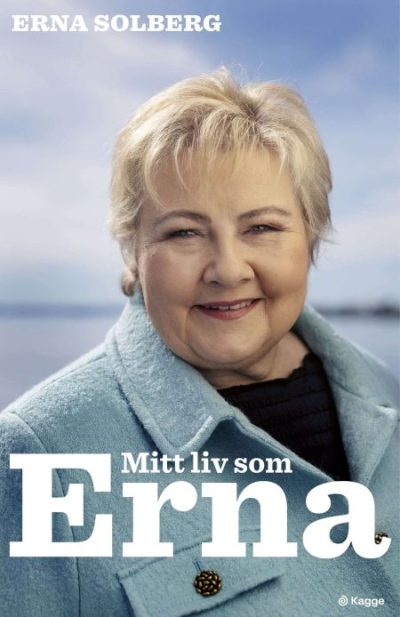
The Progress Party has been leading all the most recent public opinion polls, with a re-styled Listhaug also emerging as the conservative side’s prime minister candidate in 2029. Solberg, looking back on her life and political career, clearly doesn’t think Listhaug is suited for the top job.
Solberg, who grew up in Bergen and became prime minister in 2013, was the first Conservatives’ leader to form a government with the far-right Progress Party. She and Progress’ former leader, Siv Jensen, seemed to get along fairly well and their coalition with the much smaller Christian Democrats and Liberal parties won re-election in 2017.
Listhaug held various ministerial posts in both governments and Solberg tolerated most of her controversial, attention-grabbing acts over the years until Listhaug finally had to resign as justice minister in 2018. Now Solberg writes about how Listhaug was not interested in compromise or “finding solutions through give and take.” Listhaug, according to Solberg, would rather lose and later complain how Progress’ proposals were shot down, than reach agreement. “That’s not a good way to run the country,” writes Solberg.
Listhaug has objected to Solberg’s assessment but has declined to elaborate. She now insists that whichever party ends up with the most votes within a potential government coalition should claim the prime minister’s post. She stops short of confirming, though, whether she wants the job herself. Some commentators note that Listhaug, who later took over for Jensen as Progress Party leader, still may prefer being able to complain than to take on the responsibility of government leadership.
Solberg writes that during the 2021 election campaign, when she needed to work directly with Listhaug as Progress’ new leader, Listhaug “consistently chose to go solo” instead of working together with the other non-socialist parties “to agree on common conservative viewpoints.” That may happen again heading into the next election, warns Solberg.
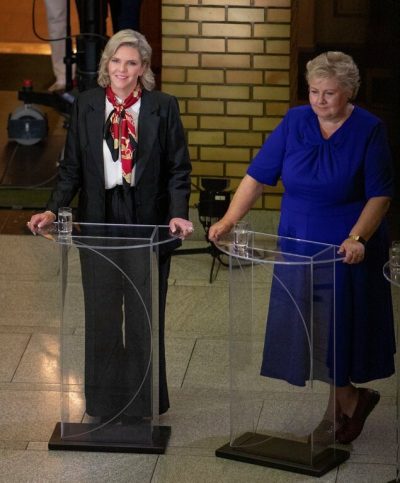
“While Siv Jensen’s project was to reduce differences among those on the conservative side, Sylvi’s project has been the opposite,” Solberg writes. “She (Listhaug) has created greater distance (from other non-socialist parties). The question then is whether Sylvi Listhaug and Progress understand what’s needed to create a conservative majority.”
Political commentator Kjetil B Alstadheim calls Solberg’s views “very harsh criticism,” noting how Solberg spent her career trying to unify the conservative side of Norwegian politics. He’s far from alone, with others all but marvelling over how the usually diplomatic Solberg is so harsh in her book.
Listhaug has responded with much the same comment to Norwegian media, that she “doesn’t recognize herself at all” in Solberg’s assessments. Listhaug has stated that she still has “great respect for the job Erna Solberg has done during a long political life,” but declined to elaborate.
“This is Erna’s book, written after one of the Conservatives’ biggest election defeats (in 2025, when Labour won re-election and formed a minority government instead of a coalition).” Listhaug noted that “many” in the Conservatives “mistakenly blamed Progress” for their loss, claiming Solberg herself made an issue of who should be prime minister in a new conservative coalition, while Listhaug and her Progress colleagues “tried to talk about politics and why we must replace the (Labour) government.”
It’s all grabbed media attention in Norway since release of the book, which otherwise dwells on what Solberg herself thinks formed her politics over the years, what a long career has cost her and her family, and how she has tackled both upturns and downturns. Most of the attention, though, is on Solberg’s assessment of Listhaug and what it can mean for the prospects of a new conservative coalition in 2029.
Solberg denies she’s guilty of a character assassination of Listhaug, telling newspaper Dagsavisen that she rather has written “a clear description of how Sylvi functioned as a minister in my government.” Solberg stresses that she also has written “a lot of positive things about Sylvi,” calling her “creative and clever.” Questions are flying, though, about how Listhaug may or may not cooperate with Solberg’s successor as Conservatives leader, Ine Eriksen Søreide. Many commentators have claimed the next election campaign is already underway.
NewsinEnglish.no/Nina Berglund
