

Norway’s Foreign Minister Espen Barth Eide has been busy meeting several fellow ministers this week, both in Ukraine and at home. After showing the UK’s foreign minister around joint defense operations in Northern Norway, Eide met Denmark’s embattled Lars Løkke Rasmussen in Oslo on Sunday, in the midst of what he called a “dramatic” weekend.

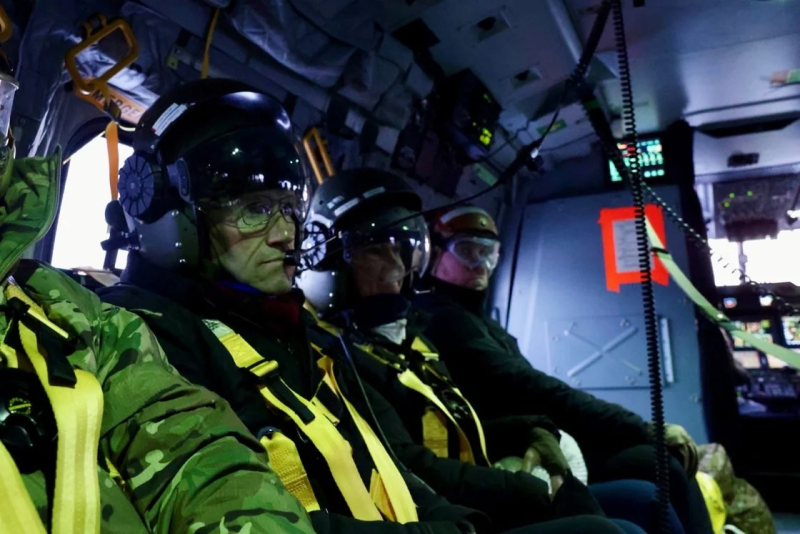
After starting the week off in Ukraine, where he had to spend parts of the night in a bomb shelter amidst meetings with his Ukrainian counterpart Andrij Sybiha, Eide traveled up to Northern Norway to host his British counterpart Yvette Cooper. They met in Bardufoss, long home to Norwegian military operations and now to British as well.
“Great Britain is one of our most important allies in Europe,” Eide said during his meeting with Cooper, both of them bundled up as they reviewed how British and Norwegian forces are training together on winter exercises. It was the two ministers’ first meeting since Norway and Great Britain agreed on a comprehensive joint defense pact last month.
Eide called the enhanced defense cooperation between long-time NATO allies Norway and Great Britain strategically important for both Norwegian and European security. Their meeting came just prior, though, to US President Donald Trump’s latest attack on his own allies that involved Trump threatening Norway, Great Britain, Denmark and five other NATO allies with new punitive tariffs that can in turn threaten the entire alliance. Now both Eide, Cooper and their colleagues are facing challenges within NATO, the likes of which they’ve never known.
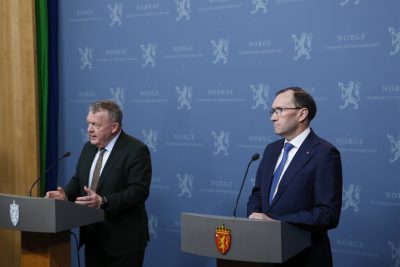
Their Danish counterpart Rasmussen arrived in Oslo just days after Cooper’s visit up north. He came almost straight from Washington DC last week, where he had tried to make sense of US President Donald Trump’s recent verbal and financial attacks on Denmark and other US allies in NATO. On Sunday Rasmussen was in Oslo, also getting full support from Norway amidst the new threats from Trump, and warning that both NATO’s future and even “the world order as we know it” are at stake.
Rasmussen is far from the first European leader to warn of how Trump continues to ignore, threaten and overturn international regulations, alliances and potentially the world order. Trump’s shocking claims and erratic behaviour have left Rasmussen and many others thinking that Trump is actually giving a strategic gift to Russian President Vladimir Putin, by risking NATO’s solidarity through his attacks on the US’ own longtime allies.
The Danish foreign minister also drew attention to the war in Ukraine and even found it necessary to mention at the press conference in Oslo that “we must not forget who our enemies really are.” If Putin succeeds in getting some of his demands met during negotiations with Trump’s US representatives, Rasmussen said, “then ongoing challenges will come for the Baltic countries, and for the Nordic countries.”
He welcomed all the firm support Denmark is getting from Norway, much of which was repeated during the weekend when Norway, Denmark and six other NATO allies jointly objected to Trump’s latest threats of punitive tariffs. Norwegian Foreign Minister Eide fully agreed that Europe and the world are in the midst of “dramatic and historic times,” and stressed how important it was for NATO allies to stand together.
Trump claimed his threatened tariffs will remain in place until the US secures a “full and total” agreement to buy Greenland from Denmark, which has responded that Greenland is not up for sale. Asked how Denmark will respond to the new tariff threats, Rasmussen noted that Denmark is a big investor in the US, “bigger than Italy, bigger than the United Arab Emirates.” That means wealthy countries like Denmark and not least Norway “have some muscle to flex” when needed. He declined to go into detail.
There was lots of speculation Sunday that the EU, Norway and the UK would respond to Trump’s tariffs with reciprocal tariffs of their own. Newspaper Dagens Næringsliv (DN) reported, meanwhile, that Rasmussen and his Danish delegation also requested and obtained a meeting with former NATO chief Jens Stoltenberg during their time in Oslo, to seek his advice on how to respond to Trump. Stoltenberg is now Norway’s finance minister but had a lot of experience dealing with Trump and was invited to Trump’s inauguration last year following his election to a second term. Stoltenberg also accompanied Norwegian Prime Minister Jonas Gahr Støre to a meeting with Trump at the White House last spring.
Rasmussen’s meeting with Stoltenberg comes at time of increasing disenchantment with Stoltenberg’s replacement as NATO chief, Mark Rutte. Instead of stressing solidarity among NATO allies, Rutte has refused to publicly criticize or challenge Trump, even amidst all the warnings that Trump’s attacks on NATO colleagues damage the alliance itself.
On Sunday evening Rutte reportedly told news bureau Reuters that he had spoken with Trump about the security situation around Greenland and the Arctic, and would “continue to work with this.” Rutte added that he looked forward to see Trump at the World Economic Forum in Davos later this week.
NewsinEnglish.no/Nina Berglund
