

It’s only been out for a week, but strong demand for Jens Stoltenberg’s new book about his 10 years leading NATO has already prompted the printing of a second edition. More are likely, given all the book’s revelations, rave reviews and Stoltenberg’s own popularity both at home in Norway and abroad.
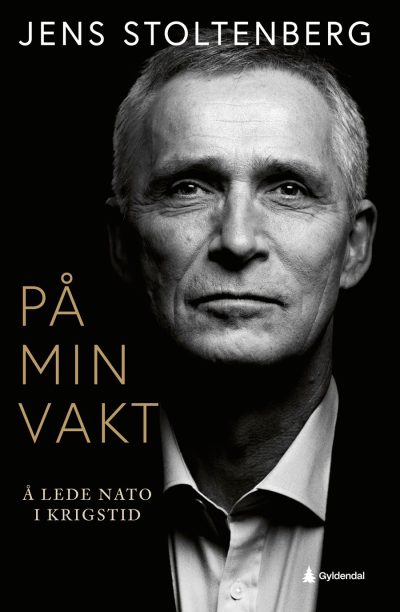
The book’s intrigue and insight into 10 years of meetings and encounters with world leaders has clearly struck a chord with readers. “The book is well-written, honest and revealing,” wrote commentator Sverre Strandhagen, who specializes in defense issues for Norway’s leading business newspaper Dagens Næringsliv (DN). It was already sold out at Norwegian bookstores by the weekend, but publisher Gyldendal was promising new shipments early this week.
Entitled På min vakt (literally, “On my watch”), it’s billed as an “open and honest account” of Stoltenberg’s “dramatic decade” as leader of NATO. The book takes readers behind doors that were closed at the time and thus offers rare insight into how leaders of some of the most powerful countries in the world dealt with crises. There were a lot of them during Stoltenberg’s two-and-a-half terms, from Russia’s invasions of Crimea and later the rest of Ukraine, NATO’s forced withdrawal from Afghanistan, difficult relations with China and the rise of Donald Trump, now back as US president.
Strandhagen notes how Stoltenberg writes “from the inside of highly dramatic NATO summits,” and from private meetings and conversations with everyone from Russian Foreign Minister Sergey Lavrov and French President Emmanuel Macron to three US presidents: Barack Obama, Joe Biden and Trump, plus many of their top aides.
It’s already been deemed a page-turner as Stoltenberg, with the help of veteran Norwegian journalist Per Anders Madsen, writes in detail about conflicts and challenges during his 10 years at NATO from 2014 to 2024. Stoltenberg claims his biggest job, though, was simply “to keep the alliance together.” That wasn’t easy, as he reports in sometimes alarming but also humorous and colourful detail.
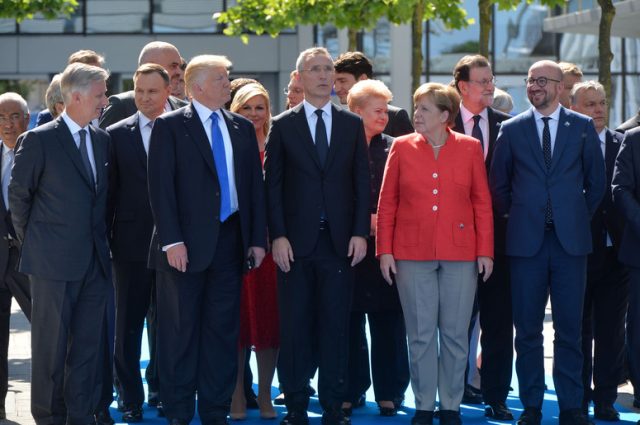
During his first meeting with Donald Trump, for example, Stoltenberg noticed a prominent red button on Trump’s desk. It wasn’t the infamous button that can set off a nuclear war, but rather a signal when Trump wanted another glass of Cola Light. And when Stoltenberg told Trump that “as a former Norwegian prime minister, I know that it’s actually possible to talk with the Russians,” Trump quickly asked “Are you Norwegian?”

When Stoltenberg answered “yes, I’m Norwegian,” Trump wasn’t as keen to discuss Russian relations as he was a former girlfriend. He quickly asked if Stoltenberg knew Celina Midelfart, a Norwegian heiress and investor with whom Trump had a relationship in the late 1990s. When Stoltenberg said he did, Trump quickly replied “Nice girl,” and then wanted to know what Norwegian newspapers had written about their relationship: “Was it good or bad?”
Stoltenberg writes that he replied the coverage was positive and added that Midelfart was now married to a wealthy Norwegian, shipping and offshore investor Tor Olav Trøim. “He’s not rich,” reportedly replied Trump. Midelfart had no comment on the extract from the book when contacted by Norwegian newspaper VG.
Stoltenberg clearly faced a challenge dealing with Trump, but quickly learned that flattery would help. At a NATO summit in 2018, when Trump was following up on Obama’s demands for more defense spending among European allies, Stoltenberg was seriously worried Trump would pull the US out of NATO. Trump yelled at his allies, claiming they hadn’t paid what they owed. He compared them to renters who don’t pay their monthly rent.
Then Trump read off how little each country was paying, “as if they were results of the European Song Contest,” with the goal of embarrassing each NATO ally that hadn’t met the goal of 2 percent of GNP at the time. “The seriousness of it all hit me later, but it was dramatic,” Stoltenberg told DN last week. “We risked Trump leaving the meeting, and that NATO as we knew it was over.”
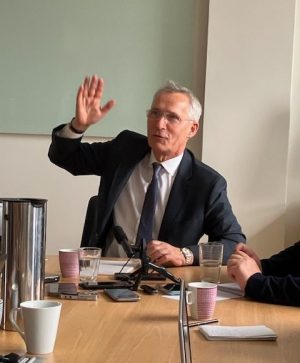
Stoltenberg thus agreed with Mark Rutte, the current NATO secretary general who succeeded Stoltenberg, that Rutte would give Trump all the honour for the fact that NATO allies were actually spending USD 33 billion more than they had before. He did so, which apparently pleased Trump enough that he passed a hand-written note to Stoltenberg that if Stoltenberg could say that the NATO allies had increased defense spending thanks to him, he would probably agree. Stoltenberg did so, and thought “NATO was saved.”
But then the prime minister of Denmark at the time, Lars Løkke Rasmussen, voiced irritation at Trump, claiming that NATO contributions aren’t just about money but also “blood and sacrifice.” Denmark had lost 45 soldiers in Afghanistan, more per capita than the US. Stoltenberg was also irritated, but this time at the Danish leader because he didn’t seem to understand, in Stoltenberg’s view, that he risked putting Trump on the defensive and igniting a new tirade. Trump, however, didn’t react and Stoltenberg quickly declared the meeting over.
That’s the kind of “behind the scenes” accounts that pepper Stoltenberg’s new book and may make it popular outside of Norway as well. Stoltenberg also writes about friction with French President Emmanuel Macron, how he once told Turkey’s foreign minister to “shut up” during critical negotiations over Sweden’s then-pending membership in NATO, and how some of Trump’s staff over the years apologized to Stoltenberg for Trump’s erratic behaviour during meetings. He also writes that the Russian foreign minister Lavrov, with whom he’d had good relations earlier, suddenly became “a bully,” and how dealing with Turkish and Hungarian leaders was often challenging.
It’s not easy handling the huge egos of many country’a leaders, and Stoltenberg writes openly about how NATO’s 20 years in Afghanistan ended in defeat for the alliance. He acknowledges that promises given to take care of young Afghans who helped NATO weren’t kept. And he believes Russia’s full-scale invasion of Ukraine could have been avoided if NATO had done more to help Ukraine when Russia “annexed” Crimea.
“At best it could have made Ukraine stronger and hindered the invasion,” Stoltenberg writes, “but in all the years from 2014 to 2022, there was strong opposition to giving any major military assistance to Ukraine for fear that would provoke the Russians.” Instead, “we didn’t offer enough help and Russia invaded.”
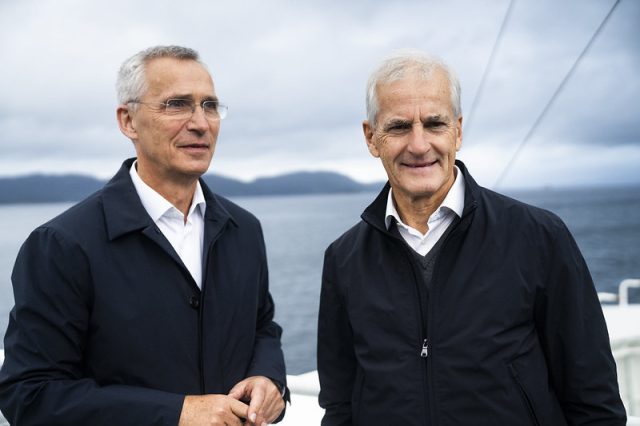
After finally being allowed to leave NATO late last year, Stoltenberg had looked forward to writing his book and then taking on the job he’d been offered to lead the Munich Security Conference. But then his old friend and current Norwegian prime minister, Jonas Gahr Støre, asked him in late January be Norway’s finance minister in a new Labour Party government. Stoltenberg, who had earlier been Støre’s boss, quickly accepted, Labour’s popularity soared and they won last month’s election. Stoltenberg found time to finish his book, with Madsen’s help, while also attending the premiers of a film and TV series about his NATO years called “Facing War.”
There’s been some concern in Norway that Stoltenberg’s openness and frankness in the book will anger not only Trump but some of the other NATO leaders mentioned throughout it. Asked whether he had cleared his descriptions of meetings with Trump in advance, Stoltenberg told DN simply “no.”
Trump invited Stoltenberg to his inauguration last January and has spoken highly of the former NATO leader, but if he disagrees with Stoltenberg’s accounts, it could lead to Trump’s trademark retaliation against anyone he views as an opponent. There’s still no agreement between Norway and the US on tariffs, currently set higher than the EU’s, either.
NewsinEnglish.no/Nina Berglund
