

Norway’s krone strengthed against the US dollar again on Tuesday, after ongoing concern over the US’ unpredictable president. Norwegians woke up to their strongest currency in three years, while debate is flying over whether Norway’s huge sovereign wealth fund known as the Oil Fund should also move some of its investing away from the US.
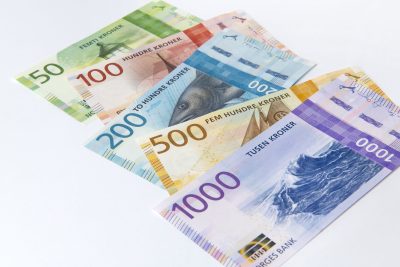
It wasn’t too long ago, in 2024, that one US dollar cost more than 11 Norwegian kroner. A US dollar also cost more than NOK 10 through most of last year, but late last week, after US President Donald Trump shook everyone up at the World Economic Forum in Davos, his country’s dollar fell below NOK 10. On Monday it was down to NOK 9.80 and by Tuesday evening, a dollar cost NOK 9.63. The Norwegian krone also strenthened against the euro.
The new NOK-USD exchange rates is perhaps most noteworthy, given all the years when a US dollar only cost around NOK 6-8, but they may mark a new round of uncertainty around the direction and safety of the United States of America. Norwegian commentators including state broadcaster NRK’s Cecilie Langum Becker were noting on Tuesday that “Sell America,” a characteristic used by analysts when investors pull money out of the the USA, is back. Currency traders don’t seem to trust Trump, after he threatened a US ally’s sovereignty and suddenly imposed new punitive tariffs before changing his mind again. All that can be bad for business and national economies.
“When the world becomes uneasy, money usually streams towards the US,” Becker wrote on NRK’s website after the dollar weakened against Norway’s currency and many others. “Now the opposite is happening.” America doesn’t seem as safe as it did, and its role in the world has come under question.
A weaker dollar can also push US interest rates up again, something Trump has been trying to bring down by exerting pressure on the US’ Federal Reserve Bank. It’s supposed to be independent of political pressure, so Trump’s recent campaign against Fed Chairman Jerome Powell is also unpopular among traders and investors.
Becker also noted how precious metals like silver, gold and platinum have also shot up in price and US stock markets sagged after Trump’s dramatic public statements last week. That has led to debate in Norway over whether Norway’s Oil Fund, long among the largest in the world, should re-think its investment strategy.
Around half of the Oil Fund’s stock portfolio is invested in American companies, which may lose their favour if traders continue to “Sell America.” The Oil Fund’s total investment in the US is currently worth around 12,500-billion kroner, a dizzying amount that can be risky, warned Greens Party leader Arild Hermstad this week. He asked Finance Minister Jens Stoltenberg to evaluate selling some of the US holdings, since the finance ministry is ultimately responsible for the Oil Fund.
Others have also proposed a Norwegian sell-off of American investments, including Kyrre Knudsen, chief economist at Sparebank 1 Sør-Norge, one of Norway’s major banks, who thinks it could give Norway some power over Trump. He acknowledged that it could politicize the fund, but told newspaper Dagens Næringsliv (DN) over the weekend that “it’s Trump who’s politicizing everything. We should absolutely have a debate over how we invest in the Oil Fund.”
Several others veto the idea, not least several other Norwegian economists and government officials themselves. They warn it could backfire, just like the recent debate over whether the Oil Fund should sell off investments in companies doing business with Israel. “I disagree strongly that (using the Oil Fund) is a means (of asserting Norway’s wealth).” Kjersti Haugland, chief economist at DNB Carnegie, told DN. Foreign Minister Espen Barth Eide has also discouraged used of the Oil Fund for political means, stressing how it’s meant to ensure pensions for future generations of Norwegians when oil revenues abate, and therefore should not subject itself to political risk.
NewsinEnglish.no/Nina Berglund
