

Norway’s new queen, the former Mette-Marit Tjessem Høiby, is avoiding more questions about her ties to the late financier and convicted sex offender Jeffrey Epstein. That’s left her widely viewed as undermining, with the help of her friend Prime Minister Jonas Gahr Støre, a new state commission charged with investigating Norwegians’ involvement with Epstein.
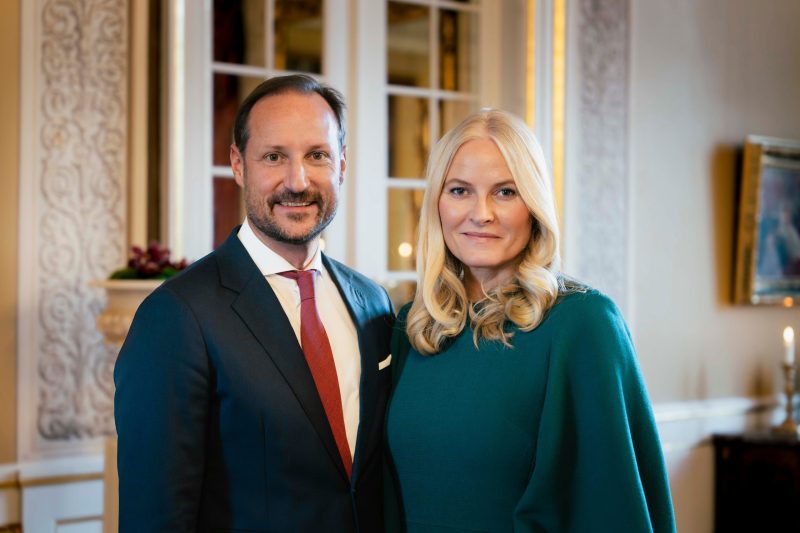
“I think this is extremely inappropriate, and very strange, ” one of the many members of the Norwegian Parliament’s disciplinary committee, Julie Estdahl Stuestøl of the Greens Party, told newspaper Dagens Næringsliv (DN). It was the committee that set up the commission to investigate Norwegians’ relations to Epstein that were revealed with the release of the so-called Epstein files earlier this year.
The files revealed how Mette-Marit had met with Epstein several times, corresponded with him and even stayed at his estate in Florida while she was crown princess. So had several other prominent Norwegians who were involved with Epstein and accepted favours from him.
In October the state commission, led by DN‘s former editor-in-chief Amund Djuve, asked to speak with Mette-Marit about her own involvement with Epstein. Officials at the Royal Palace hesitated, and instead contacted the Office of the Prime Minister. Current Prime Minister Støre has long been a personal friend of Mette-Marit, and his office responded that she should not meet with the commission.

Doing so, claimed palace officials in their response to the commission, would run counter to “long tradition and raise questions about fundamental division of power.” Their negative response on behalf of the queen, first reported by Norwegian Broadcasting (NRK), was pegged to the “evaluation” by the prime minister’s office, and the palace officials declined to set up a meeting between Queen Mette-Marit and the commission.
Støre himself confirmed to NRK this week that she would not participate in the commission’s investigation. That surprised various members of the Parliament’s committee that set up the commission. MP Hege Bae Nyholt of the Reds Party told NRK she found it “disturbing” that the government “has chosen to advise a central witness against delivering a clarification to an investigative commission formed by the Parliament.”
Djuve was also clearly disappointed and told DN that he regretted the “conclusion” that allows the queen to avoid questioning. “We think that a conversation with the queen would be quite valuable for the commission’s work,” Djuve wrote in a message to DN. He also told NRK on its national nightly news program that he’s not sure the decision is correct.
Several Members of Parliament who set up the commission aren’t sure either. The leader of Parliament’s disciplinary committee, Per-Willy Amundsen of the conservative Progress Party, called Prime Minister Støre’s comments “unwise” and surprising. “It’s difficult to see any good reason for the prime minister to involve himself personally,” Amundsen told DN. Veteran MP Lars Haltbrekken of the Socialist Left party (SV) also said he was “not pleased” that both the Office of the Prime Minister and Støre himself had involved themselves.
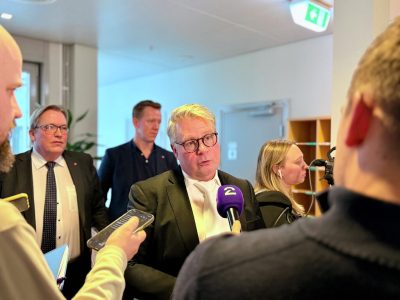
MP Stuesøl of the Greens, meanwhile, noted that “the Parliament has decided that the commission shall follow all leads,” and given the commission what’s needed to do that. “Now the Office of the Prime Minister has made this a political issue, and thus undermines the mandate of the commission and the Parliament’s decision in a case they should have stayed away from.” Stuesøl claimed that both the prime minister’s office and the Labour Party have “misunderstood” the commission’s mandate and its request to the queen.
A professor at the University of Oslo, Eivind Smith, told DN that when the prime minister’s office makes such an evaluation, it can be viewed as a message to palace officials that they shouldn’t dismiss. Smith wasn’t surprised that the palace sought advice from the prime minister, which led to involvement by the justice ministry as well.
The prime minister’s office pointed to a section of Norway’s constitution that’s hardly ever been used, Smith noted. It says that the Parliament can all but order anyone to meet up when called in, with the exception of royals. That doesn’t hinder a queen from meeting under her own free will, but it can give her a reason not to meet. Smith also noted that it shows how the Parliament can control the government, but not the royals.
Meanwhile, King Haakon himself has also been in the news this week over his role in protecting his stepson Marius Borg Høiby, Queen Mette-Marit’s troubled son from an earlier relationship. The former crown prince had been informed in advance that Høiby was about to be arrested on Sunday August 4, 2024 for assaulting an earlier girlfriend and vandalizing her apartment. The crown prince at the time arranged for Høiby to turn himself over to police, instead of being arrested at the house he’d been allowed to use on the royal couple’s estate west of Oslo.
Newspaper Aftenposten has reported that no one will say who informed Crown Prince Haakon at the time of the impending arrest. World of it, however, had already circulated throughout the police, its special intelligence division PST, the justice ministry and the Office of the Prime Minister. Høiby eventually met police on the grounds of his childhood school, after his mother had reportedly cleaned his home before police arrived.
After a lengthy court trial, Høiby was found guilty of two rapes, other assaults and violations of restraining orders, and sentenced to four years in prison. He has appealed but remains in custody, now back at the house on the royal estate at Skaugum west of Oslo. His defense attorney claimed the 29-year-old who holds no college degree and has worked only sporadically now has a job as a carpenter. He’ll be allowed to work while still wearing an electronic cuff that restricts his movements.
NewsinEnglish.no/Nina Berglund
