

Norwegian Finance Minister Jens Stoltenberg stressed once again on Thursday that Norway’s huge sovereign wealth fund known as the Oil Fund isn’t a political tool. After months of controversy over some of its investments, however, Stoltenberg agrees that it’s time to review the fund’s ethical guidelines for investing.
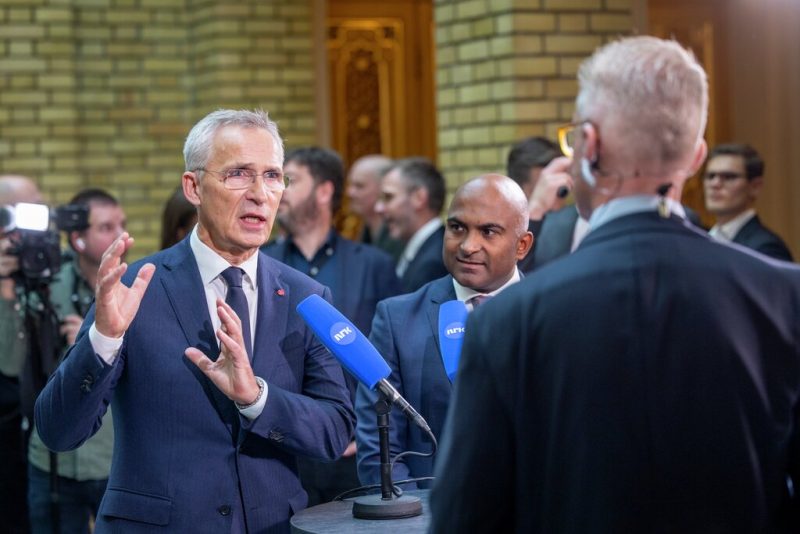
Speaking at a special session of Parliament that initially was closed to everyone except Members of Parliament, Stoltenberg also stressed how the Oil Fund’s guidelines for investing are directed at companies, not countries. The fund and Norway itself have nonetheless come under lots of criticism this year over some of the fund’s investments, especially those in Israeli companies.
The fund’s managers have recently sold off stakes in several of those companies, when they were found to have had direct ties to Israel’s war on Gaza. While that placated many opposed to such investments, because they arguably were helping to fund the war on Gaza, the sales also sparked criticism from supporters of Israel, including US senators.
Stoltenberg consistently refers to the fund as Pensjonsfondet, the state pension fund that invests in companies and real estate abroad, not in Norway. The fund was set up to save most of the profits from Norway’s offshore oil industry for future generations, and prevent them from overheating Norway’s economy. That’s why the fund quickly became known as the “Oil Fund” when it was first established in the late 1990s.
It has grown enormously ever since, helped make Norway a wealthy country and ensured pensions for Norwegians for years to come. The government is allowed to withdraw only up to 3 percent of its value every year, to help pad state budgets and avoid any budget deficits.
A set of ethical guidelines was also set up for the fund’s managers, and have been overseen by a special non-partisan ethics council ever since. If a company is found to have violated guidelines on anything from labour practice to human rights or environmental concerns, managers can be asked to sell off investment stakes but always quietly so as not to upset markets.
A total of 180 companies around the world are currently locked out of the fund, which has stakes in nearly 8,500 companies worldwide. Now Stoltenberg thinks the ethical guidelines themselves, set up nearly 30 years ago, need a review.
“I think the time is right to go through the (fund’s) ethical framework and practice, in order to secure a good balance between important considerations,” Stoltenberg said. Such a review could result in more investment pull-outs, he said, or hasten control or even raise the barrier in other cases.
Given all the current wars and unease in the world, he said, some companies in which the fund has invested can suddenly be contributing to violations of the rule of law that weren’t earlier. That’s what has concerned many Members of Parliament, with some calling for stricter guidelines. All agree, meanwhile, that investing in stockmarkets around the world has been profitable so far.
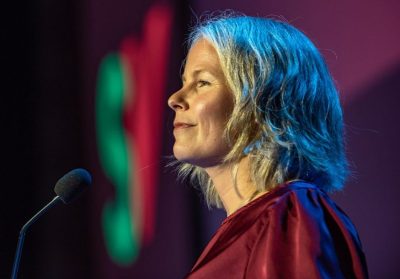
The Socialist Left Party (SV), the Greens, the Reds and the non-socialist Liberal Party all want stricter guidelines for Oil Fund investments. They also want a rundown of the ethical evaluations that have been made to date, and worry that the fund’s ethics council works too slowly simply because of all the companies that need to be monitored.
“The finance minister (Stoltenberg represents Norway’s Labour Party) agrees with us in words, but now we want to see action,” SV leader Kirsti Bergstø told Norwegian Broadcasting (NRK) after the meeting on Thursday. She said Stoltenberg relies on the ethics council, “but we don’t think the system functions. It’s too slow.”
Arild Hermstad, leader of the Greens Party, agreed. “The gruesome revelations that Norway profited on the bombing of Palestinian children shows that major changes are needed in how the fund functions,” he told NRK.
Even the leader of the council, Svein Richard Brandtzæg, has admitted to newspaper Dagens Næringsliv (DN) that the council “isn’t rigged for extreme situations like Gaza. We have to set priorities and aren’t in a position to have a full overview over the entire portfolio at any given time.”
The Conservative Party, meanwhile, was positive towards Stoltenberg’s proposal for a review of the fund and its ethics systems. Its MP Henrik Asheim said it was most important to ensure that Norway’s interests and “our fellow savings account” will be best for coming generations.” There were few details so far on when and how the review would get underway as the new session of Parliament begins.
NewsinEnglish.no/Nina Berglund
