

Børge Brende was Norway’s foreign minister before he became head of the World Economic Forum (WEF) in Geneva. On Thursday he resigned his highly paid post following revelations of his earlier contact with the late financier and convicted sex offender Jeffrey Epstein.
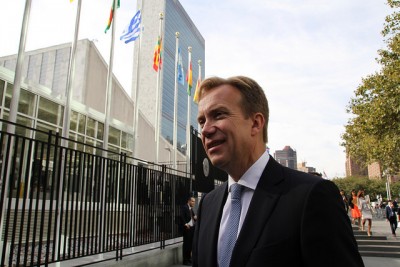
“This is a dramatic fall for Børge Brende,” said Sigurd Falkenberg Mikkelsen, foreign editor at Norwegian Broadcasting (NRK). Even though a statement from the World Economic Forum indicates Brende chose to resign after more than eight years as its secretary general, “there’s no doubt the Epstein case has hit him hard,” Mikkelsen said.
Mikkelsen noted how many people who had close contact with Epstein, like Brende had, “are either on the way out of their positions or under enormous pressure.” There were also conflicts between Brende and WEF’s founder Klaus Schwab, who claims he was entirely unaware of Brende’s ties to Epstein in 2018 and 2019. Brende disputed that. Epstein was arrested again in July 2019 on more charges of sexual assault and human trafficking and found dead in his jail cell on August 10, 2019.
The carefully worded press release from the WEF announcing Brende’s resignation makes no mention of Brende’s contact with Epstein, or even mentions Epstein’s name. Brende is quoted in it, however, as saying that he believes “now is the right moment for the Forum to continue its important work without distractions.”
Brende, a high-ranking member of Norway’s Conservative Party and former leader of the Norwegian Red Cross, served as as Member of Parliament and had been both climate minister and trade minister in earlier conservative coalition governments before becoming foreign minister from 2013 to 2017. When the Conservatives (Høyre) won re-election in 2017, however, Brende opted against continuing as foreign minister in order to take the much higher-paying position as WEF’s president and chief executive. He’d earlier held administrative posts at WEF but then landed the top job at the organization that annually organizes one of the world’s most high-level gatherings in January.
It was just a few weeks ago that Brende was interviewing presidents, prime ministers and other leaders in the business world at the annual WEF meeting in Davos. When the US Department of Justice released another huge batch of documents in the so-called Epstein files (gathered during the federal investigation into Epstein’s alleged crimes) in early February, Brende’s name was among those popping up. As for so many others, it was highly embarrassing and indicated how Brende hadn’t been entirely truthful about his contact with Epstein, all of which began after he’d taken over the top post at WEF.
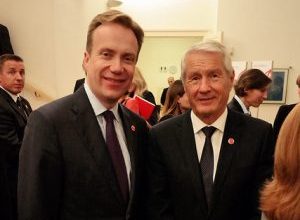
That prompted WEF to launch an immediate independent investigation of Brende’s actual contact with Epstein. Brende had earlier told Oslo newspaper Aftenposten in November that he hadn’t had anything to do with Epstein. Newspaper Adresseavisen in Trondheim (where Brende grew up and had been a local politician) ended up uncovering extensive contact in the Epstein files: More than 100 text messages plus emails and photos of Brende visiting Epstein’s home in New York along with former and now disgraced Norwegian diplomat Terje Rød-Larsen and former aide to US President Donald Trump, Steve Bannon.
There’s no question Brende had far more contact with Epstein than he’d wanted to admit to publicly. The emails also have a very friendly tone, with Brende referring to Epstein as “my friend,” for example, when thanking him for a dinner in March 2018.
One email in particular caused concern when Brende reacted positively to Epstein’s proposal that the WEF could replace the United Nations, with Brende writing that “we need … new global architecture” and that “the World Economic Forum (Davos) is in a unique position,” both publicly and privately.
The WEF’s own independent investigation of Brende’s contact with Epstein has since been completed, according to the foundation’s press release. It refers to the investigation as “an independent review conducted by outside counsel” and merely notes that its “findings stated that there were no additional concerns beyound what has been previously disclosed.”
That seems to have remained enough, though, to end Brende’s career at the WEF, with its leaders stating that they “respect his decision to step down.” They expressed “sincere appreciation” for Brende’s “significant contributions to the World Economic Forum.”
Brende earned the equivalent of NOK 20 million a year as head of WEF. Newspaper Dagens Næringsliv (DN) has reported that his pay and benefit package are also under probe by Swiss authorities, citing local newspaper NZZ.
Brende also faces an open hearing on Norwegian officials’ own ties to Epstein before the Parliament’s disciplinary committee. All foreign ministers over the past 20 years are expected to be called in, Brende included, even though his contact with Epstein didn’t begin until after he’d left Norwegian government and Norway.
He has apologized for not investigating Epstein’s background further. He has said he was introduced to Epstein by Rød-Larsen (the former Norwegian diplomat who had years of close contact with Epstein) and apologized to DN for not telling the truth about his own contact with Epstein when he’d been contacted by yet another Norwegian newspaper, Aftenposten.
“I regret and am sorry that I wasn’t more open about three dinners and follow-up text messages and emails (with Epstein) when Aftenposten asked about it,” Brende told DN. “I have felt great discomfort over being tied to Jeffrey Epstein. I was afraid the contact would be presented as something other than what it was. That’s the honest answer.”
Brende, age 60, has also subsequently referred to Epstein as “a monster.” His professional plans remain unclear.
NewsinEnglish.no/Nina Berglund
