

Norwegians from Kirkenes in the north to Kristiansand in the south launched sympathy strikes and demonstrations on Monday to preserve Posten, the country’s postal service. Among them were leaders of the political parties that normally support Norway’s Labour government, but decry its proposal that will further cut post delivery and thousands of jobs.
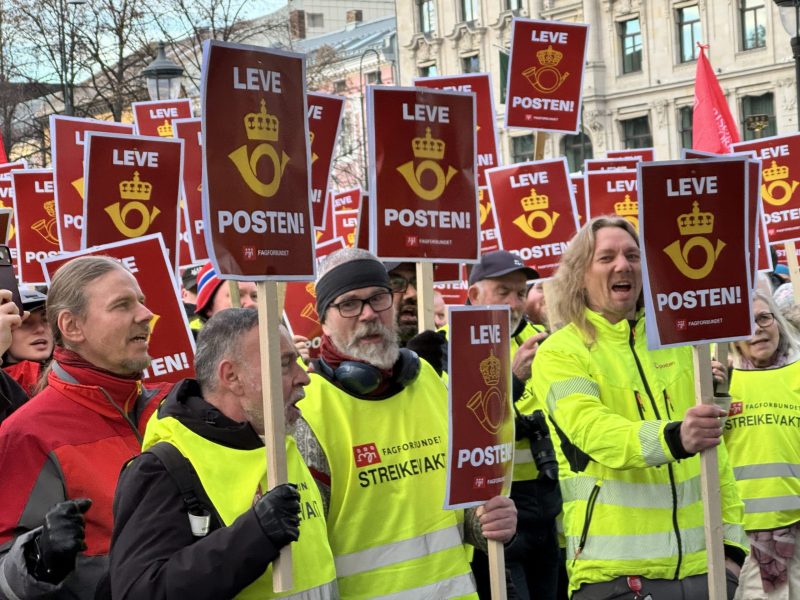
“Leve Posten” (Long live Posten), chanted demonstrators outside the Norwegian Parliament in Oslo. They’ve been protesting for weeks over Labour’s state budget proposal for Posten. It would, in short, cut postal service to just one delivery a week. It would also phase out an agreement in which Posten delivers newspapers and other printed material in outlying areas of the country that don’t have agreements with commercial delivery firms.
The proposed budget cuts follow those that already have shut down most traditional post offices in Norway and cut delivery to just two- or three days a week. Posten, once regarded as having highly reliable service, has become a shadow of its former self, and now faces having to lay off 2,000 of its remaining 3,000 employees.
That’s prompted the nationwide labour federation representing postal workers, Fagforbundet, to call the political strike against its own preferred Labour government for the first time ever. A “political strike” differs from general strikes: It’s short and aimed at directly influencing a political decision.

In this case, the Labour Party is being harshly criticized not only by labour union members who normally vote for Labour but also by the four political parties that generally support Labour’s minority government and give it a majority in Parliament. The leaders of the Reds, Center and Socialist Left parties were among those speaking at the rally outside Parliament Monday afternoon.
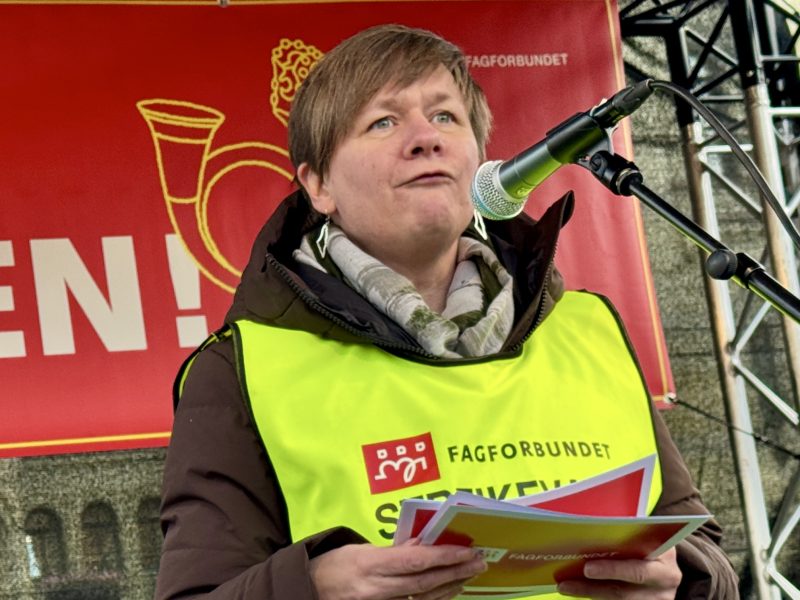
“The Labour Party must listen to us now,” exclaimed Helene Harsvik Skeibrok, leader of Fagforbundet and among the first to speak on Monday. She stressed Posten’s own motto of how “no one knows Norway better” than postal carriers for Posten. She accused the government that her federation normally supports of backing a “brutal culture” of dismantling a postal service that has “served Norway well for more than 400 years.”
The leaders of both the Reds and the Center parties followed up on that, with Reds leader Marie Sneve Martinussen promising to do everything they can during state budget negotiations to halt the proposed cuts. Center Party leader Trygve Slagsvold Vedum also vowed a “mobilization” to retain Posten in at least its current form. Vedum is known for strongly supporting outlying areas of Norway where regular postal delivery is especially important.
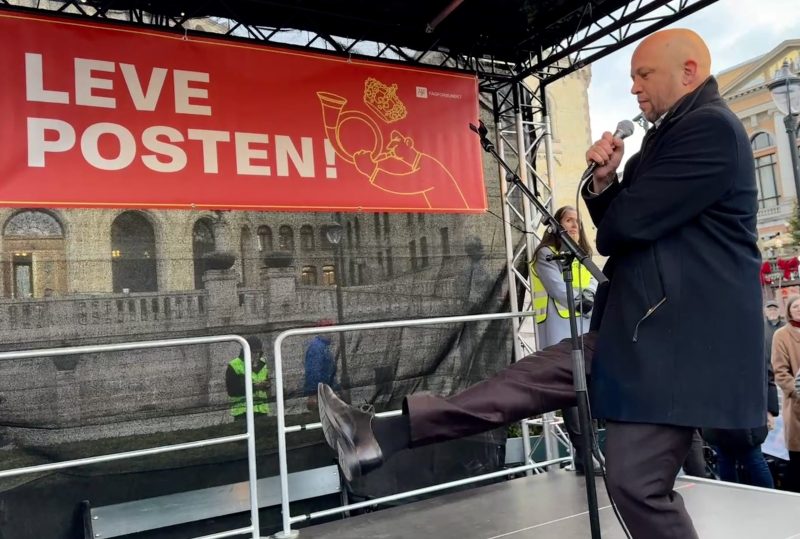
Labour is currently in state budget negotiations with its so-called “partners” in Parliament and has stressed how Posten must reorganize and cut back on services in the digital age. “We understand that,” Martinussen has said, “but not everyone uses or can use digital services. We can’t tear down Posten and then find out that we have a huge hole in our social structure.”
Many opponents of the government’s proposed postal service cuts have also claimed that Posten plays an important role in national preparedness and even defense. Postal carriers know where people live, especially elderly and those who may need extra help in a national crisis.

One proposal to fend off the looming cuts of 2,000 jobs and workers is to transform their duties into what been called a new national “Door-to-door service.” It’s aimed at ringing the doorbells of all Norwegians aged 75 and over at least once a week. Postal workers can then distribute important information from local authorities on everything from where they can get flu shots to local social activities, and basically check on residents who otherwise don’t get around much anymore. A pilot project on such contact with the elderly has shown promising results.
The new leader of Norway’s largest labour federation, LO, also addressed the crowd in Oslo and made it clear LO was unhappy with the Labour government. Kine Asper Vistnes urged the government “to come with a better proposal,” calling it “unwise and not future-oriented” to simply cut service and dismiss two-thirds of Norway’s postal employees.
Similar rallies were staged in Stavanger, Tromsø, Bergen, Trondheim, Fredrikstad, Kristiansand, Egersund, Halden and Tønsberg on Monday, with short strikes and smaller events also held elsewhere around the country. In Oslo, public transport workers for the metro and tram systems also suspended service for 15 minutes at 3pm.
Even a branch of the labour movement’s opponent in strike situations, the large employers’ organization NHO, supports the postal workers and has publicly criticized the looming postal cuts. NHO’s industrial unit, Norsk Industri, has warned that the cuts “would weaken both preparedness and democratic access to information,” along with some of its member companies active in the printing- and paper industries.
Norway’s national retirees’ organization, Pensjonistforbundet, also objects to the postal cut proposals, arguing that the elderly will be hit hardest. Many of its members “have lower mobility and haven’t mastered digital services,” claims the federation’s leader Erna Ansnes. “Regular delivery of letters, newspapers and other printed information is important.”
State budget negotiations between Labour and its support parties are underway in Parliament. The goal is to settle on a proposal that would then have majority support in Parliament by the end of this week.
NewsinEnglish.no/Nina Berglund
