

Teenagers’ tears and strong local protests didn’t stop a majority of Innlandet county politicians from deciding on Wednesday to shut down six schools and transfer their students to bigger schools in other towns. More such consolidations are expected in many other areas around Norway, given predictions that there will be more elderly to care for than youngsters in the years ahead, especially in rural areas.
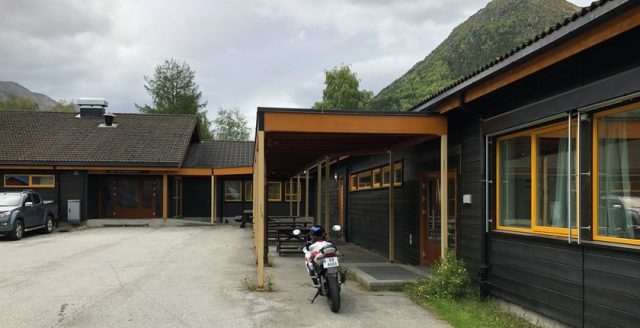
Debate over school closures is already raging elsewhere around Norway, from Drammen outside Oslo to Gudbrandsdalen farther north and beyond. The large county of Innlandet suddenly became what some commentators called the “epicenter” of the debate during the past few weeks. It’s bound to spread and cause just as much anguish as it did at Wednesday’s meeting of the Innlandet county council in Hamar.
Even those voting in favour of the school restructuring were distressed and claimed to be deeply affected by recent massive protests from students, their parents and many others in the municipalities of Dokka and Skarnes, which will lose their high schools, and in Flisa, Sønsterud, Dombås and Lom.
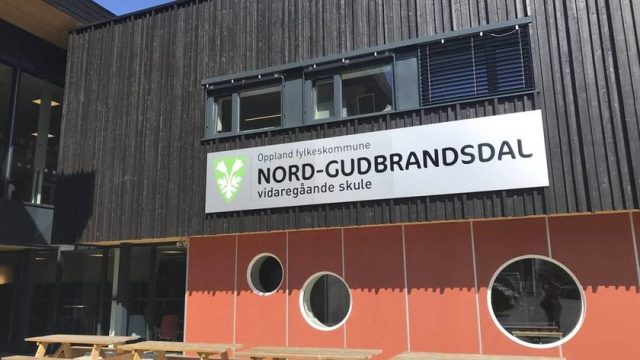
Flisa’s high school is now set to be merged with Solør Videregående in Våler, while the high schools in Dombås and Lom will be merged into the remaining Nord-Gudbrandsdal vidaregåande skule in Otta. The elementary and intermediate schools in Sønsterud, which already lost its high shool several years ago, will be merged into the school complex in Våler.
“We have to take steps to build our communities in a new way,” said Hans Kristian Enge of the Labour Party before the final decision was made. He and Labour colleague Thomas Breen have been the targets of perhaps the most criticism, since their Labour Party initially wanted to maintain local schools as they are. Labour ultimately teamed with the Conservatives and Greens parties, though, to form an unusual majority on Innlandet’s county council.
The final decision Wednesday was met with more tears and protests from high school students who will need to start commuting from their home towns or move into small student apartments where their new high schools are located. “This is very disappointing,” current Lom student Ada Biko Vaagaasar told state broadcaster NRK after the county officials’ vote. Even though she and many of her friends had come to expect the shut-down decision, they were very upset: “We don’t feel good about this at all now, not at all,” said another disappointed Lom student, Mya Hånsar.
High school students in Dokka, who had mounted torchlit demonstrations over their school’s threatened closure, will soon need to commute to another high school in Gjøvik. “This is just terrible, I’m so sad about this,” Sunniva Ludvigsen told NRK. “I’ve cried a lot today.” Fabiola Ledo, leader of the students’ county organization in Innlandet, stressed that “school is more than just school, it’s where you have your friends, create your future.” He worries that they’re losing that now.
County Mayor Breen of Labour said he’s mostly relieved that a decision was made that he thinks is “future-oriented.” He noted, however, that “we understand this is painful for many.” That pain was clearly described in a letter to the editor of newspaper Klassekampen on Wednesday from a resident of Sjåk, not far from Lom: “This is all about youngsters, who’ll be forced to sit more than three hours on a bus every day,” wrote Stian Solheim. “This is about youngsters who may need to move away from mom and dad before they want to … it’s about families who may feel forced to move from their homes … it’s about the destruction of living strong local communities that are an important part of Norway’s heritage and identity.”
Others worry that without local schools, small communities already facing depopulation will have a hard time attracting new residents, especially families with small children. Joakim Ekseth of the Conservative Party nonetheless called the school closures “important” and stressed that the county “now has a plan for what we’ll do moving forward. Now we can start the job.” He, too, said that he was sorry about all the negative reaction and claimed he also understood it. Both he and Conservatives colleague Hanne Velure agreed the issue was difficult: “No one thinks it’s fun to shut down schools.”

The rural-oriented Center Party’s members on the county council were firmly opposed to the shutdowns that are ironically occurring while Center currently shares state government power with Labour. Decisions regarding high schools, however, are made at the local county level where Labour, the Conservatives and the Greens formed a 52 percent majority.
Center’s Aud Hove said she was “incredibly disappointed,” claiming that 700 youngsters will now lose their local school, probably from the beginning of the 2025 school year. She and others also complained about the process, during which administrative officials allegedly played a roled in pushing through the proposal. Justice Minister Emilie Enger Mehl of the Center Party, who was reprimanded this week by Prime Minister Jonas Gahr Støre over her personal involvement in the issue, said the decision “will damage generations ahead. Youngsters will be forced to move away from home when they’re just 15- or 16-years-old or spend up to four hours a day commuting on a bus.”
At issue, though, are demographics: Low birth rates, especially in rural areas, indicate there will be 11,000 fewer youngsters aged 13-15 in Norway by 2030. Norway’s state statistics bureau SSB predicts as many as 30,000 fewer Norwegians aged 13-15 by 2040, reducing the need for both intermediate- and high schools.
The organization representing Norwegian municipalities, KS, expects that school restructuring will thus continue to be a troublesome issue because of declines in the numbers of children and youngsters in all regions. More counties will face the same problems: The declines in school-age children and youth are expected to be the biggest in the western counties of Vestland and Rogaland, and the smallest in Oslo and its surrounding county of Akershus.
At the same time, more and more resources will be needed for elder care, especially in rural areas. In Innlandet alone, the number of high-school aged Norwegians has already declined by nearly 3,500 since 2013, reported newspaper Aftenposten on Wednesday. The counties of Buskerud and Østfold are also grappling with steep declines.
“And births continue to sink,” said Innlandet’s mayor Breen during a recent county council meeting. There won’t be a need for all the local schools, while there will be more need for nursing homes. The council majority thus thinks they “landed on a comprehensive solution that we believe is sensible over time.” It’s just also very unpopular right now.
NewsinEnglish.no/Nina Berglund
