

Norway’s state-owned oil and energy company Equinor delivered strong earnings last week but has been facing major challenges to some of its biggest projects lately. It ended up prevailing at home this week and hopes to do so in the US as well, especially after getting some help from the former NATO chief Jens Stoltenberg.

Equinor officials could heave a sigh of relief on Wednesday that their huge Melkøya gas-processing facility in Northern Norway can still be powered by electricity from land. Various proposals to halt the electrification project, because of its cost and all the power Melkøya will require, were voted down in Parliament Tuesday evening.
While 75 Members of Parliament wanted the government to come up with an alternative to the electrification, which is strongly opposed by many residents of Northern Norway and the native Sami population, another 94 did not. The vote was much closer on another proposal to simply stop construction of the electrification infrastructure that’s already underway, with 85 against and 84 in favour.
It all means that work on electrifying Equinor’s Melkøya facility off Hammerfest will continue, as will a similar project for the offshore Haltenbanken project off Trøndelag. The electrification is aimed at lowering carbon emissions from both, but it comes at a high price and usually demands construction of new sources of electricity including large power masts and wind turbines. The turbines are especially controversial, because they mar the landscape and can disturb the Samis’ reindeer grazing in the area. Environmental groups have faced a dilemma because of their desire to both cut emissions and preserve the landscape.
The biggest problem for opponents of the electrification, though, is that construction of new electrical infrastructure to serve Melkøya is already underway. Shutting it down would have incurred major losses and left Equinor in a difficult position. The leader of the climate-oriented Liberal Party, Guri Melby, claimed that withdrawal of Equinor’s licensing for the electrification project would be “irresponsible” at this point in the process. That disappointed other pro-climate parties including the Greens, the Socialist Left and the Reds. The rural-oriented Center Party also objected to the electrification, but because many of its members now fear an electricity deficit in Northern Norway and that sending so much electricity offshore will hinder development on land.
Large businesses like Equinor need predictability, meanwhile, and expect that projects approved by authorities in the areas where the company invests and does business can be carried out. “Our credibility as a reliable land in which to invest would be at risk,” worried Bård Ludvig Thorheim of the Conservative Party, if previously issued licenses were to be revoked. He stressed that the electrification of Melkøya was approved several years ago, and revoking it would “create insecurity” for future investments. “This is an important issue of principle,” Thorheim said.
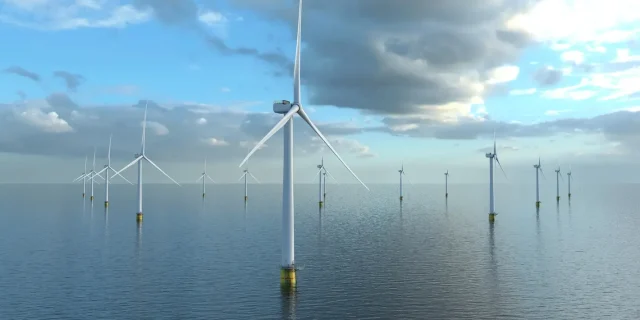
Equinor is also grappling with such an “issue of principle” in the US at present, after the new Trump Administration suddenly ordered a halt to Equinor’s large offshore wind project in waters off New York. Equinor had received a federal lease for what it calls its “Empire Wind” project as far back as 2017. It has also received all necessary federal and state permits since, and construction is underway. Equinor already values the project at around USD 2.5 billion, with Equinor claiming that it’s providing work for more than 1,500 people.
On the night before Norway’s five-day Easter holidays began last month, though, the US Bureau of Ocean Energy Management (BOEM) issued a notice ordering Equinor to “halt all activities” on Empire until BOEM had completed a review of the project. That stunned the company and all those working on Empire, but Equinor is “complying with the order” and took “immediate steps” through Empire officials and its contractors to “initiate suspension of relevant marine activities, ensuring the safety of workers and the environment.”

Give the investment at stake, though, Equinor and its Empire officials are also “engaging with relevant authorities to clarify this matter” and “considering legal remedies,” including appealing the halt order in court. Equinor has stated in its response how the project is being developed “under contract” with the New York State Energy Research and Development Authority “to provide an important new source of electricity for the State of New York. Electricity generated by Empire Wind’s first phase is expected to generate power for 500,000 homes in New York.
Economic analysts have long questioned Equinor’s investment, though, and newspaper Dagens Næringsliv (DN) has called Empire Wind Equinor’s “new turkey.” Norway’s Sparebank1 Markets warned earlier this year that the project could turn into “a new Norwegian industrial scandal” like Equinor’s earlier oil sands project in Alberta and various drilling projects in the US.
Equinor’s management continues to defend the project, but had to disclose its shutdown as a “subsequent event” in its otherwise solid first-quarter report. Equinor earned USD 8.65 billion, which analysts called a “solid” result that was higher than expected. “Equinor is Norway’s most important company in its most important branch (oil and gas),” Kyrre Knudsen, chief economist at Sparebank 1 Sør-Norge, told state broadcaster NRK. “Earning (the equivalent of) nearly NOK 100 billion in three months is a huge amount of money, and it’s important for the stability of Norway that Equinor is robust.”

That can explain why Norway’s new finance minister, the former NATO boss Jens Stoltenberg, has helped try to set up a meeting between Equinor’s CEO Anders Opedal and US President Donald Trump’s economic adviser Kevin Hassett. Stoltenberg met Hassett when he and Prime Minister Jonas Gahr Støre recently had a meeting with Trump at the White House.
Opedal said at his earnings presentation last week that he can never remember being in such “an extraordinary situation” that may wind up in court. The issue has also come up in Congress, where Equinor has received support from several top politicians and Leslie Beyer, who may soon join the Trump Adminstration and report to the cabinet secretary who ordered Empire Wind’s halt, Doug Burgum. DN reported how she agreed during a recent Senate hearing that such an order can send a “dangerous signal” to potential investors and other businesses that need “absolute predtictability in our (the US’) licensing process.”
Several Democratic senators criticized the halt order against Equinor, fearing it can discourage otherwise wanted foreign investment in the US. Republicans backing Trump, who dislikes climate measures, have complained, however, about wind power projects like Empire Wind. DN also reported that Republican Congressman Chris Smith from New Jersey thinks the projects turbines could disrupt radar systems and cause shipping accidents.
NewsinEnglish.no/Nina Berglund
