

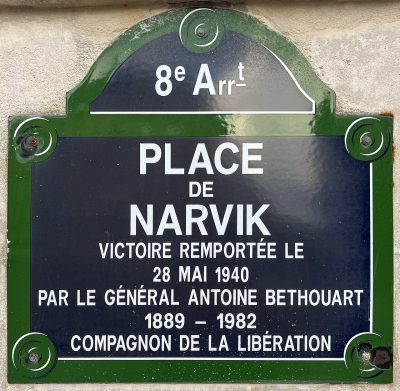
Anti-nuclear activists in Norway are unhappy with their country’s new defense agreement with France, named after the northern Norwegian city where French allies helped fight back against Nazi invaders. Others, though, have been praising the pact and giving Prime Minister Jonas Gahr Støre credit for being “politically brave” in a “completely new security situation.”
The praise comes from Norway’s leading newspapers on both sides of the political spectrum, including Dagens Næringsliv (DN) on the right and Dagsavisen on the left. Støre’s government had initially turned down an invitation from French President Emmanuel Macron to join his new, strengthened French nuclear weapon strategy. It aims to further deter any enemy at a time when reliance on the US and its nuclear weapons has come into question.
Other close NATO allies including Great Britain (which also has nuclear weapons), Germany, the Netherlands, Poland, the Netherlands, Belgium, Greece and, perhaps most importantly, both Sweden and Denmark had already signed on. After futher consideration, Støre quietly conferred with some other parties in the Norwegian Parliament including the Conservatives in opposition, and received favourable feedback.
Now all three Scandinavian countries are included in the French initiative to further ward off any threats from, for example, an increasingly aggessive Russia. It means French nuclear weapons can also hinder attacks on France’s partners, even though Støre maintains that Norway is not being brought under France’s nuclear umbrella.
At a meeting on Friday with members of the Foreign Press Association in Norway, Støre claimed “we are not moving under the nuclear umbrealla,” stressing the “deterrent” factor. “We will sit down with the French and have an exchange over how the deterrent will be handled,” Støre said, while also stressing that “there will be no nuclear weapons placed on Norwegian soil” and that Norway won’t be financing any nuclear weapons purchases.
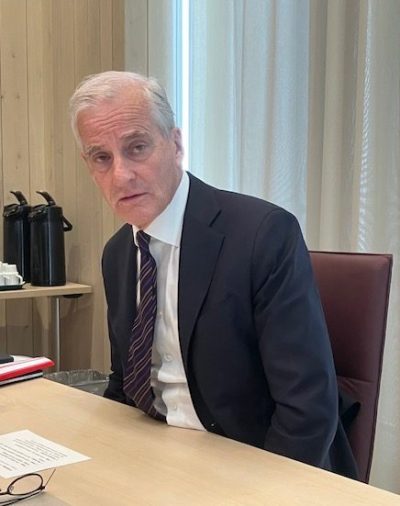
“I have been working all my life on arms control,” Støre said. He and Norway continue to support non-proliferation treaties and nuclear arms reduction and he all but bristled at the suggestion Norway is moving away from its arms control policies. “There are no changes,” he said, in Norway’s nuclear policy, even though he has some critics within his own Labour Party and some think there should have been more public debate, hearings and studies of the agreement with France.
At issue, though, is that the “deep peace” that came after the fall of the Berlin Wall is now all but gone, with an increasingly hostile president in Russia and an unreliable president in the US who has made it clear that Europe must be able to defend itself. Støre views the new defense pact with France, which follows Norway’s bilateral agreements with Great Britain and Germany, as “more and more integration within the NATO system.”
He added that France “has explained this to the US,” and he agrees the new pact will “enhance” non-proliferation. Top Norwegian politicians have long referred to the US as Norway’s “most important” ally. On Friday, Støre called the US “a significant ally,” while promoting the new pact with France.
Reaction is now generally favourable from Norway’s largest political parties, commentators and defense experts. Kristian Skard of newspaper Dagsavisen noted how such a defense pact based on a nuclear deterrent “would have been unthinkable” just a few years ago, but now “we must relate to an entirely new security situation. The brutal war on Ukraine, a threatening Russian regime and a totally unpredictable American president is behind the decision the Norwegian government has made.” He added that all the uncertainty tied to the US’ role in NATO makes it “logical to develop a broader defense cooperation with other European allies.”
His counterparts at the otherwise critical DN agreed, editorializing that “the fact more countries than the USA can offer nuclear security guarantees is, in today’s world, unfortunately good for Norway.”
NewsinEnglish.no/Nina Berglund
