

NEWS ANALYSIS: As security threats rise around the world, Norway continues to cement even closer ties with other NATO allies in Europe. Prime Minister Jonas Gahr Støre was back in Paris this week to sign another new mutual defense agreement with France, even though it set off some concerns over nuclear weapons issues from his own government partners.

They’re already longtime NATO allies, but now France and Norway are even more committed “to come to each other’s aid should the need arise,” according to an official statement. Norway has earlier signed new individual defense pacts with the UK, its Nordic neighbours, Germany, Canada and others. Norway and France have struck what they call a “comprehensive” defense agreement in times of trouble.
It’s all a result of increasing uncertainty over how Russian President Vladimir Putin will react as his unsuccessful war on Ukraine continues to drag on, more than four years after he launched it. With Ukraine continuing to defend itself and launching new drone attacks on Russia, there’s concern that Putin will become desperate and lash out at other neighbours.
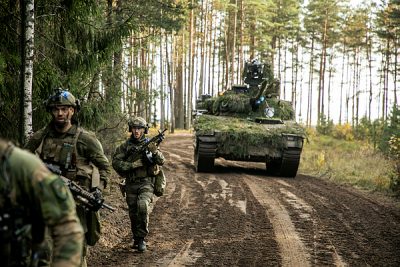
Those concerns have risen in recent weeks after some Ukrainian drones have strayed beyond their targets in Russia, even landing in friendly Baltic states and NATO territory amidst speculation they were jammed by Russia. Last week the foreign ministers of all the Nordic and Baltic countries issued a joint statement “strongly condemning” what they claim is a disinformation campaign and false claims by Russia and Belarus regarding violations in the Nordic-Baltic region.
The NATO ministers cited “Russia’s threats to use force against Latvia and other countries in the region.” They stressed that incidents involving drones entering NATO airspace “are a direct consequence of Russia’s illegal war of aggression against Ukraine,” and suggested Russia is “attempting to divert attention away from its war against Ukraine and intimidate NATO allies.”
Norway’s border to Russia in the far north and close proximity to Russian bases on the nearby Kola Peninsula is also an area of concern, especially given overland access and all the Russian naval traffic in the area. The Kirkenes-based Barents Observer (external link) continues to cover the Russian threat on an ongoing basis, with the Ukrainian ambassador to Norway claiming this week that Kirkenes itself is standing “on the front line.” He called the far northeastern Norwegian city “the main watchtower of the democratic world in the north.”
On top of all this come threats from US President Donald Trump, who is once again angry that Norway, along with other NATO allies, didn’t support his grab for Greenland and don’t support his new war on Iran. Trump has rejected their reminders that NATO is a defense alliance, not one on the offense. Trump has already cut off aid to Ukraine, is pulling US troops out of Europe and continually bashing his NATO allies for not investing enough in defense, even though most all have met or even exceeded much higher defense spending goals.
Trump’s foreign minister Marco Rubio told NATO allies at a recent meeting in Sweden that Trump is “very disappointed” in them. Many are just as disappointed in Trump, if not outraged, even though few are as brave as Canada in challenging the US president. Norway’s Støre still called the US “Norway’s most important ally” while in Paris on Wednesday, but was also clear that’s it’s just as important to be forging stronger ties “with the European allies that are most important in terms of safeguarding our security.”
Støre stressed at the outset that they are facing “the most serious security situation since the Second World War.” His government is thus “pursuing a hedging strategy, aimed at reinforcing the foundation that underpins Norwegian security.” Norway and France were among NATO’s founding members in 1949 and Støre called that membership “essential to our national security.” Now Norway is keen to work even more closely with individual and cooperative NATO allies who share Norway’s values.
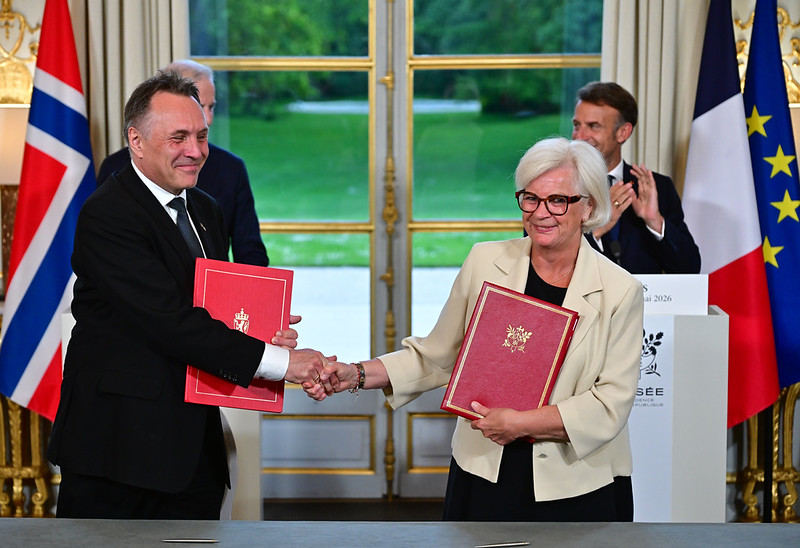
The new so-called “Narvik Agreement” with France is named after the northern city in Norway that was attacked at the outset of World War II and at the forefront of resistance to German occupation. That resistance was formed, according to the prime minister’s office, when the two occupied countries “joined forces to secure the allies’ first victory during World War II.” French soldiers on skis joined British and Norwegians in fending off invading Nazi German forces.
France also remains second among NATO allies only to the UK in sailing the most extensively in the north. “The (new) agreement reinforces our cooperation through concrete structures, plans, exercises and prepositioning of equipment,” Støre said, “and will enable us to mount a swift and coordinated response when it’s really needed.”
The new pact also calls for closer cooperation on hybrid warfare, maritime security, space cooperation, cyber security, support for Urkaine and defense industry cooperation. Støre claims it “will bring new momentum to our cooperation.”
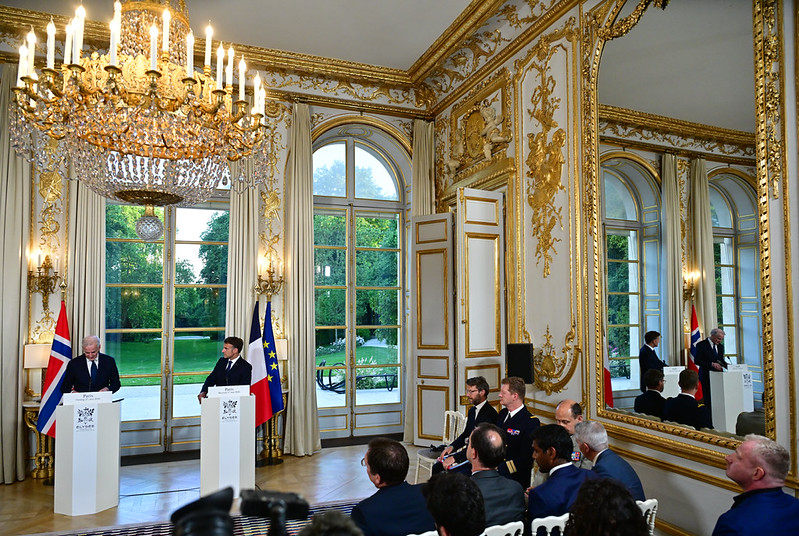
It also brings Norway, though, into what’s been called “nuclear deterrence,” launched by Macron earlier this year to use nuclear weapons as a means of deterring a nuclear war. That’s controversial in the staunchly anti-nuclear-weapon Norway. Kirsti Bergstø, leader of the Socialist Left party (SV) that’s a partner of Støre’s Labour Party government, is not pleased that Støre has brought Norway into such an effort.
“To think that more nuclear weapons and reliance on nuclear weapons is something Norway’s security can rest on is an historic mistake,” Bergstø said. “The world needs fewer nuclear weapons, not more.” France is one of only nine countries in the world with nuclear weapons.
She won support overnight from both the Reds and the Greens parties, leaders of which claimed Norway should not be part of “legitimizing a new wave of nuclear build-up in Europe.” Greens leader Arild Hermstad warned against responding to Russia’s provocations by expanding nuclear arms supplies. The secretary general of the Red Cross in Norway, which Støre himself once led, was also negative to Macron’s nuclear deterrence plan.
Støre stressed that the new agreement with France does not change Norway view on nuclear weapons. “There won’t be any nuclear weapons placed on Norwegian soil in peacetime,” he told state broadcaster NRK. “We’re still working for nuclear disarmament and non-proliferation of nuclear weapons. That’s very important.”
Nor will Norway finance any nuclear weapons, Støre said, and hasn’t been asked to do so. “That’s not an issue,” he told NRK.
Norway’s Conservative Party, meanwhile, supports the new agreement between Norway and France. “This is all about how those of us in Europe are doing more for our own security when several countries take part in this French initiative,” said the new Conservatives leader Ine Eriksen Søreide. She claimed it comes in addition to the US’ “nuclear umbrella” and that it does not alter Norway’s own nuclear policy.
“Cooperation is always better than going it alone,” said Søreide, “and this agreement is an importnat step towards tighter cooperation.” The UK, Germany, Poland, the Netherlands, Sweden, Denmark, Belgium and Greece have also joined the French nuclear deterrence initiative. A major goal for all is to become less and less dependent on the USA for defense needs.
NewsinEnglish.no/Nina Berglund
