

UPDATED: Norwegian Foreign Minister Espen Barth Eide was quick to challenge a new 12.5 percent tariff imposed last week by US President Donald Trump on much of what the US imports from Norway. Eide claimed that Trump’s reasoning behind the tariff is simply wrong, that “we strongly disagree” with Trump’s decision to impose it, and now Eide is inviting Norwegian business leaders to a special meeting next week to hear their reaction.
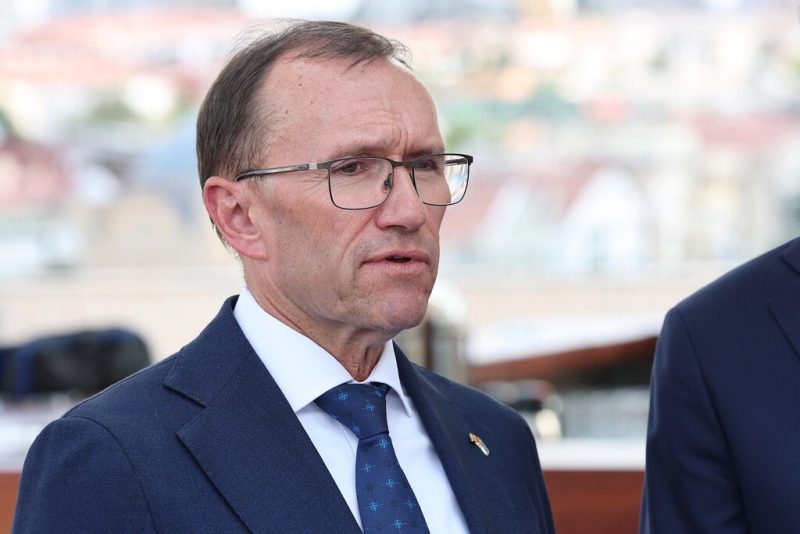
“The United States’ tariff creates enormous unpredictability for Norwegian export firms,” Eide said after inviting Norwegian business leaders to an emergency meeting on the tariff’s consequences in early August.
“We have ongoing contact with business and industry,” Eide said. “It’s extremely important for the government to hear their evaluation of the situation, and launch a dialogue on what consequences more tariffs wil have on Norwegian export firms.”
Many business leaders have already been complaining and worrying about the effect on sales, especially when other exporters elsewhere in Europe face a lower tariff than the Norwegians. That will put Norway, already a high-cost country, at a further disadvantage when selling to the US.
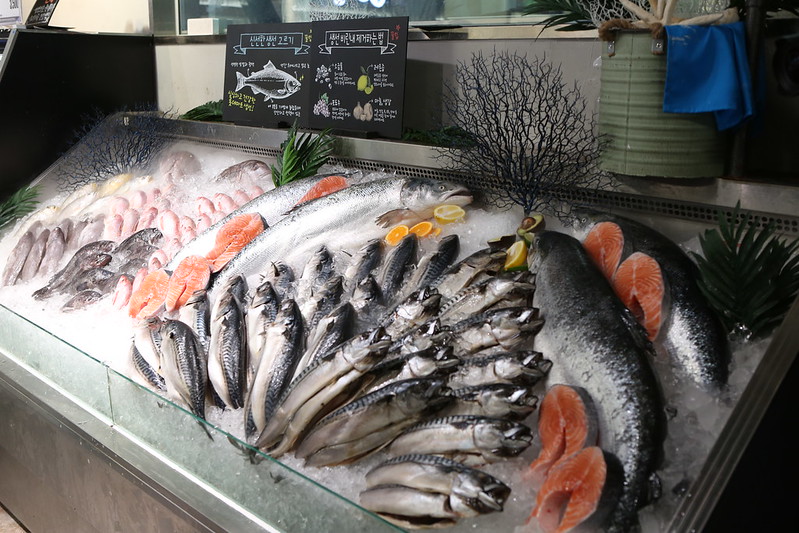
The new tariff took effect immediately and will mostly affect Norway’s exports of seafood, furniture and industrial products to the US. The irony is that it’s American consumers who like Norwegian salmon, for example, who will get hit hardest by Trump’s tariff when salmon prices rise. Eide called the tariff “completely unreasonable” and unfair, but Norway won’t resort to slapping a reciprocal tariff on the US that would affect Norwegian consumers.
Eide was especially provoked by Trump’s decision to impose a tariff against Norway that’s higher than the 10 percent tariff Trump maintained on imports from the EU. Norway is not a member of the EU but nor is Great Britain, which was hit with the same 10 percent tariff as the EU. Eide objected mightily to how Norway was treated differently and more harshly than the vast majority of its European neighbours.
The new tariffs carry on or replace the global and temporary tariff of 10 percent that was imposed by Trump earlier. Those tariffs had in turn replaced Trump’s initial punitive tariffs that ranged from 10- to 50 percent against US trading partners, but later were ruled as illegal by the US’ own Supreme Court.
Only around 3.5 percent of Norway’s total exports go to the US, so the actual effect on Norway is limited, notes Professor Ola H Grytten at the Norwegian business school NHH (Norges Handeslhøyskole). Norwegian producers of salmon and other seafood may see sales decline, but it’s the principles behind free trade that are most at stake. “Trump is in a judicial grey zone on this,” the chief economist at Sparebank1 Markets, Harald Magnus Andresassen, told news bureau NTB. He noted that Trump “needs to keep finding new ways of imposing tariffs without Congressional confirmation,” since he lacks a majority in Congress to do so.
The “new way” Trump has found now is to claim that Norway and other countries hit by his higher tariffs haven’t done enough to forbid imports of goods produced by slave labour. Foreign Minister Eide firmly contradicts that, as does Trade Minister Cecilie Myrseth. “Slave labour is of course forbidden in Norway today,” Myrseth told NTB before the tariffs were announced. She stressed that Norway has also imposed a ban on any imports of items that may have involved slave- or child labour.
Eide was in the Philippines when Trump’s new tariffs were announced. He’d been attending a meeting of the Association of South-East Asian Nations (ASEAN) and sounded furious when interviewed live on national radio and TV last Friday morning: “We maintain that (Trump’s) claim is wrong, and we strongly disagree with this decision,” Eide said. He added that Norway “has long had very clear regulations” against any connection to slave- or child labour, and “we believe it is completely unreasonable to say that we in any way contribute to it.” His US counterpart, Secretary of State Marco Rubio, was also in Manila at the time, and Eide said Norway’s protests had been expressed directly to Rubio: “We can’t see that we have any worse regulations than the EU in this area.”
Several other experts also object to the US’ new tariff against Norway. Janne Haaland Matlary, a professor specializing in international politics at the University of Oslo, equated Trump’s accusation of slave labour violations to an excuse he’s come up with to justify the tariff. “If there are any countries that are very careful about suppliers and those under them regarding child labour and human rights, it’s countries in Europe,” Matlary told NTB. “That applies to EU members and to Norway, so this is completely baseless.”
Matlary does think, however, that Trump’s new 12.5 percent tariff on Norwegian imports is another good reason for Norway to join the EU. If Norway was a member of the EU it would have a lower tariff and be part of a much larger organization to stand up to Trump. “This is very bad news for Europe and all countries that have been slapped with this extra tariff,” she told state broadcaster NRK on Friday afternoon. “It’s especially bad for countries outside the EU, like Norway, which have a higher tariff.”
It will apply to around 67 percent of what the US imports from Norway, according to the foreign ministry. Other Norwegian exports to the US including fertilizer, fuel and various food products are exempt.
Norwegian exports in general, meanwhile, increased again when figures for June were released by Norway’s State Statistics Bureau (SSB) last week. SSB reported that Norway logged an overall trade surplus of NOK 62 billion, mostly because of high revenues from oil and gas in addition to seafood products. Norway’s total exports amounted to NOK 158.3 billion, up 12.5 percent from June of last year.
The meeting announced on July 29 will be held at government headquarters in Oslo and also be attended by Trade Minister Myrseth and Fisheries Minister Marianne Sivertsen Næss. Both they and Foreign Minister Eide now worry that Trump may announce even more tariffs in connection with results from a new survey of structural industrial over-capacity.
NewsinEnglish.no/Nina Berglund
