

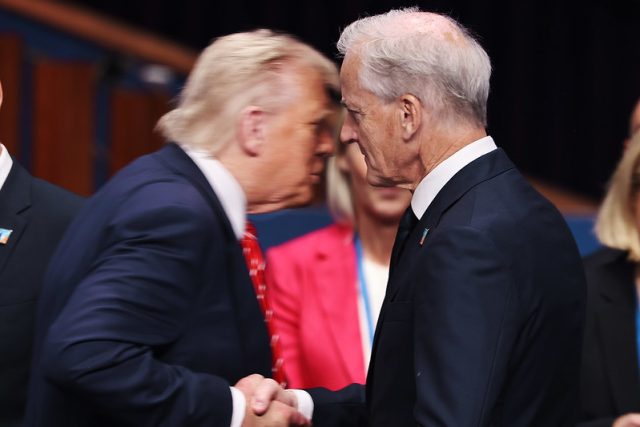
With some firm handshakes, flattery and lots of money, Norway and its NATO allies survived their latest direct encounter with the unpredictable US President Donald Trump on Wednesday. They all formally agreed to another massive boost in defense spending at their latest NATO summit, and avoided issues on which they disagree.
The Norwegian government had already committed itself to allocate 5 percent of Norway’s gross national product (GNP) to defense spending, up from the current 2 percent that’s already been reached. By 2035, a deadline finally agreed upon at the NATO summit in The Hague, Norway will spend 3.5 percent on defense and another 1.5 percent on new domestic infrastructure needed to support defense ability.
The infrastructure improvements in Norway are likely to include new highway projects. They’re needed to speed the transport of troops, vehicles and equipment from Norwegian harbours and military bases eastward to new NATO members Sweden and Finland, especially if the Baltic Sea were to be blocked in a conflict with Russia.
“With Sweden and Finland in NATO now, we’ll become a transit land to move defense material eastwards,” Bjørn Laksforsmo of the state highway department told newspaper Klassekampen. The E14 highway from Stjørdal in Trøndelag to the Swedish border, for example, will need to accommodate much heavier loads than it does today, as will bridges. Farther north are lots of dirt- and gravel roads that currently lead to border crossings on the Norwegian side, and they’ll need to be improved as well.
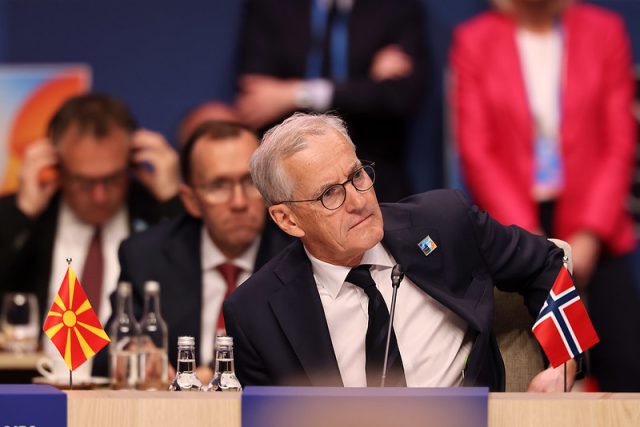
“There’s a mutual understanding in Europe that we must do more,” Prime Minister Jonas Gahr Støre told newspaper Aftenposten late last week. “We must have an economy that contributes towards keeping Norway safe, that we have the correct equipment and enough people. We’ll need to use more of our resources on that now.”
Norway currently is spending around 3.3 percent of its GNP on defense, when its support for Ukraine is factored in. Støre’s government announced this week that it’s also poised to buy NOK 6.5 billion (USD 650 million) worth of drones and drone technology for Ukraine, since “drones are decisive for Ukraine in its defense efforts against Ukraine,” Støre said.
All 32 NATO allies agreed to the new 5 percent spending goal at their summit. NATO chief Mark Rutte had initially proposed setting a deadline of 2032, but that was extended to 2035 after countries including Spain had expressed concern over the expense involved. Trump had demanded the new 5 percent goal and claimed that it was his latest “monumental victory” for the US. He threatened to keep a close watch on Spain to make sure it follows through.
The NATO summit’s agenda was unusually short, to minimize more confrontations with Trump. Rutte humoured and flattered Trump, since that’s widely viewed as the only way to make any progress with him. Rutte even hailed Trump for the surprise US attack on Iran during the weekend, calling it “very impressive.”
While Trump claims his forces “obliterated” Iran’s atomic program, various reports have since disputed that, nor did many NATO allies including Norway support the attack. Norway was actively involved in the earlier US-led negotiations with Iran to contain its atomic efforts, which Trump scrapped during his first term, only to change his mind and demand a new deal with Iran now. When that didn’t happen, Trump bombed the Iranian facility.
Støre was among those who had claimed that the US attack on Iran defied the rule of law, and he expressed regrets “that the work on a diplomatic solution and new agreement with Iran had not succeeded.” He called for “de-escalation” of the tensions on both sides: “This conflict has no military solution,” Støre claimed during the weekend. “The rule of law must be respected by all parts in this war.”
At the meeting on Wednesday, however, the issue was toned down and allied leaders concentrated on the defense spending agreement. Rutte claimed NATO will now be a “stronger and more fair” alliance when it comes to sharing the expense burden. Trump called on members to spend their new and bigger defense budgets on weapons, not bureaucracy.
The NATO promise of “all for one and one for all” was also reinforced, with its “collective defense” that considers an attack on one member as an attack on all. That was important, since some NATO allies worry the US under Trump may no longer respect the core premise, especially as Russia continues to attack Ukraine and threaten Europe.
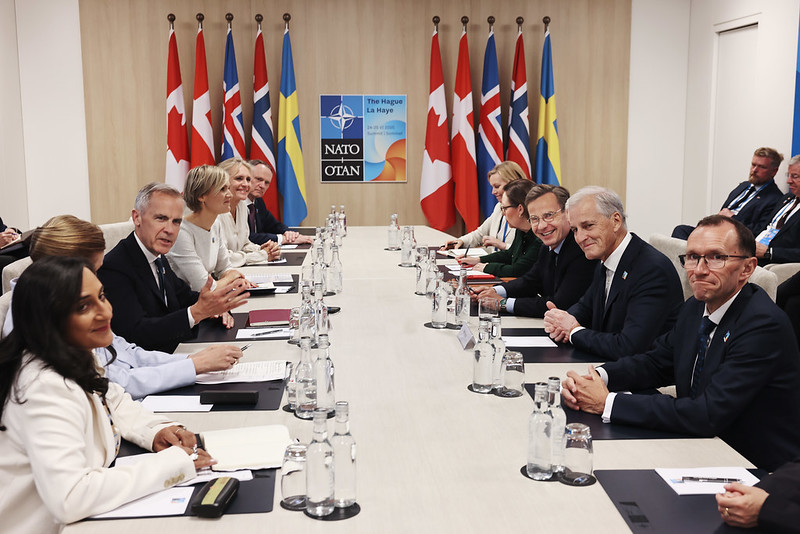
There seemed to be one bright point, as allied leaders heaved a sigh of relief for avoiding a new Trump temper tantrum: Norwegian Foreign Minister Espen Barth Eide had feared that war in the Middle East would take attention away from Ukraine, but Ukrainian President Volodomyr Zelensky spent nearly an hour talking with Trump and seemed relieved afterwards, too. He stated that they discussed how a ceasefire and lasting peace could be achieved. Støre told state broadcaster NRK that the NATO allies handled themselves as “close friends and partners.”
NewsinEnglish.no/Nina Berglund
