

Norwegian economists admit to being shocked this week, when Norway’s state statistics bureau SSB reported that prices in January were much higher than expected. Since the country’s central bank chief is keen on using interest rates to bring inflation down, speculation is flying that rates may rise this year instead of fall.
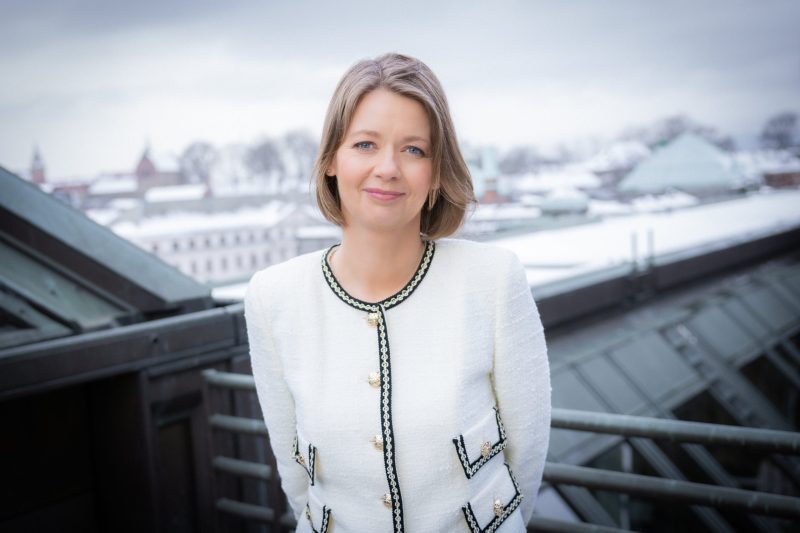
SSB (Statistics Norway) released its report just two days before Norges Bank Governor Ida Wolden Bache was due to hold the central bank’s annual address. It’s always a grand occasion, gathering top politicians, captains of industry, business leaders and, not least, bank executives at the central bank’s headquarters and then at a dinner afterwards. By Wednesday morning, economists were predicting that Bache (pronounced “Bah-keh”) would need to rewrite some of her speech.
That’s because SSB reported that prices in January were 3.6 percent higher than they were in the same month last year. Core inflation (excluding increases in utility rates and taxes) also jumped, up 3.4 percent, mostly because of higher food prices at the grocery stores.
On Friday came another report that’s used by both employers and labour unions as they enter annual wage negotiations. It was released by TBU (the Norwegian Technical Calculation Committee for Wage Settlements) and it predicted that price growth in the year ahead would amount to 3 percent.
Also that was much higher than the central bank’s target inflation rate of just 2 percent. Bache and her colleagues had predicted lower price growth of 2.4 percent, and expected wage growth to be lower this year than last. Most Norwegians finally experienced more purchasing power last year, when wages rose by an average 4.8 percent and inflation was an average 3.1 percent. Now, with inflation running at somewhere between 3- and 3.7 percent, wages would need to rise by more than that in order to maintain real wage growth.
It all poses a dilemma for Bache and the central bank’s monetary policy committee. They’d kept Norwegian interest rates relatively high compared to other countries until lowering their policy rate to 4.25 percent last June. That was the first rate cut in five years, and followed by another quarter-point cut to 4 percent in September. That lowered mortgage rates for borrowers, offering some monthly payment relief especially in Norwegian cities where housing prices are high.
The rate cuts surprised economists at the time but Bache called them a “cautious normalization” that brought Norwegian rates closer to those in neighbouring Sweden, where they were as low as 2 percent. Most economists had expected rates to further decline in 2026, but now the higher inflation is “very bad news for Norges Bank,” according to Kjersti Haugland, chief economist at DNB Carnegie in Oslo, and several other economists.
Kjetil Olsen, chief economist at the big banking firm Nordea, told newspaper Dagens Næringsliv (DN) that the inflation hike is “a slap in the face to Norges Bank,” while Harald Magnus Andreassen at Sparebank 1 Market, called the inflation numbers “surprisingly high.” Still others predicted interest rates have already bottomed out, with chief economist Marius Gonsholt Hov and his colleague Karine Alsvik Nelson at Handelsbanken writing that “Norges Bank has a serious inflation problem” that may amount to the “last nail in the coffin for more rate cuts.” News had already broken the week before that housing prices rose 3.6 percent in January.
Bache took it all with characteristic calm in an interview with NRK shortly before she took the podium at Norges Bank’s annual meeting with the Norwegian elite on Thursday evening. She stressed that Norway’s economy remains strong, even though price growth is higher than she wants.
“When we haven’t lowered interest rates as much as countries around us, it’s because price growth is still too high,” she told NRK. The inflation rate goal remains 2 percent and she confirmed that the central bank will still use interest rates to bring inflation down. That indicates they won’t be lowered any time soon, “but we’re not painting a depressing picture either. We think a moderate rise in the economy will continue and that purchasing power for households will also rise further.”
Read Bache’s entire speech here (external link) in English.
Hov has since pointed out that “the biggest news” in Bache’s speech is that the usually secretive Norges Bank will offer more “openness” in the future. The central bank is now expected to allow more insight into its committee discussions, including the release of minutes of what was discussed by whom.
Erling Røed Larsen at Swedbank called Bache’s annual address “a good speech, and I give it a high score within its field,” even though he and others would have liked to hear more about what the bank thinks is behind the higher inflation.
NewsinEnglish.no/Nina Berglund
