

Housing prices are expected to rise by just 3.5 percent this year, and the market for holiday homes has fallen as well. Brokers blame prospects for another interest rate hike, lots of property on the market and economic uncertainty created by a world in turmoil.
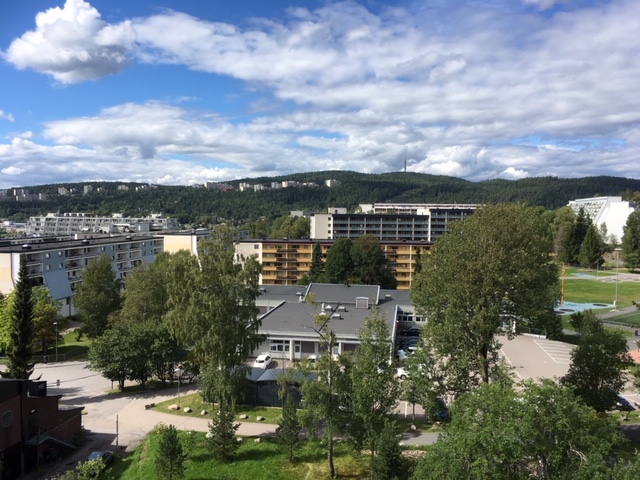
“For sellers, it’s no fun to see prices falling and that will continue, unfortunately,” Grethe Meier, head of the large national real estate brokerage Privatmegleren, told newspaper Dagens Næringsliv (DN). “It’s really a buyer’s market now, especially in Oslo,” meaning that sellers’ price expectations will need to decline.
That also has something to do with recent changes in state tax laws that have prompted lots of investors to sell off rental units that no longer qualify for earlier writeoffs. Small apartments have flooded the market, while first-time buyers still have a hard time coming up with enough capital to satisfy lending requirements. Rental rates, in turn, have jumped because of high demand and a lower supply of rental units.
Even though Norway’s central bank kept its policy rate unchanged last week, rates are expected to rise by at least another quarter point after the summer holidays. Higher interest rates “always affect prices negatively,” Meier said. As chief of a real estate brokerage firm that relies on commission income from sales, though, she tried to remain positive: “At the same time we’ve had two good wage settlements now … enough to cover at least two (quarter-point) interest rate increases.” That should boost prospective buyers’ purchasing power.
Norges Bank had earlier expected that housing prices would rise by 4 percent this year, after years of much bigger price hikes. Now the bank expects housing price growth of 3.5 percent this year, 4.4 percent next year and 6.5 percent in in 2028. That’s down from earlier expectations of 6.1 percent next year and 7.1 percent in 2028.
Norway’s national real estate brokers’ federation, Norges Eiendomsmeglerforbund, was relieved interest rates weren’t raised again last week, but a quarter-point rise in May, to 4.25 percent, is just now starting to take effect. Predictions of higher rates create more uncertainty, at a time when rental rates in Oslo and other Norwegian cities are record-high because so many units are up for sale instead. The federation worries that will create more “imbalance” in the market.
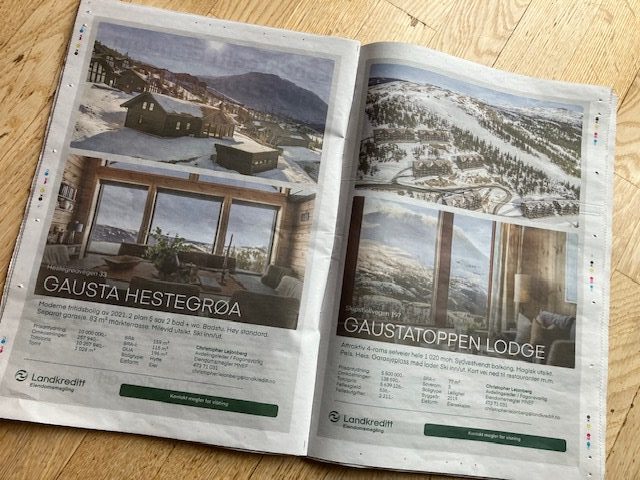
Norway’s once-hot market for holiday homes (hytter) has also cooled off, both in the mountains and along the coast. Sales of hytter in large developments have dried up, sending some developers into bankruptcy or voluntarily out of business.
The market for cabins in the mountains and holiday homes by the sea peaked in 2022, around the same time the pandemic ended and people had more freedom again to travel. Prices had soared as much as 16.5 percent in 2021, but now many buyers have been selling and leading to a record number of hytte ads last year. Some have found buyers abroad, especially from Denmark and Sweden where interest rates are lower than in Norway, but far from all.
News service E24 has also reported a record number of bankruptcies among residential developers both in the housing and leisure sectors, fueled by higher interest rates, higher costs and affordability issues. Newspaper Dagsavisen reported a “crisis” in the building branch early last spring, after another disappointing ski season as well. Rising temperatures and more rain than snow last winter further dampened the market.
NewsinEnglish.no/Nina Berglund
