

The relatively new coastal cruise line that competes against Hurtigruten in Norway had to evacuate passengers this week after the propulsion system on its new vessel MS Havila Polaris overheated. The cruise was later cancelled, disappointing passengers and posing another setback for Havila Voyages and its shipping line known as Havila Kystruten.
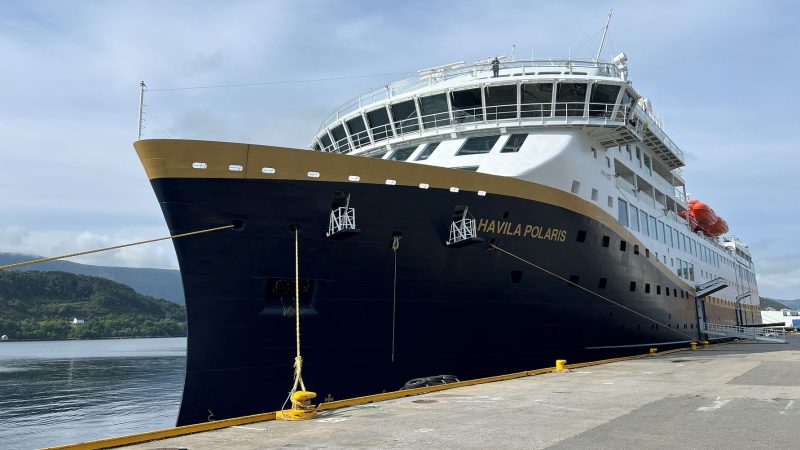
The trouble began when the Havila Polaris was sailing north from Bergen and on its way into the scenic Geirangerfjord, often the highlight of cruises along the Norwegian coast. The company later reported that the propulsion system on the port (left) side of the vessel overheated to such a “significant” degree that it “triggered cooling and foam spraying in the affected areas.”
The ship, which had 397 passengers and a crew of 68 on board, docked under its own power at Stranda, where all passengers and 30 crew members were temporarily “evacuated for safety reasons.” Maritime authorities and the ship’s classification society DNV later cleared the vessel to sail back to Ålesund, but Havila Voyages ended up having to cancel the rest of the cruise after just the first two days, because of damage from the overheating that required immediate repairs.
“I’m very, very disappointed,” 78-year-old passenger Louise Hill, an Australian now living in Italy, told Norwegian Broadcasting (NRK) on Thursday. “I’ve looked forward to this my whole life.” All passengers have been promised full refunds, and others were making the best of it, with one couple opting to rent a car in Ålesund and continue their Norwegian holiday on their own. Another family from Switzerland, who said they’d had a “fantastic” if unexpectedly short cruise, headed off on a bus tour instead.
Havila’s communications director Lasse Vangstein told NRK that the company was “terribly sorry” about the disruption “but we can’t compromise on safety. The safety of our passengers, crew and the ship are the most important for our company.” He said Havila hoped to have the vessel back in service and on its “normal route” from Bergen to Kirkenes on August 3.
It’s the latest setback for Havila, which won the concession to sail along Norway’s coast with regularly scheduled service when Hurtigruten’s former monopoly was broken up. The two shipping lines now function mostly as cruise firms instead of as ferries or on cargo and transport routes, and Havila recently stopped taking private cars on board.
Both Havila and Hurtigruten have faced challenges in the aftermath of the Corona crisis, when most cruising stopped up. Havila also ran into trouble with the financing of its stylish new vessels and delivery delays. Havila completed a corporate refinancing in April aimed at securing better liquidity and a stronger balance sheet.
As with many new ventures, Havila has also had various start-up challenges including other technical trouble, cruise delays and, as NRK reported, passengers who haven’t been able to travel along the coast as they could earlier. Load factors have improved, however, ending at 68 percent in the first quarter of this year, up from 60 percent from the prior quarter, and Havila’s revenues increased by 17 percent.
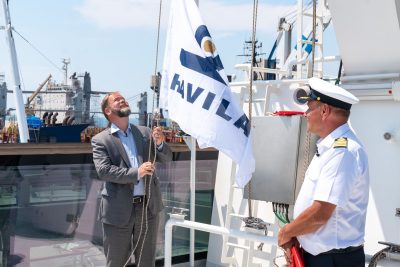
Havila chief executive Bent Martini, who formerly worked for Hurtigruten, admitted the company’s new financing in the form of a bond loan “is expensive for us,” but better than its original financing that involved Russian lender GTLK, which wound up subject to EU sanctions also adopted by Norway. That also affected the vessels’ insurance and its first ship delivered in 2022 was prevented from sailing after it finally arrived in Norway.
Havila has since been hoping for smoother sailing, and Vangstein said Havila was well-aware that problems such as that facing the Havila Polaris this week can hurt the company’s reputation. Havila also had to cancel a Bergen-Kirkenes-Bergen round trip in May on its new Havila Pollux vessel, sister-ship to the Polaris, because of necessary warranty work.
“At the same time, we hope people understand that this (the latest cancellation) was an incident outside of our control,” Vantstein told NRK. “The danger from overheating and possible fire was much greater than it actually turned out to be.”
Havlia currently operates four ships along the Norwegian coast. All were built within the past few years and boast climate-friendly technology and design, featuring hybrid systems that allow them to run quietly on electricity for up to four hours while in fragile fjord waters.
NewsinEnglish.no/Nina Berglund
