

UPDATED: Members of one of Norway’s largest trade union federations, Fellesforbundet, could head back to work on Thursday after their hotel- and restaurant employers settled a lengthy strike. The strike continued for around 350 members of another labour organization, Parat, but then it also was called off later on Thursday afternoon.
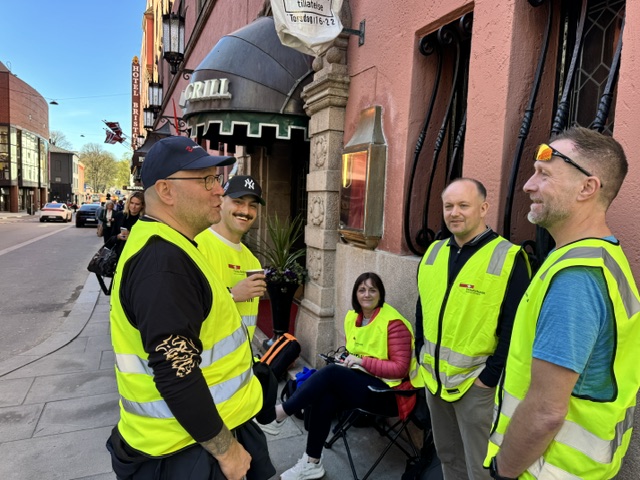
The strike had entered its sixth week on Monday, as demands for higher pay and reliable long-term sick-pay disbursements continued. Around 2,000 workers nationwide had walked off the job April 19, claiming their generally low wages were lagging behind inflation and that workers’ compensation payments were unreliable. The numbers of strikers had doubled by this week, as the strike spread.
The settlement between Fellesforbundet and the national organization representing hotel- and restaurant employers NHO Reiseliv involves pay hikes of up to NOK 15.50 per hour from June 1st. Employers will also, from June 1st next year, issue sick pay and some other nationally funded benefits until state welfare agency NAV takes over and reimburses the employers’ distributions.
“We are very glad we reached an agreement with NHO Reiseliv,” stated Fellesforbundet’s negotiations leader Clas Delp in a press statement Thursday morning. He called the negotiations were “extremely demanding,” extending throughout the night with the state mediator
NHO Reiseliv didn’t seem as satisfied as the union bosses, with its leader and former government minister Kristin Krohn Devold claiming the employers’ organization “unfortunately” found itself “forced to accept the demand” for long-term sick pay until NAV assumes responsibility. Employers in Norway are generally responsible for covering workers’ sick pay for the first 16 days of an illness or injury. After that the state takes over, but NAV is often slow to do so immediately, blaming delays on its approval process. Unless the employers keep paying, workers can face a complete lack of income and inability to meet their ongoing expenses.
Even though NAV ultimately reimburses employers’ outlays after 16 days, Devold argued that small hotels and restaurants often lack the liquidity to meet extended sick pay demands. She has claimed all along that the equivalent of workers’ compensation is an expense that the state must absorb and find a solution for doing so, as soon as the first 16 days are over.
“We have worked hard to try to shield small businesses from this burden,” Devold said. At the same time, however, the six-week strike also posed a burden and Devold indicated the employers felt pressured to end it.
The new leader of Fellesforbundet, Christian Justnes, could claim victory in the first major strike since he took over last year. He objected, however, to Devold’s claims indicating the labour organization “just forced this through.” Justnes told state broadcaster NRK later on Thusday that “I don’t buy that,” noting how other branches and employer organizations already have agreed to cover sick pay until the state takes over.
Around 350 members of the other labour organization representing restaurant- and hotel workers, Parat, were still out striking on Thursday morning. Their leaders hadn’t yet struck a deal with NHO Reiseliv and Devold, even though the issues were much the same. “For our members,” wrote Parat’s leader of negotiations Lars Petter Larsen, “this strike is about fundamental economic security in everyday life.”
Details remained sketchy, but Larsen wrote later in the day that “we didn’t manage to win acceptance” for a separate long-term wage boost in addition to what the others agreed to. He claimed it became impossible for Parat “to stand alone in an ongoing strike” after Fellesforbundet had settled.
NewsinEnglish.no/Nina Berglund
