

COMMENTARY: King Harald, Norway’s monarch for more than 35 years, became what any sensible leader should be: A unifying force that Norwegians would turn to in troubled times – and who turned to them.
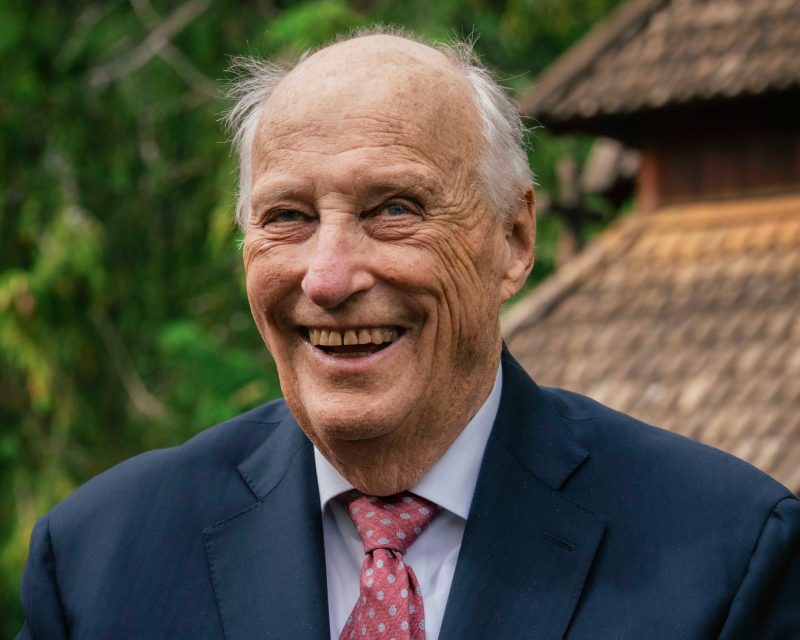
The role of Norway’s king may be largely ceremonial and non-political, but Harald V shaped his country and kingdom in important ways. Rather than staying holed up in a palace, King Harald seemed to be almost constantly on the move to meet the good people of Norway, building trust and support for the monarchy in the process. When hurricanes and disasters struck vulnerable communities, King Harald and Queen Sonja would come visiting, offering sympathy for those who had lost their homes. And when 77 people, mostly teenagers, died at the hands of a right-wing terrorist in 2011, he spoke as the nation’s comforting father, unable to hold back his own tears.
Harald’s main message was one of inclusion. A key moment was his 2016 diversity speech, stating that “Norwegians (are people who) believe in God, Allah, everything and nothing,” and that they’re “girls who love girls, boys who love boys and girls and boys who love each other.” In a time of controversy over immigration to Norway, he would remind people that his own grandparents (King Haakon VII and Queen Maud, who came from Denmark and England) had been immigrants of sorts, and that he and his own family became refugees when Nazi Germany attacked Norway in 1940.
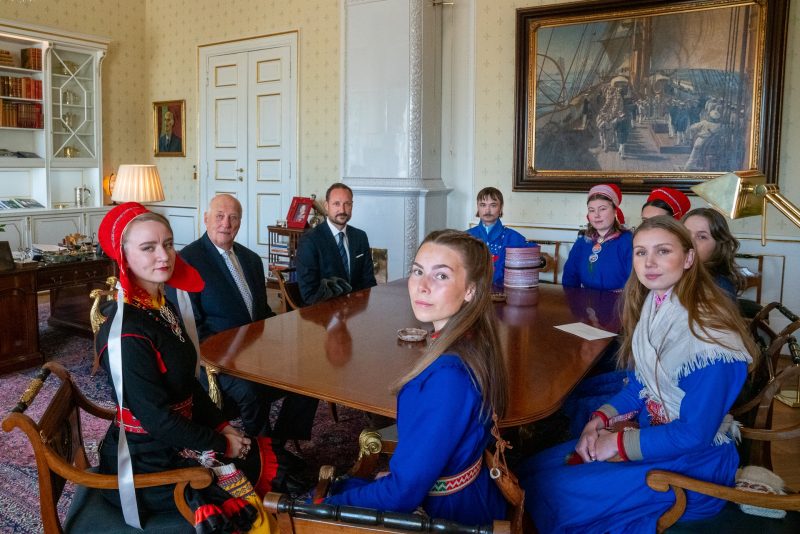
Harald saw himself as standing on the shoulders of his grandfather, Haakon VII. While Haakon VII famously declared that he was also a king for the communists in the early 1900s, Harald included minorities in his speeches and social agenda. He invited the challenged and downtrodden, and more fortunate Norwegians too, to come see him at the palace, making this kind of socializing seem as natural as receiving foreign dignitaries.
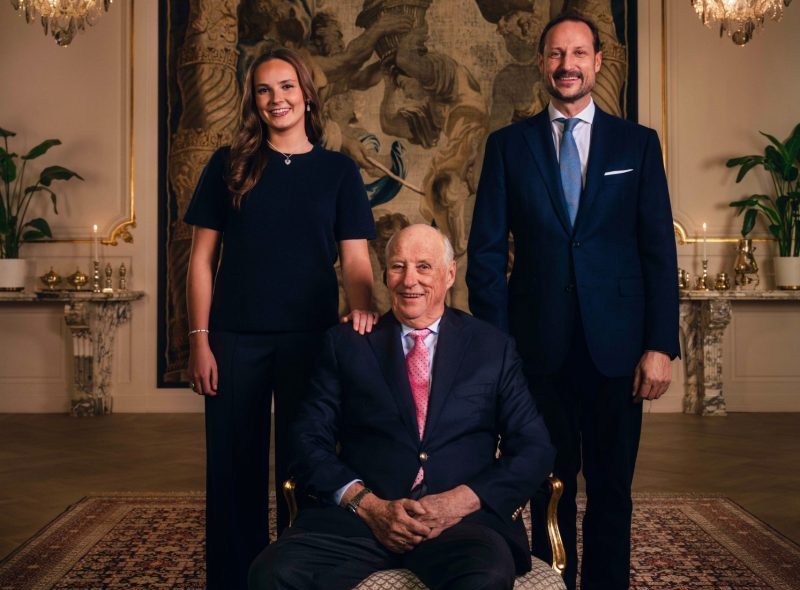
In Norway’s so-called constitutional monarchy, the king has no political role. But King Harald certainly was no stranger to politicians, having met several generations of Norway’s government ministers at the weekly Council of State. It started when he was a young man, as it’s common practice for the Crown Prince to join those formal meetings. In recent years, his granddaughter and royal heir Ingrid Alexandra has also joined when possible.
He sometimes spoke up, though, most notably when he insisted on keeping a constitutional provision that Norway’s monarch must adhere to the Lutheran faith, when the government wanted to remove it. He also made headlines when apologizing for mistakes of the past, including brutal assimilation policies by Norway’s governments toward Sami minorities.
With Queen Sonja mostly by his side, King Harald was frequently on the move to places big and small, to meet the people living there. They had a grand project to officially visit every one of Norway’s 357 municipalities. Just four remained to visit when he died, although Harald had made unofficial visits to some of them – like going salmon-fishing in Høylandet in the county of Trøndelag. Every day, one way or another, he seemed to be on the job for Norway: That’s in line with the old motto of Norway’s kings: Alt for Norge (“I will do everything for Norway”). When asked in 2024 about abdication, which his colleague Queen Margrethe of Denmark had chosen, he ruled it out flatly: “I have taken an oath to Parliament, and that will last for as long as I live”.
During King Harald’s reign, Norway’s royalty modernized along with the country and stayed relevant to a majority of Norwegians. That can be seen as a survival strategy; moving with the times has clearly strengthened the monarchy’s position in the 21st century, even as hereditary state power looks like an increasingly strange idea. And with his striking personal qualities, like effortlessly connecting with people, a clearly communicated sense of duty and a warm, folksy humour, Harald won the hearts and minds even of those would like to see the monarchy abolished. With such a popular royal family, being a republican in Norway got difficult.
It was not a perfect family, though. King Harald’s final years were darkened by controversy that landed royals in the news for all the wrong reasons. Those included an apparently bitter fallout with his daughter Martha Louise over role conflicts as a businesswoman using her princess title, followed by her recent unusual wedding to Durek Verret, a self-professed shaman from the US.
Tragedy also hit when Crown Princess Mette-Marit was diagnosed with a serious lung disease, while at the same time having some explaining to do about her earlier contacts with convicted sex offender Jeffrey Epstein. Seeing her son Marius in court over rape and violence charges clearly didn’t help the royal mood. It did, however, make the royals a little bit more like an ordinary family, with problems and difficult choices that many people can recognize. At the height of it all, Queen Sonja, when spotted during her discreet exit from a concert at the Oslo Philharmonic Orchestra, received spontaneous applause from the audience; everyone understood that she was having a hard time. It echoed a common remark when people discussed the various royal troubles: “The old folks deserved better.”
Little of the the family turbulence seemed to be in the cards on January 17, 1991, when Harald succeeded his father. Many Norwegians remember him early on as a dour, unsmiling guy who smoked a lot. Expectations were not high. Harald’s father Olav V, meanwhile, had been a well-liked king, respected for the royal famiy’s patriotism and clear stance against Nazi Germany during World War II. Olav was also known for his high-pitched laugh, but he was also a conventional king who liked the old ways. He preferred to handle state matters himself and only let his heir take care of less exciting stuff like heading trade delegations.
Arguments and conflicts sometimes arose between father and son, Harald later revealed, notably after he fell in love with a non-royal young lady named Sonja Haraldsen in the late 1950s. He wanted to marry her, rather than someone from one of Europe’s royal families or nobility, which would have been the tradition. The idea of Norway’s heir to the throne marrying a “commoner”, though, did not go down well with either King Olav nor with those within Norway’s establishment who knew about Harald’s love affair. While almost unbelievable today, there were serious fears that such a marriage would mean the end of the monarchy. The Crown Prince took the opposite approach and posed an ultimatum to his dad: If he could not marry Sonja, he would not marry at all, thus ruling out fathering a successor. After a marathon courtship that lasted nine years, though, the couple were allowed to marry and they did so, on August 29, 1968. Queen Sonja and King Harald should have been able to celebrate their 58th wedding anniversary this weekend, just a day after Harald died.
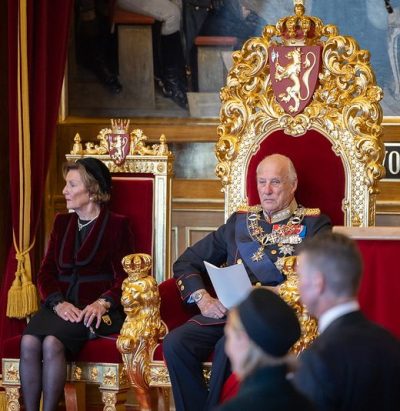
Their marriage was an important step towards modernity: A future Norwegian king who married out of love, not convention. Although controversy also surrounded Crown Prince Haakon’s marriage in 2001 to Mette-Marit Tjessem Høiby, an unwed mother with a party-filled past, the son probably had an easier time than his dad. After becoming king in 1991 Harald also made more subtle changes in royal practices, like including Queen Sonja in the important annual opening of Parliament, facing down objections from advisors and etiquette experts.
But Harald had followed a tradition in other ways. He got an academic military education before moving on to Oxford to study economics, political science and history at Balliol College. Like his father, he became an avid sailor, competing for Norway in the 1964-, 1968- and 1972 Olympics. Harald and his crew won a World Championship in 1987 and a European championship in 2005. Many a time, he declared himself a sportsidiot (“sports nut”) and remained a fixture in countless sports audiences almost until the day he died.
A clear breach with tradition, though, and also a crucial modernizing move that occurred on Harald’s guard, was opening the way for a woman to become Norway’s head of state, provided Norway remains a monarchy. Ingrid Alexandra, who is now Norway’s Crown Princess, is in line to succeed her father Haakon Magnus when the time comes. Things were very different when Harald was born in 1937, as the little brother of princesses Ragnhild and Astrid. For them to inherit the throne was almost unthinkable at the time, and a moot point after a boy had actually been born.
The question came back in 1971 when Sonja and Harald had their first-born, Martha Louise, followed by Haakon Magnus in 1973. But acccording to the constitution, Norway’s monarch had an “absolute cognatic line of inheritance,” meaning that boys had priority over girls. When asked, King Harald said at the time that such practices could change eventually, but would not affect any living person. The constitution was amended in 1990 providing for the first-born child to inherit the throne, regardless of gender. But that reform was not made retroactive, paving the way for Ingrid Alexandra to be first heir to the throne and not her Aunt Martha.
While not noted as a funny guy early in his career, King Harald’s sense of humour and snappy one-liners became legendary with age. On equal rights, he once mentioned that even with even numbers of men and women in his family, the women always seem to be in majority when everyday matters and palace logistics are discussed. After stumbling on a recent visit to Denmark’s Queen Margrethe, he got back on his feet and informed the bystanders, “I’m bending knee for the queen.”
In recent years, it had gradually become clear that King Harald’s active life and work came at a price. His health failed in numerous ways, and he needed crutches, but still made frequent public appearances. That was a marked contrast to his grandfather Haakon, who was rarely seen in public after a femoral neck fracture mostly immobilized him late in life. Harald was not afraid to show his vulnerability, a commentator said. On a recent visit with Sonja to Bjørnøya, an island in the Barents Sea, he even needed to be transported on a tractor through the rough terrain. That visit, on a background of international tension not least in the Arctic, was crucial, Harald said: “This is part of Norway. That’s why we’re here. It’s important that people live here. Then we control this area.”
And then, King Harald smiled.
NewsinEnglish.no/Morten Møst
