

A total of 12 Norwegian police officers have been killed on the job since World War II. The latest casualty occurred over weekend, and has renewed debate over whether Norway’s usually unarmed police should be armed at all times.

Police were in mourning nationwide after news broke Saturday that one of their young colleagues had been shot and killed after being called out to a threatening situation during the night at Klepp, south of Stavanger. Three people were shot during a sudden exchange of gunfire, including another police officer who survived and the suspect who started it all, a man in his 40s, who was also killed.
The police officer who was killed, identified as 25-year-old Markus Botnen, had just started his career with a temporary position at the Jæren Police Station in Rogaland, part of Norway’s Southwest Police District. He was due to move on to another police district right after New Year.
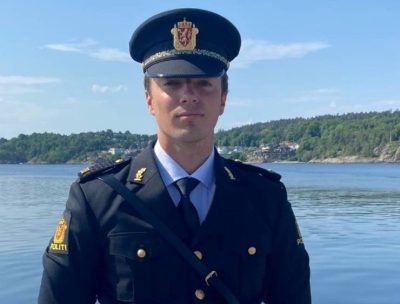
Instead he was gunned down in what the national police’s labour federation Politiets Fellesforbund called a “deeply tragic” incident, details of which were continuing to unfold on Sunday. “This affects the entire police force, nationwide,” said the leader of the federation, Unn Alma Skatvold.
Police officials have reported that both Botnen and his wounded colleague were armed and wearing bullet-proof vests when they were among those responding to a call for help around 1am Saturday. They ended up in an exchange of fire reportedly originating from the man in his 40s who was shooting from a car. Prosecutor Eli Valheim said at a press conference Sunday that the incident has been documented by both police drones at the scene and the eye-witness accounts of other survivors. The entire incident may have been sparked by a domestic conflict.
Even though police have confirmed that Botnen and his colleague were armed at the time, the fatal shooting has revived calls for police to be armed at all times. Police have recently been armed nationwide because of various security threats, but support is rising for permanent arming.
Even top politicians who formerly opposed police arming have been changing their minds, as crime has risen in Norway. “Police themselves report that they’re experiencing more threats and more violence on the job,” former prime minister Erna Solberg told state broadcaster NRK. “That’s entirely unacceptable, and a trend we need to turn around. Police deserve great respect and thanks for the job the do for all of us.”
Leaders of several labour and employer organizations along with police leaders also think Norwegian police must be able to carry weapons at all times. Hans Erik Skjæggerud of YS, Unn Kristin Olsen of Parat and Kjetil Ravlo of Norges Politilederlag all claimed just last month that “the time is now right for general arming to be the main rule in the Norwegian Police.”
Writing in newspaper Dagsavisen, they pointed to “increased threats tied to crime and terror, a long-term change in the national security situation” and more challenges unleashed by people with mental health problems. Police have responded just in the past week to a string of stabbings, murders and domestic violence. Norway is also seeing an increase of hired criminals and even assassins coming over the border from Sweden to “settle conflicts” in the gang milieu.
A state commission also determined in 2022 that the current system of only arming in special situations was no longer adequate. Oslo Police Chief Ida Melbo Øystese has since agreed, claiming that permanent arming is necessary to secure quick response in critical situations.
State police director Benedicte Bjørnland told NRK on Sunday that she didn’t think the time was right to comment on the issue, so soon after the death of another police officer. She noted, however, that the state police directorate has advised permanent arming in its response to the commission’s report.
Sigve Bolstad, a former head of the police officers’ federation, is now a state secretary in the justice ministry, which is responsible for the police in Norway. He told NRK on Sunday that the arming issue is now in “a process of evaluation” and likely to be taken up by the government in the New Year.
NewsinEnglish.no/Nina Berglund
