

State-controlled Norwegian oil and gas company Equinor has been on a roll in recent weeks, unveiling huge new investments in offshore oil and gas production. Officials at the United Nations are not pleased, and want Norway to halt all new oil exploration.

Equinor has rolled out new projects from the North Sea up to the Arctic, all aimed at increasing oil and gas production. After years of heavy losses in the US and several other countries, criticism at home and a recent flap over its offshore Empire Wind project in New York, new management at Equinor is again concentrating on Norwegian territory, not least given the need for gas in Europe after Russia invaded Ukraine and its gas supplies were cut off.
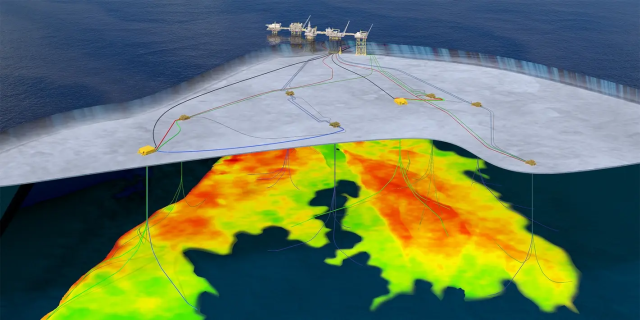
Now company officials claim Equinor’s future lies on the Norwegian continental shelf. The company recently announced NOK 21 billion worth of investment in subsea development around the Fram Sør area in the North Sea and its Troll C host platform. It’s to be powered by electricity from shore, leading Equinor executive vice president Geir Tungesvik to claim that production from Fram Sør “will have very low emissions.”
Development and operation plans were submitted to Energy Minister Terje Aasland in late June, with Tungesvik also claiming that Fram Sør “will contribute to security of energy supply from the Norwegian continental shelf (NCS) to Europe.” New oil and gas resources and offshore infrastructure around the projects will be connected to existing facilities, also making them more profitable.

It’s the biggest offshore development plan in several years, reported newspaper Dagens Næringsliv (DN), in which new oil and gas discoveries can connect to infrastructure already in place. There have been several of them in the Fram- and Troll areas over the past six years, expected to yield 116 million barrels of oil equivalents. Production is expected to start at the end of 2029.
Some are calling it a “new era” of Norwegian oil and gas production, revolving around existing infrastructure in “mature” fields. Much of the new exploration is being carried out around oil platforms already in place. “If you look at the development on the Norwegian shelf, it’s subsea expansion tied to existing infrastructure that mostly will electrified and will be the future,” Trond Bokn, Equinor’s senior vice president for project development Trond Bokn, told DN.
Not long after the Fram and Troll plans were announced came news that Equinor also is investing NOK 13 billion in the third phase of the huge Johan Sverdrup field in the North Sea. New subsea infrastructure there will boost recovery of oil and gas by as much as 50 billion barrels. Bokn claims Johan Sverdrup already is “one of the world’s most carbon-efficient oil and gas fields” while “contributing to stable energy supplies to Europe.”
Energy Minister Terje Aasland of the Labour Party also hailed those plans, noting how “Europe is asking Norway to continue being a secure and stable provider of oil and gas. In order to ward off any sudden fall in production on Norwegian fields, it’s necessary to explore more, find more and produce more.” Not all Norwegian politicians agree, though, including those who traditionally support Labour. “We’re in a time of setting new temperature records,” Lars Haltbakken of the Socialist Left Party (SV) told state broadcaster NRK. “Starting up even more production of fossil energy is madness.”
Farther north of the Sverdrup field, Equinor’s Johan Castberg field in the Barents Sea has now reached full production, with a fully laden tanker sailing off every few days with a cargo worth around a half-billion kroner. Castberg is producing 220,000 barrels a day, three months after it started up, with most of the oil sold to Europe.
Equinor also reported a new oil strike in an exploration well on the Castberg field, expected to yield up to 15 million barrels. The Barents Sea remains the least explored and developed portion of the NCS, because of often harsh conditions in the area and evironmental sensitivities in the Arctic. Opposition to more exploration is strong, not least from environmental advocates and political parties including SV, the Greens and the Liberals.
Opposition is also rising from the United Nations, where those in charge of climate and environmental issues and enforcing internationally agreed-upon goals aren’t at all impressed by Equinor’s offshore accomplishments. This week the UN issued another report, calling upon Norway to halt all further oil production.
The report stresses that in just five years, all wealthy countries like Norway (so-called “petro-states”) must phase out all oil, gas and coal production by 2030. That’s the conclusion of Elisa Morgera, in charge of the UN’s special reports on human rights and climate change. Her latest report came out just as most of Europe has been sweltering in one of its worst heat waves ever.
Morgera, a professor of global environmental law at Strathclyde University in Scotland, states that in order to hinder “catastrophic” climate change, all petro-states must phase out fossil fuel. “These countries (including Norway) are responsible for not hindering” the damage caused by climate change, she claims, arguing that they must “defossilize” their economies by forbidding more exploration, production and “greenwashing.”
Knut Einar Rosendahl, a professor at NMBU in Norway, said the UN report should be taken seriously. He told newspaper Klassekampen this week that production and use of fossil energy “is a lot greater than it should be in order to reach the climate goals that have been set.” He added that Norway has “a moral responsibility” to cut back because of all the money earned on oil and gas production.
Rosendahl thinks a total phase-out of all fossil energy by 2030, though, is impossible. “We don’t have enough (alternative sources of) energy to phase out fossil fuels within such a short time,” he told Klassekampen.
He thinks a halt to all new exploration, however, is possible and wouldn’t have a dramatic effect on the Norwegian economy.
“If Norway were to halt all production by 2030, it would have a quite dramatic effect on the economy,” Rosendahl said, “but if Norway decided to stop searching for more oil and gas, the effect would be quite modest.”
NewsinEnglish.no/Nina Berglund
