

NEWS ANALYSIS: The Norwegian Nobel Committee has had to fend off more pressure than usual this year from an unlikely source: the president of the United States. Donald Trump’s unabashed self-promotion and lobbying for a Nobel Peace Prize, which the committee is tasked with awarding, has sparked dismay in Norway and concern, because of Trump’s veiled threats and apparent ignorance over how the committee works.

At issue is how the five-member committee always must act in accordance with the terms of the last will and testament of the Swedish industrialist Alfred Nobel. Nobel’s will doesn’t bode well for Trump, since Nobel himself wanted his Peace Prize to go to those “who shall have done the most or the best work for fraternity between nations, for the abolition or reduction of standing armies and for the holding and promotion of peace congresses.”
That sets the rules for rewarding promotion of international cooperation, democracy, humanitarian aid and demilitarization. Trump, meanwhile, defies international organizations and internationally agreed tariffs and treaties, has pulled the US out of major UN programs, dramatically cut foreign aid and promoted military build-up, even sending National Guard troops into American cities. That won’t go unnoticed by the Norwegian Nobel Committee, which was set up back in 1897 in accordance with Nobel’s will. While Nobel himself entrusted Swedish organizations to award prizes in such areas as medicine, literature, sciences and, later, economics, he wanted a committee set up by the Norwegian Parliament (still part of a union with Sweden at the time) to award the Nobel Peace Prize, in accordance with his criteria.
Members are still chosen to reflect the political make-up of the Norwegian Parliament at any given time, but that’s where the Norwegian political or government interference stops. The committee is independent and no longer dominated by former Members of Parliament or politicians. The Norwegian government has no say in how the committee operates. There was a time when Norway’s foreign ministry assisted the committee with various tasks, but that ended several years ago. Nor does the government get any advance information on who the winner is, until it’s announced on the first Friday of the first full week in October. The prize itself is always formally awarded in Oslo on December 10, the anniversary of Alfred Nobel’s death.

Much of the clear separation of Nobel Peace Prizes and the Norwegian state came after all the fuss that followed the awarding of a Peace Prize to Chinese dissident Liu Xiaobo in 2010. That set off a lengthy diplomatic freeze between Norway and China, whose leaders blamed and chose to punish Norway for what it viewed as a major offense.
Now another increasingly authoritarian leader, this time the US president, is hinting at the same. Trump deems himself most worthy of the prize, claiming to have halted several wars in Africa and Asia, and now on the brink of an uneasy truce in the Middle East. Trump went so far as to call the former NATO chief and Norwegian prime minister Jens Stoltenberg last summer at the height of worldwide uproar over Trump’s new tariffs, and reportedly mentioned his desire for the Nobel Peace Prize at the same time.
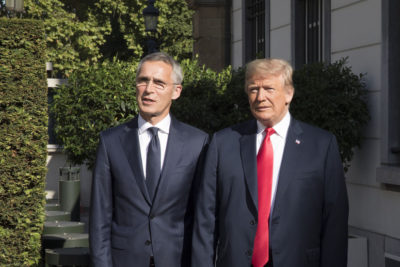
“It’s correct that President Trump called me a few days before his conversation (on tariffs and economic issues) with (Norway’s) Prime Minister (Jonas Gahr) Støre,” Stoltenberg told newspaper Dagens Næringsliv (DN) in mid-August. Stoltenberg, who has just released his own book on his decade leading NATO, declined to say whether Trump also mentioned his desire for a Nobel Peace Prize, but DN and other media have reported that the subject has come up repeatedly. Trump has made no secret of his desire for a Peace Prize and even said recently that it would “be a big insult to our country” the US if he doesn’t win one.
It remains unclear whether Trump would really try to punish Norway, one of its NATO allies, if he doesn’t win a Nobel Peace Prize on Friday. Trump has lashed out at other NATO allies, not least Canada and Denmark, but many note that the US relies on Norwegian expertise in the Arctic, which it views as a strategic area for its own defense. Trump also gave Prime Minister Støre of the Labour Party and his delegation (which included Stoltenberg) a warm welcome at the White House earlier this year despite many political differences. Norway “never threatens anyone,” Støre himself has said repeatedly, especially after its neighbouring Russia invaded Ukraine, but remains determined to defend itself.
Stein Tønneson, a senior researcher emeritus at the foreign policy research institute NUPI and an expert on Peace Prize history, thinks Trump’s obsession with the prize is tied to both its status and to Trump’s “enormous ego and ambitions.” Tønneson found Trump’s “insult” remark disturbing, however, and told newspaper Klassekampen over the weekend that “yes, he can” try to punish Norway if he doesn’t win the prize, “especially if the prize is awarded to someone (or an organization) that he doesn’t like.” He may not distinguish the independence of the Norwegian Nobel Committee from Norway itself, despite the division that exists between them.
Other researchers and experts on international affairs and peace efforts stress that Nobel prizes are given for achievements made before the annual nomination deadline at the end of January. So even if Trump manages to achieve a settlement between Israel and Hamas, it wouldn’t be part of Peace Prize considerations until next year at the earliest. The Norwegian Nobel Institute reported earlier this year that it had registered a total of 338 candidates for the 2025 Peace Prize, of which 244 are individuals and 94 are organizations.
The institute also noted that neither the names of nominators nor nominees can be divulged until 50 years have passed, also because of rules tied to the prize. Nobel officials can’t stop those nominating Peace Prize candidates from publicizing them, as Israeli leader Benjamin Netanyahu did after he’d nominated Trump for the prize, but the committee frowns on that.

Top candidates selected by professional researchers who follow both international and Peace Prize develoments are all organizations deemed most worthy of this year’s Nobel Peace Prize. The Committee to Protect Journalists tops the list prepared by Nina Græger of Norway’s peace research institute PRIO in Oslo. She thinks that would “send a powerful message that peace and democracy are endangered if journalists are prevented from keeping the world informed.” Even though two journalists (Maria Ressa and Dmitry Muratov) won the Peace Prize just four years ago, Græger notes that “never before have so many journalists been killed in a single year … 70 percent of them in the Israel-Gaza war,” and that from Russia to Myanmar, Afghanistan and especially Gaza, “reporting truth has become a matter of life and death.”
PRIO’s list, which has a strong track record of subsequent winners, also includes Sudan’s Emergency Response Rooms (ERR), which provides humanitarian aid to war victims, the OSCE’s Office for Democratic Institutions and Human Rights along with The Carter Center, the Women’s International League for Peace and Freedom and The International Court of Justice and the International Criminal Court.
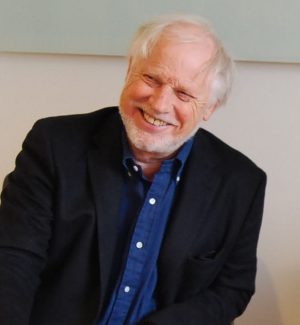
Asle Sveen, a historian who wrote the book on the first 100 years of Nobel Peace Prizes in 2001, is among the most blunt in his opinion of whether Trump is a serious candidate. He and fellow historian Øivind Stenersen recently noted in newspaper Aftenposten how Trump has refused to accept the results of a democratic election (when he lost his bid for re-election in 2020) and inspired his followers to carry out a state coup. Sveen and Stenersen also ran through many of Trump’s other moves since taking office in January that violate Alfred Nobel’s ideals, and concluded that “only a nervous breakdown” on the part of the Norwegian Nobel Committee could fulfill Trump’s dream of becoming a Nobel Laureate.
All still think the Nobel Peace Prize is “very important,” perhaps more than ever this year “when everyone is talking about war,” Græger notes, “and we need recognition of how important peace is.” Leira points to “macro-trends” over the years that have tied the prize to both peace and justice, and the need for sustainable communities and civil societies. He also thinks the Norwegian Nobel Committee “likes to be unpredictable,” leading to some surprise winners in recent years while also moving away from “highly controversial” winners.
Both think the prize also remains highly relevant and important in such a troubled world. “I think it’s more relevant than ever,” said Græger.
NewsinEnglish.no/Nina Berglund
