

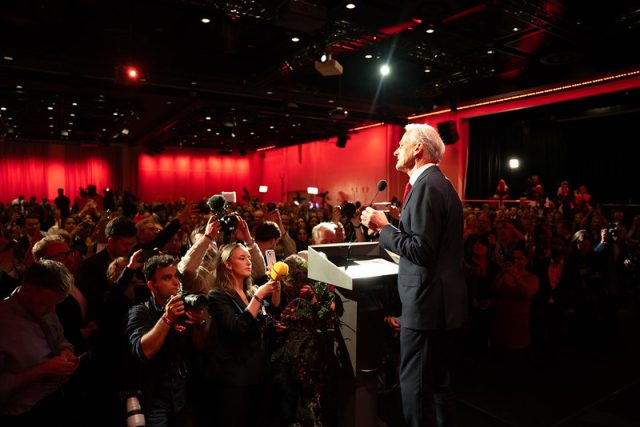
NEWS ANALYSIS: Norwegian Prime Minister Jonas Gahr Støre put it perhaps best himself, after his minority Labour government won enough votes in Monday’s Parliamentary election to remain in power: “It’s one thing to be elected,” Støre told cheering party members shortly before midnight. “It’s something else to be re-elected.”

That set off even more cheers and long chants of “four new years, four new years.” Norway’s Labour Party and Støre himself had overcome all the odds. He was down in the dumps less than a year ago, when polls fell to less than 15 percent favouring Labour and a victory for the conservative opposition loomed as election year began.
But then Støre’s Labour ran into yet another conflict with its government partner at the time, the unpopular Center Party. Their partnership broke up in January and Støre asked his own former boss Jens Stoltenberg (who had just come home to Norway after 10 years running NATO) if Stoltenberg would like to join his new pure Labour government and take over as finance minister. The extremely popular Stoltenberg agreed, and with Labour now on its own, polls started rising.
They continued to do so, and Labour won Monday’s Parliamentary election with 28.2 percent of the vote and more seats in Parliament (53) than any other party. Labour also remained Norway’s largest party, but with the right-wing Progress Party not far behind with 23.9 percent. The Conservatives, traditionally Labour’s arch-rival, ended up as a shadow of its former self with just 14.6 percent of the vote, not enough to form a new conservative coalition. Even though the conservative Christian Democrats won extra representation in Parliament with 4.2 percent of the vote and seven seats, the non-socialist Liberal Party (Venstre) fell apart, ending with just 3.6 percent and three seats.
Now Støre has a solid team behind him and much higher spirits within Labour itself, but will still need cooperation from the four other parties on the left side of Norwegian politics. He’ll need to strike deals with the Socialist Left Party (SV), the Reds and the Greens, all of which won around 5 percent of the vote and a total of 25 seats. Speculation was already rising on Tuesday that Labour’s former government partner, the rural-oriented Center Party, may drift over to the conservative side after seeing its election results crash from more than 13 percent in 2021 to just 5.6 percent.
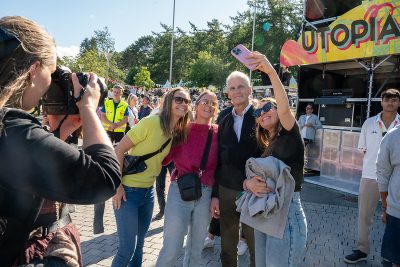
Even though Støre made a point of stressing how Norway’s cities and outlying districts need to work “hand-in-hand,” there’s no doubt that his far more urban- and international expertise helped him win the election. Election analysts had predicted that many Norwegians who’d never voted for Labour would now, at such a critical time when democracy is under threat all over the world. The highly educated and multilingual Støre, his ministers and Norwegian ambassadors are closely involved in efforts to keep defending Ukraine, supporting the Palestinians’ rights in the Middle East and, not least, trying to deal with US President Donald Trump. It was simply not the right time to dramatically change Norway’s political leadership.
Støre was already by far the favoured candidate for prime minister, with 46 percent of all voters backing him in a recent poll conducted by research firm Respons for newspaper Aftenposten. The embattled Conservatives’ leader Erna Solberg won just 24 percent while only 18 percent preferred Progress leader Sylvi Listhaug as prime minister.
Listhaug had avoided most questions about foreign policy during the campaign, even refusing to take part in a pre-election program on pressing international issues hosted by state broadcaster NRK. While domestic issues dominated during Norway’s relatively short election campaign in August, and had arguably been overlooked during all the uproar over Ukraine, Gaza, Trump’s tariffs and questionable allegiance to NATO, Listhaug was accused of being provincial and removed from international realities.
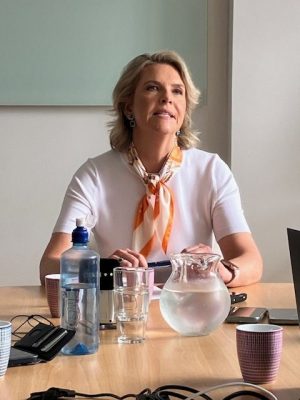
One campaign donor who supports the conservative side, Jan Petter Sissener, told newspaper Dagens Næringsliv (DN) last week that he’d asked Listhaug to let the Conservatives’ Erna Solberg take over again as prime minister even if Progress won more votes in a conservative victory. Sissener viewed Solberg as far more capable of unifying the conservative side than Listhaug, along with being more internationally oriented.
Listhaug had also been accused of doing little to unify the conservative side herself, opting to criticize all other parties, not just those on the left. It remained unclear whether she even wanted to become prime minister, consistently refusing to answer direct questions on the issue and merely responding that policy was more important than position. She told foreign correspondents at a meeting in early August that the only ministerial post she’d demand if given the chance to form a government, was education.
Now she’s lost her bid for government power but is still widely viewed as one of the big winners in Monday’s election, along with Støre’s Labour Party and the Greens, which won more seats in Parliament than ever before. The Greens had successfully expanded its agenda beyond climate and environmental issues, calling for more cooperation with Europe and even EU membership in an election where that issue had once again been parked. The Greens otherwise identified 14 issues on which it believes Labour and its potential partners agree.
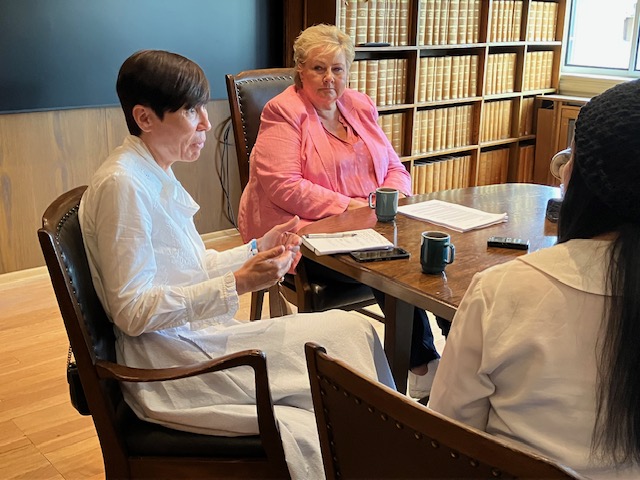
The biggest loser in Monday’s election was Erna Solberg and her Conservative Party. It performed so poorly that several longtime Conservative politicians lost their seats in Parliament (as did several Center Party MPs). Not even the leader of the Conservatives’ youth organization, Ola Svenneby, won a seat, and many expressed deep disappointment. Solberg, soiled by a stock-trading scandal involving her husband two years ago, came under criticism for not stepping aside as party leader long before the election campaign began. Now she admits she’s unlikely to be the Conservatives’ prime minister candidate in 2029.
“I think we landed in a squeeze between Labour and Progress,” she said from the podium after admitting defeat Monday night. The Conservatives’ election results were the worst since 2005 and the party is ripe for a generation shift, even though several MP-candidates failed to win seats. She congratulated both Støre and Listhaug on their election results and promised an “evaluation” of what went wrong.
By Tuesday afternoon, calls for Solberg’s resignation were rising. Longtime MP Ingjerd Schou said she thinks Solberg should resign immediately and be replaced by Peter Frølich, who’s led numerous aid missions to Ukraine and narrowly retained his own seat in Parliament. Former Oslo Mayor Fabian Stang also thinks Solberg should give up her post, but because “she has worked hard for so many years, and it’s reasonable that some of us are honest and say that it has been a fantastic period but also that the time is right to let others slip in.”
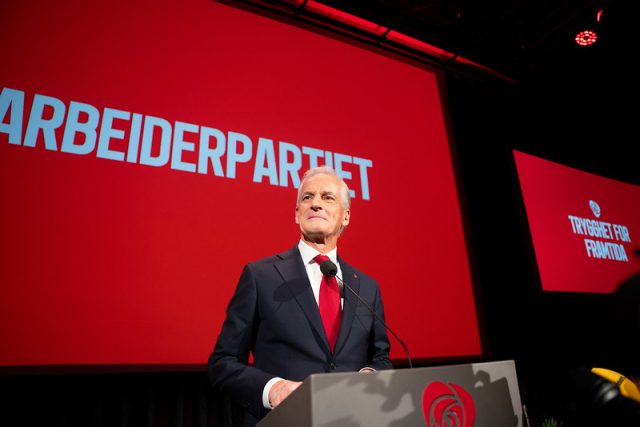
Støre, meanwhile, was clearly savouring his victory, noting during a nationally televised midnight debate among party leaders that “we have had responsibility during a very demanding time.” He was happy for “the renewed confidence” among voters and looked forward “to find good solutions” to looming issues.
Støre said he’ll now initiate “conversations” with all the other party leaders on the left and was “sure that we’ll speak well together.” He’ll soon be meeting his international colleagues again as well, most likely at the UN General Assembly later this month, and said he’d already received several messages of congratulations including one from Canada’s leader arriving at 3am. On Tuesday, Ukrainine’s President Volodymyr Zelensky was among the well-wishers, writing that he wished Støre “continued success in your work for the Norwegian people.” Zelensky also wrote that he was grateful for Norway’s support for Ukraine and looked forward “to continue the important work” for securing “our countries and our region.”
On Tuesday, Jens Stoltenberg also confirmed that he’s “motivated to stay on as finance minister” but cautioned that “in politics, you have to be prepared that things can happen on short notice.” He had turned down a post as leader of the Munich Security Conference when he decided to join Støre’s government and recently told newspaper Dagsavisen that he thoroughly enjoys being back in Norwegian politics.
Stoltenberg said Tuesday that he was already working on proposals for a compromise on tax issues in Parliament, and that would include Norway’s controversial tax on net worth. He aims to organize a new tax commission to review and renew the tax system, but it won’t be in place until after he presents the government’s proposed state budget in Parliament later this fall.
NewsinEnglish.no/Nina Berglund
