

Norway was expanding its offshore oil and gas industry even before the US and Israel began bombing Iran, cutting off Persian Gulf oil supplies in the process. Now a majority of Norwegian leaders think it’s more important than ever to keep Norway’s own oil flowing, despite its contribution to climate change.
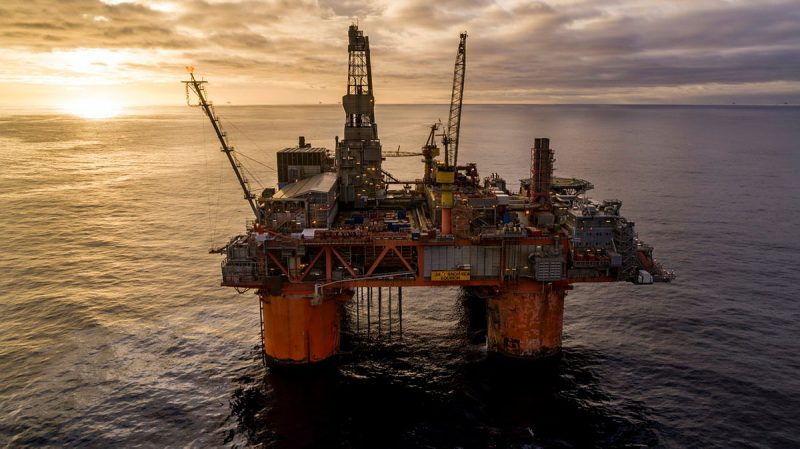
“We will continue to search for more oil, produce and deliver it to Europe,” Norwegian Prime Minister Jonas Gahr Støre declared in January, two months before US President Donald Trump set off a new energy crisis and market chaos. Now Støre is repeating his message of “developing, not phasing out” Norway’s oil and gas resources and supplies, especially in troubled times, and has a majority in Parliament to do so.
His government recently offered 57 new licenses to oil companies for more exploration on the Norwegian Continental Shelf. That was up from last year, and the government has also been eager to open up new areas of the North Sea, Norwegian Sea and the Barents for oil exploration and production. Støre has the backing of both Norwegian industry and labour organizations, and stresses that Norwegian gas has been even more important for Europe since Russia invaded Ukraine more than four years ago. Russian gas supplies were cut off, leading to shortages especially during the winter.
The new war that Trump and Israeli leader Benjamin Netanyahu unleashed in the Middle East threatens supplies again, and has led to an oil price drama the likes of which even seasoned industry executives have never seen. Anders Opedal, chief executive of Norway’s state-owned oil and energy company Equinor, initially described the situation as “unclear, unpredictable and serious.” Now it’s even moreso, with the price of a barrel of Norway’s Brent crude oil shooting up way over USD 100 and falling again on the basis of ever-changing statements from Trump. The value of the US dollar has been highly volatile as well.
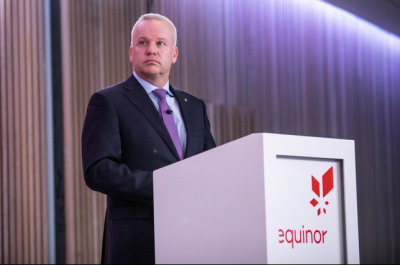
That at least makes Opedal’s job clear: “We can’t do anything about the situation,” he told newspaper Dagens Næringsliv (DN), “so for us this is about ensuring secure and efficient operations so that we can get our oil and gas out to the markets.” He added that he was worried about the huge swings in oil prices, but seemed relieved that Equinor has no production in the areas directly affected by the war nor exposure to volumes generated there.
“It’s in everyone’s interest that the strait (Hormuz, the gateway in and out of the Persian Gulf) reopens again, that normal production resumes in the area and that we get a market in balance,” Opedal said. Meanwhile, he added, the current situation shows that oil and gas are still important despite the need for alternative energy.
“We must be a secure and reliable supplier,” Opedal told DN.

Prime Minister Støre fully agrees, despite criticism from climate and environmental activists and those who don’t like seeing how Norway can profit on war. Støre’s aim is to make the most of oil and gas resources that are likely to decline over the next few decades anyway.
There’s already been a lack of new large offshore projects, worrying labour organizations concerned about a simultaneous decline in jobs. Extending the oil age is “incredibly important,” Kine Asper Vistnes, new leader of Norway’s largest trade union federation LO, recently told DN. “People need jobs to go to and Norway needs more profitable projects to generate new revenues.”
Despite concerns over climate change in Norway and elsewhere, many Norwegians agree. A record 62 percent of them were positive to extending the oil age, according to a Klimabarometer survey last fall, expressing in the survey that oil exploration should continue. That number of those supporting the oil and gas industry had increased by 25 percentage points over the past 10 years.
Efforts are materializing, though, to more systematically monitor how the Norwegian economy can be restructured away from oil and gas. Called “omstilling” in Norwegian, the government presented members of a new Omstillingskommisjon (Restructuring Commission) just before the weekend.
The new commission met demands from the Greens and Socialist Left (SV) parties during negotiations last fall to support Støre’s Labour Party government. Its members include several former climate-friendly politicians who are not fans of the oil and gas industry, including Kari Elisabeth Kaski of SV, Lan Marie Berg of the Greens and Sveinung Rotevatn of the Liberals (Venstre). The commission will be led by Erlend Grimstad of the Center Party, and it’s expected to promote renewal energy projects aimed at replacing oil and gas.
While such restructuring is likely in the future, Støre himself made it clear that current policy favouring oil and gas will continue. He and others think it’s important to maintain oil and gas supplies in democratic and stable countries like Norway, for as long as possible.
NewsinEnglish.no/Nina Berglund
