

UPDATED: Norwegian Prime Minister Jonas Gahr Støre has distanced himself from what he called US President Donald Trump’s “brutal” messages to Iran, and called for diplomacy over brutality. So did his foreign minister, Espen Barth Eide, who later called a ceasefire Trump claimed to have secured “fragile” but “better than the alternative.”
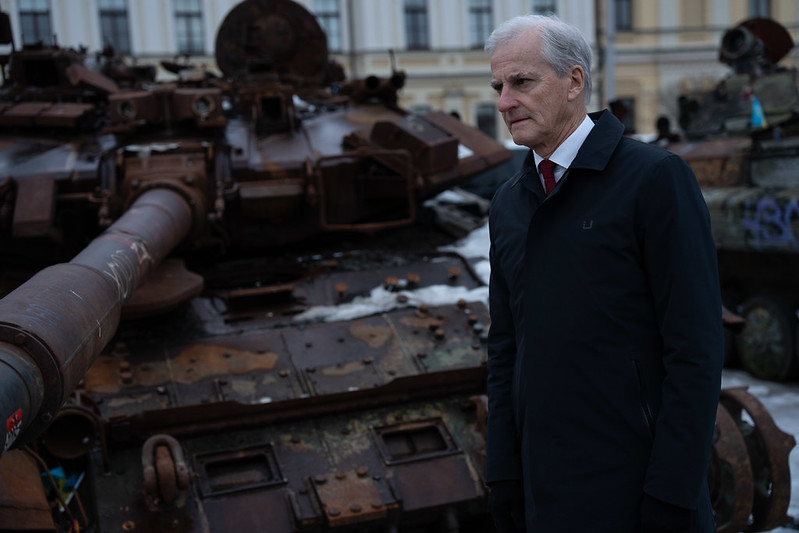
Trump opted for the dramatic earlier this week when he warned that an entire civilization would die and never come back. Trump, who further threatened to bomb Iran “back to the stone age,” has also descended into vulgarity and a manner of speaking that’s stunning and disgusting leaders in Norway and many other countries around the world.
Trump’s statements “are left to one’s own fantasy, but it is a brutal message,” Støre told Norway’s TV2 on Tuesday afternoon. “It must mean warfare, bombing … and it won’t resolve this very serious situation.” The Norwegian prime minister later told state broadcaster NRK that Trump’s handling of the US’ and Israel’s war on Iran “is in a category of its own.”
Støre repeated that the ongoing “conflict” in the Middle East cannot be resolved militarily. “You won’t get ships through the Straits of Hormuz with military means, you have to shift over to something that’s diplomatic,” Støre said. “What we’re hearing today are disturbing signs.”
Foreign Minister Eide stressed on Tuesday that “we’re now in an extremely dramatic and dangerous day for the Middle East. The threats that Trump came with during the night are a further escalation, and Iran’s warning that they will react with similar attacks against countries in the region is deeply disturbing.”
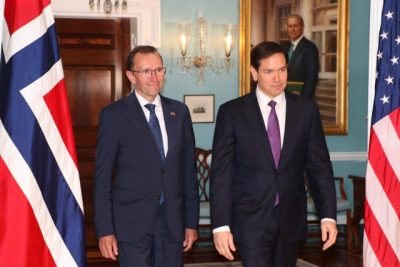
Eide added that he was “deeply worried over how the situation can become even worse.” By late Tuesday afternoon came reports that the US was bombing Kharg Island and that both Israel and the US were attacking railroads and bridges in Iran, even before Trump’s deadline for Iraq to halt its defense operations.
Norwegian officials, along with many others throughout Europe, claim that such attacks defy international law because they’re targeting civilians. “This is dramatic news we’re hearing now, it’s not allowed,” Støre told NRK. “We must hope that this is just words, not actions.”
By Wednesday morning, Trump was coming with new messages and finally seemed to revert to at least some form of the diplomacy the Norwegians and many others were seeking. Eide called Pakistan “an important brick” in the ceasefire by arranging for talks between Iran and the USA.
“I think it became quite clear after a while that Trump really didn’t want this war to become even more dramatic than it already was,” Eide said during the live morning talkshow Politisk kvarter on state broadcaster NRK. “There has been strong opposition (to the war) at home in the USA and very negative international reaction.”
Eide thinks Trump and other US leaders were also surprised by all the negative consequences that Trump’s and Israeli leader Benjamin Netanyahu’s war on Iran has already had for the international economy. “That’s quite odd, because in all earlier rounds (regarding) possible attacks on Iran, it’s well-known that (such negative consequences) will occur,” he said.
Eide was joined on the live radio- and TV program by Ine Eriksen Søreide, a former defense- and foreign minister for Norway’s Conservative Party that’s now in opposition to Støre’s and Eide’s Labour Party government. As often occurs in Norwegian politics, though, there’s broad agreement in Parliament on foreign policy, and both Eide and Søreide were either directly or indirectly criticizing Trump and hoping he’d learn to become more diplomatic.
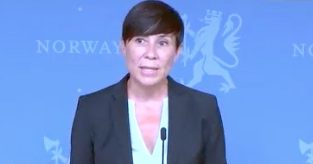
“Something is fundamentally wrong,” Søreide said, “with the manner in which he’s leading, when we all breathe a sigh of relief when the American president changes his mind and says he won’t use military power to seize part of an allied country (Denmark), or when he decides he won’t wipe out a civilization. That’s what makes this complicated.”
Eirik Løkke of the Norwegian think-tank Civita said Trump had been “escalating the rhetoric to the extreme,” but also presenting himself as a leader who’s “becoming frustrated and desperate. He wanted this to be a short war, quick in and quick out. That’s not what (was) happening.”
Others are also critical of how Trump is quick to make threats, only to back off later. When things go wrong, and he changes course, he then brags about how he fixed mistakes he had made in the first place. Norwegian leaders are clearly finding this exhausting. While negotiations between the US and Iran in Islamabad are another welcome relief, Norwegian officials warn they’ll be tough.
“There are several urgent points here that can be very difficult to negotiate over the next 14 days,” Lt Col Sigbjørn Halsne at Norway’s defense college (Forsvarets høgskole) told NRK on Wednesday. “I think the main issues of contention that the diplomats must address are what will happen to (Iran’s) nuclear program and traffic through the Straits of Hormuz.”
Iran reopened the key maritime passage for moving oil out of the Persian Gulf and several ships finally managed to sail through them again on Wednesday. Hormuz gives Iran unique leverage, with Halsne noting how Iran “doesn’t really need strong military capacity to maintain control” of the straits. “Only the ships that Iran has approved have been able to sail through Hormuz,” Halsne said.
He acknowledged that the US and Israel have managed to greatly reduce Iran’s military capability since they started attacking Iran a month ago, “but they haven’t managed to crush the Iranians’ will for ongoing opposition. Iran remains a considerable threat in the region.”
NewsinEnglish.no/Nina Berglund
