

The views from a hilltop called Prekestolåsen on the Hurum peninsula south of Oslo are stunning, as they are from several other peaks in the area. Farmland surrounds the forested area known as Hurummarka, but more than four square kilometers of it is now targeted as the site of a new explosives plant that pits the value of the great outdoors against the need for defense and preparedness.
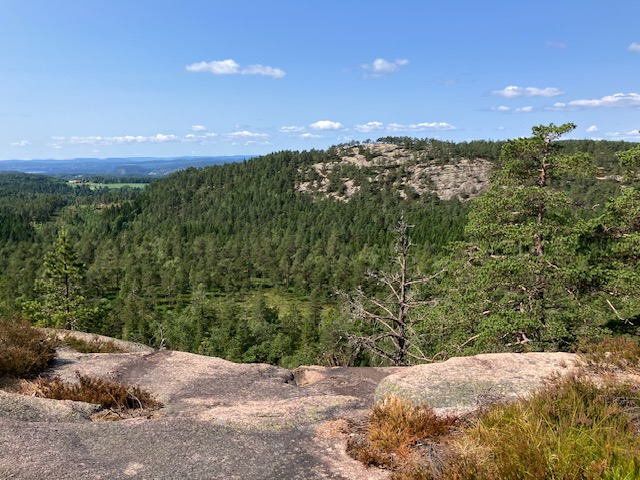
Thousands of hikers have visited the area just in the last few years, after the local skiing and trekking association Skiforeningen chose it for three posts recommended to visit. It’s also a popular recreational area with local residents, many of whom now feel that both the government and the company behind the explosives plant, Chemring Nobel, are forcing the plant upon them.
Among them is Line Johansen, an independent representative on the local Asker municipal council. She fears that local democracy is being overrun by the close cooperation between Norway’s defense ministry and Chemring Nobel, which has operated another high-security munitions plant nearby since 1876. Both stress how demand for advanced explosives has soared since Russia launched its “brutal war” against Ukraine, while also citing “necessary military buildup in Norway and other allied countries.
“The need for military explosives in Europe is greated than today’s production capacity can meet,” states Chemring Nobel on its website, adding that a new explosives plant will also “strengthen Norway’s defense capability and contribute to NATO’s overall preparedness.”
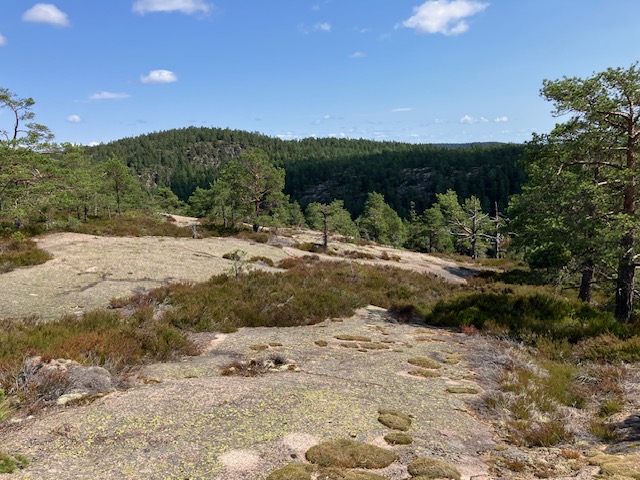
The new plant, which would produce “high-level explosives like HMX, RDX and NTO” needed for use in modern ammunition, remains in “an early phase,” according to Chemring Nobel, and it will be “several years” before it’s operable. The Norwegian government has already decided to concentrate on the Hurum site, with “comprehensive analyses and project plans underway.”
That’s what concerns Line Johansen most of all. She recently wrote in a commentary in newspaper Dagsavisen that “this is about how far the state can go when it thinks something is urgent. It’s about what will happen the next time a project is considered critical and is pushed through, whether it’s a power line, a new data center or a industrial project that’s deemed so important that local democracy must give way.”
She and many others object to what they think is a major power play by the state. More than 800 people had sent in their comments when the hearing deadline for the plans ran out last month. Many of them also responded negatively to the state process and questioned why it was so rushed, with newspaper Aftenposten reporting concerns the process was “undemocratic” and lacked any real opportunity for the public to influence it.
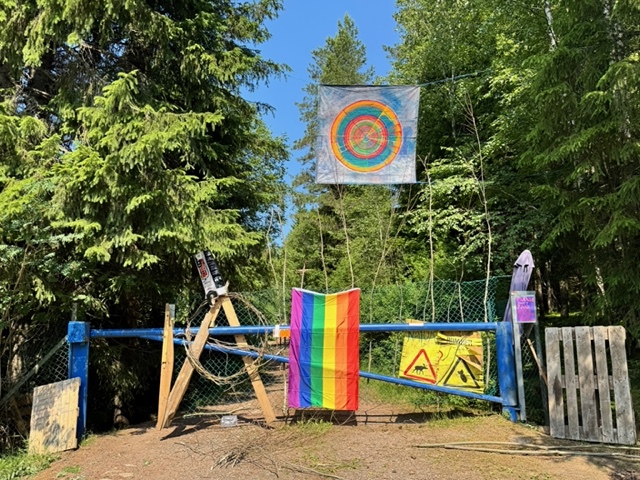
Opposition to the project has exploded itself in recent months, after local mobilization and the arrival of environmental activists from abroad. They occupied a building in the valley just under scenic Preskestolåsen and have launched colourful protests in the area. Ironically enough, the road they’ve blocked off that leads into the building was formerly defense property and the site of a military shooting range. When the defense department no longer needed the area, the state turned it over to the local government in Asker, but now wants it back.
“The project is of considerable importance for national interests and urgent,” wrote one planning leader in Forsvarsbygg, the state agency tied to the defense ministry that is in charge of defense property. He wrote to Aftenposten that the urgency is directly tied to “the acute and critical need for increased production of advanced explosives.” Chemring Nobel’s new plant will contribute, the agency has claimed earlier, to the supplies needed for the defense of Ukraine.
Demonstrators at the site, however, fear the explosives will instead be sold to the US “and sent to Israel,” claimed one of them, an elderly man who spoke Norwegian. Others at the site could not speak Norwegian, had come to Norway and Hurum to join a new environmental battle and did not want to reveal their names. Others were also masked, wearing scarves over their faces so as not to be identified. Their “Join the Resistance” pamphlets were also written in English, proudly proclaiming that “we have occupied the abandoned military barracks in Avgrunnsdalen (the valley below Prekestolåsen) and established an Actively Defended Zone in Hurummarka!”
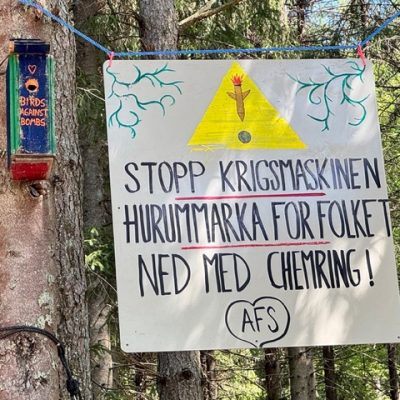
They claimed to “support the locals in defending Hurummarka from the Ministry of Defense and Chemring Nobel’s planned explosives factory (Europe’s largest).” They called the factory “a profit-seeking military-industrial complex” that would be built “not for self-defense as claimed, but to enrich shareholders while expanding the war machine and the American empire.” They wrote that Chemring Nobel is wholly owned by British Chemring Groups PLC, of which the American firm Blackrock is the largest shareholder.
They further write that “90 percent of Chemring Nobel’s production is exported abroad, mostly to the US arms industry (Lockheed Martin, Northrop Grumman and Space X) and often on to Israel. We know that explosives produced at Chemring are part of the American-made Hellfire missile, which is widely used in Israel’s genocide of the Palestinians,” reads their leaflet passed out to visitors and at demonstrations.
The Norwegian government continues to stress the need for ammunition for Norway’s own defense and for shipments to Ukraine. The project alone can also serve as a deterrent to any prospective invaders, and Forsvarsbygg has written that it’s in Norway’s own national security interests that the explosives plant be up and running by 2030 at the latest.
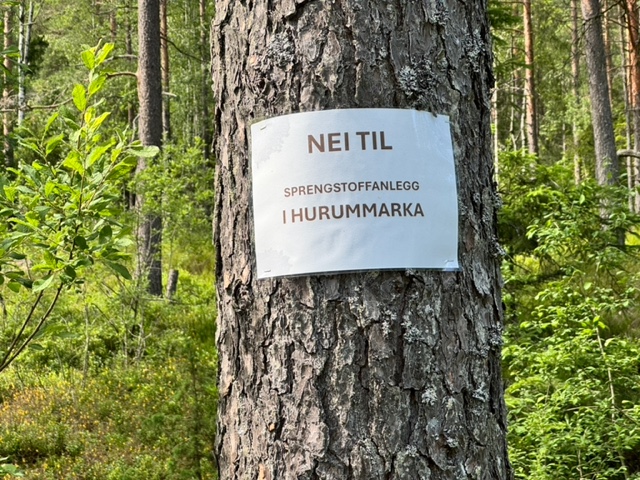
Opponents, however, cite yet other problems with the project, not least that few think Russia’s war on Ukraine will still be going on in 2030 or or beyond. There’s also the threat the new plant poses to the Oslo Fjord itself, which has been declared all but “dead” because of pollution, much of it from nitrogen found in the fertilizer run-off from agriculture. Chemring Nobel itself has been a source of nitrogen pollution at its original plant at Sætre, around 25 kilometers to the northwest. The company now promises it will have “strict demands for security, quality and the environment.”
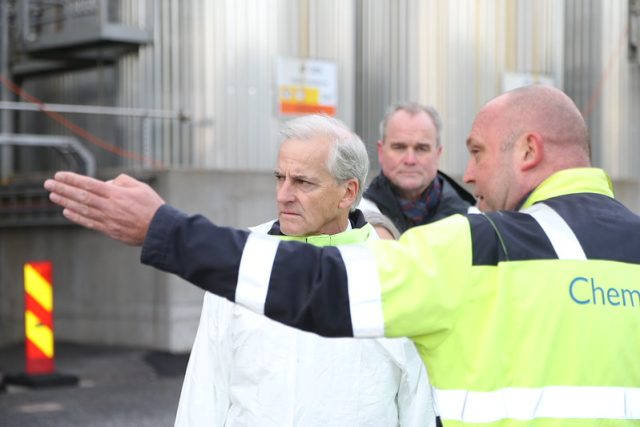
Opposition has spread, meanwhile, and now includes some Norwegian celebrities like musician Ingrid Olava and comedian Sigrid Bonde Tusvik, who has written commentaries in local newspapers including Dagsavisen. The son of Prime Minister Jonas Gahr Støre, who visited Chemring Nobel in 2024 just as the project was getting underway, also opposes the project. Magnus Jonas Slagsvold Støre lives on a farm in the area where he works as therapist and course leader and calls the explosives plant “dangerous peace politics.” He told newspaper VG recently that he wants the Hurum peninsula to remain “a place for water and nature, not fire and explosives.” Prime Minister Støre himself has thus declared a conflict of interest in the subject and withdrawn from debate on the issue.
Newspaper Klassekampen reported in mid-July that Asker now wants to tear down the building that demonstrators are occupying. “The property today has no municipal function, and tearing it down is one of several things under consideration in the area,” municipal director Lars Bjerke told Klassekampen, “also to prevent any dangerous situations and hinder illegal use.”
There’s also the possibility that Russia’s war on Ukraine will end before Chemring Nobel could produce more explosives in Hurummarka in 2030 or beyond. “We hope the war has ended before then,” Karsten Friis of Norway’s foreign policy institute NUPI told Aftenposten. Friis still believes, however, that it’s important to boost production of explosives in Europe, because the war has emptied storage supplies at the same time Europe is building up its defense.
“Regardless of how things go with Ukraine, analysts think Russia continues to represent a threat to Europe as long as (Russian President Vladimir) Putin hangs on to power, and probably long than that,” Friis said. Both Europe and Ukraine will continue to need weapons, he stressed, even after the war ends.
NewsinEnglish.no/Nina Berglund
