

Faced by threats not only from Russia in the east but now also the US in the west, the leaders of all five Nordic nations huddled in Oslo over the weekend with Canada’s Prime Minister Mark Carney. All are eager to “intensify” their cooperation within defense, security and even help build a “new world order.”
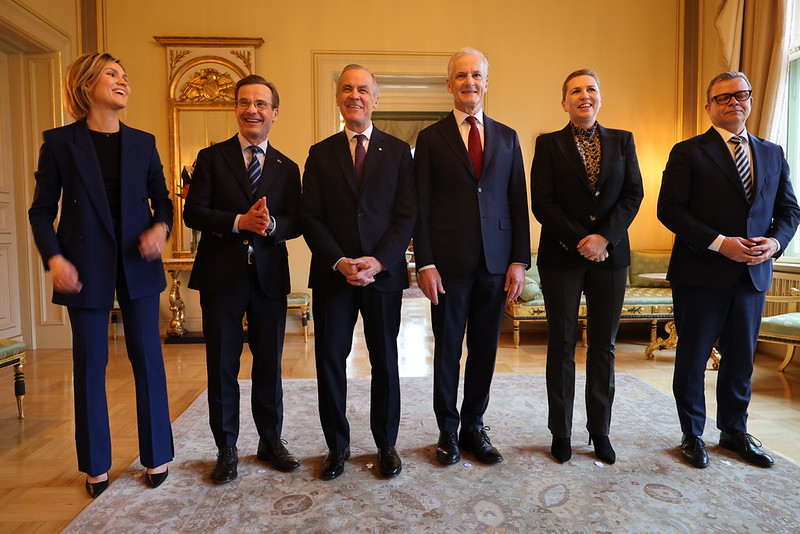
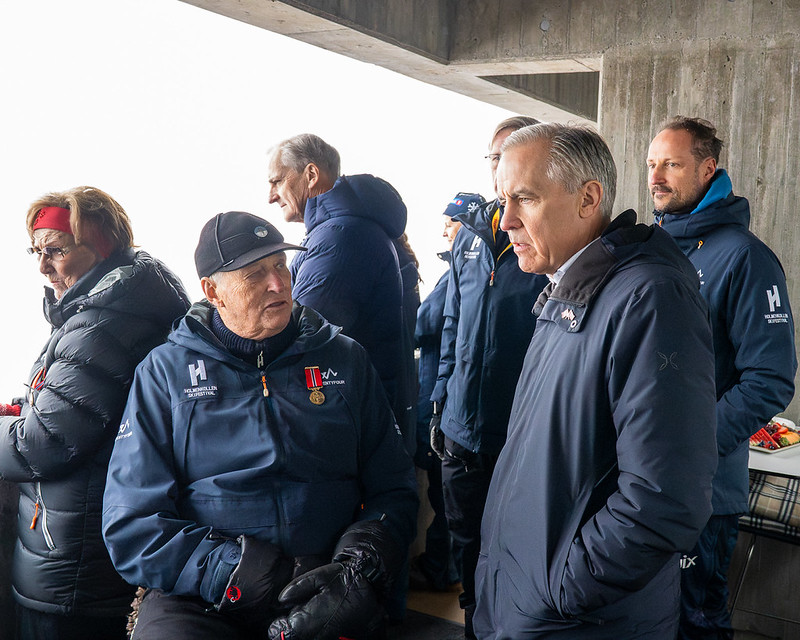
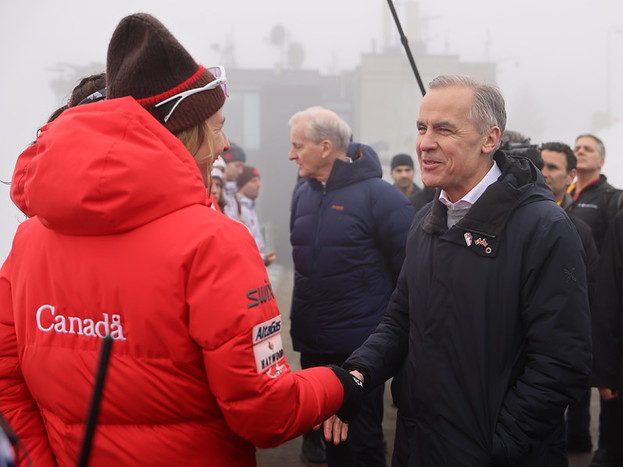
Norwegian Prime Minister Jonas Gahr Støre served as host at the end of what already was an important event: the first official visit of a Canadian leader to Norway since 1980. Carney had arrived in Northern Norway before the Nordic summit began, joining Støre and German Chancellor Friedrich Merz for meetings during the annual NATO winter military exercises.
Carney has grabbed lots of attention tied to his assessment of how the world order has changed since Donald Trump returned as US president early last year. Some major Norwegian newspapers reprinted the entire text of a speech Carney delivered at the World Economic Forum in January, calling for a new approach to new realities.
Norway and Canada already have a lot in common, given their geographic locations on each side of the North Atlantic and vast Arctic areas at sea and on land. Both countries have major oil, gas and seafood industries, indigenous populations and social welfare systems rooted in democracy.
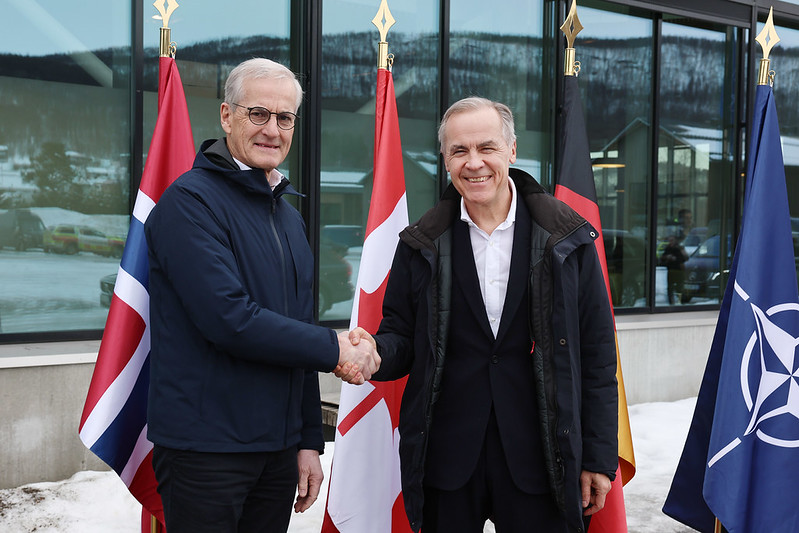
Most important are the new challenges and even threats made by Trump against everything from trade and defense to territorial issues. “At a time of much international uncertainty, it’s important to strengthen cooperation between Canada, Norway and the Nordic countries,” Støre stated before Carney arrived.
After Carney’s first full day in Norway, Støre declared that “we are stronger when we stand together with countries such as Canada … that are major economies and stable democracies with substantial resources and robust institutions.” A new “strategic cooperation” between the two “will also be of benefit to Norwegian business and industry,” Støre said.
Norway and Canada will co-host, along with Ukraine, a ministerial conference in Toronto this autumn, “to highlight the human suffering caused by Russia’s war of aggression against Ukraine.” Toronto has long had a large Ukrainian community, and Støre stressed how Norway and Canada are committed to supporting Ukraine. There was no direct mention of how Trump has cut US support to Ukraine and often seems to favour Russian President Vladimir Putin, even reportedly easing up on sanctions against Russian oil during the weekend, to try bring down oil prices that shot up after Trump and his Israeli counterpart started bombing Iran earlier this month.
On Sunday the prime ministers of Finland, Sweden, Iceland and Denmark joined Støre and Carney in Oslo for a Nordic-Canadian summit. All of them have a lot in common “as Arctic states and close NATO allies … with many shared values and interests,” said Støre. Halvor Hegtun, commentator at newspaper Aftenposten, noted on Monday how all six countries are building “their own Arctic alliance … without the (other) large North American country,” just two weeks after Trump’s US launched its own war with Israel against Iran.
The US has been taking part as usual in NATO’s annual “Cold Response” winter exercises in Northern Norway and Northern Finland with around 4,000 troops. While it’s also mostly been “business as usual” among the various national military leaders and troops in Bodø and Bardufoss, the background for Sunday’s summit in Oslo was anything but usual otherwise, given the new war on Iran.
Norway is among NATO allies criticizing the war on Iran as a violation of international law. Nor was Norway or many other NATO allies consulted, according to Støre, even though Trump now expects allies to send naval vessels to the area and help in efforts to secure oil tankers and shipments out of the Persian Gulf. The Financial Times has reported that Trump seemed to further threaten the future of NATO itself on Sunday, if its members don’t contribute to his war on Iran.
Trump also lashed out at Ukraine again, even though Ukraine has already sent drone experts to the Middle East to help the US. Lt. Col. Dag Henriksen of Norway’s Air Force college told Oslo newspaper Dagsavisen that Ukraine can contribute its “extremely important experience” with drones that have helped Ukraine fend off Russia after four long years of war.
The Nordic-Canadian summit wasn’t only about war and defense. Those attending also talked about creating new opportunities for economic growth, job creation in Arctic areas and climate measures aimed at preserving the Arctic despite all the offshore oil and gas production and exploration still going on.
Carney admitted to “a growing list of challenges” in the area, not least in protecting it in a variety of ways. All six countries, Støre said, “are committed to democracy, the rule of law and international law.” They also put a high priority on social welfare and sovereignty, with Danish Prime Minister Mette Frederiksen expressing deep gratitude for the support Denmark and Greenland have received amidst Trump’s claims that he wants to “take over” Greenland.
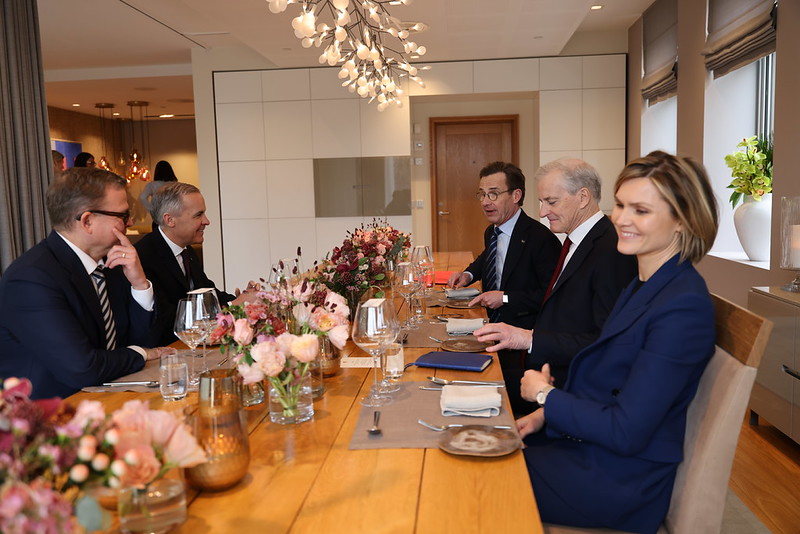
They acknowledged living “in a time of heightened geopolitical tension, war and climate change,” and they renewed commitments to international cooperation based on shared values and interests “as the best way to strengthen our common security and prosperity.” Ulf Kristersson of Sweden hailed Carney’s initiatives to boost cooperation among mid-sized countries, and called for allies to be more “pro-active” in doing the same. Iceland’s Kristrun Froastadottir thinks the new global situation can result in “new international dynamics” and opportunity for shifting alliances. “We won’t shut anyone out, rather expand,” she said.
Petteri Orpo of Finland noted how the Nordic countries and Canada have already made huge investments in strengthening their military capability in the Arctic. Finland has devoted major resources to defense for decades, long before joining NATO along with Sweden after Russia invaded Ukraine.
Carney told reporters at a press conference on Sunday that “working with this group” of Nordic countries “is at the center of Canada’s strategic interests.” Frederiksen, who’s up for re-election in Denmark, claimed that those meeting in Oslo and many other NATO allies “must remain even more united in a world such as it is now, where the old world order is gone and probably won’t come back. We must build something new, and it must be a world order based on the values we represent.”
NewsinEnglish.no/Nina Berglund
