

Norwegian government officials, Norway’s king and queen and not least survivors of a right-wing extremist’s deadly attacks on July 22, 2011 gathered once again on Wednesday. They don’t want anyone to forget the terror that hit Norway 15 years ago, especially following a documented increase in hatred and extremists’ threats.
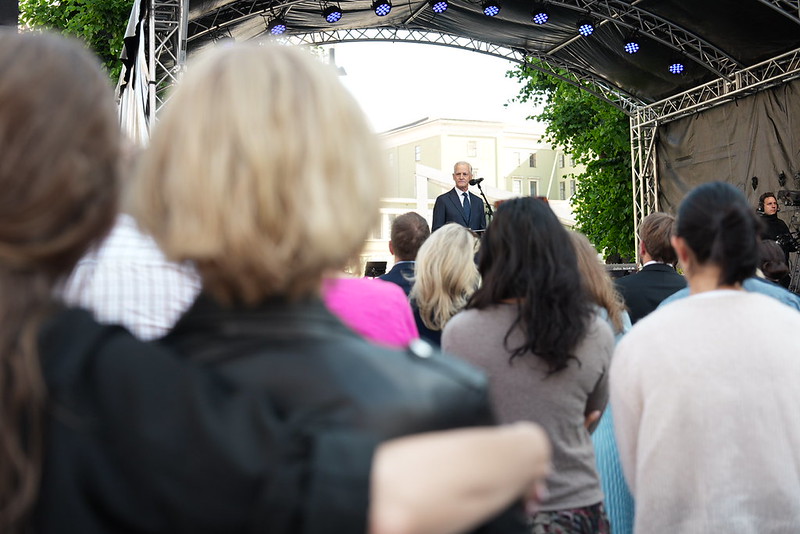
Prime Minister Jonas Gahr Støre noted at the outset that July 22 remains one of the year’s most difficult days for many. This year, however, Støre could speak from a newly renovated and reopened government complex in downtown Oslo, which the lone Norwegian terrorist bombed before heading for Støre’s Labour Party’s youth summer camp on the island of Utøya. Once there, dressed in a mock police uniform, the still-jailed Anders Behring Breivik gunned down scores of young party members before surrendering to special forces when they finally arrived on the island.
Breivik killed 77 people that day, and continues to be confined under Norway’s lengthiest prison term. A recent report from the country’s police intelligence agency PST, however, shows an increase in those “inspired” by Breivik’s twin attacks. “The threat from right-wing extremists is greater today than it was in 2011,” wrote PST shortly before the 15-year anniversary observances began.
The July 22 attacks remain the most deadly right-wing extremist attacks in the world in recent times, noted PST (Politiets sikkerhets tjeneste). The security agency added it has “registered” that Breivik’s attacks “to a rising degree” are “motivating players within right-wing extremist landscape.” After examining other cases tied to such extremism, “Breivik’s acts and mindset contribute to increased radicalism,” wrote PST, especially among young men.
PST also reported that since 2019, those behind right-wing extremist attacks that were both carried out or averted now refer to Breivik more often than they did earlier. Many have gone through a varied radicalizing process that’s not so much based on racial or white supremacist ideology as on their own weaknesses. Fascination with violence and mass-murder like that carried out by Breivik can be as important as right-wing ideology.
This raises a dilemma in Norway, where many leaders, victims and parents of those killed by Breivik on July 22, 2011 still can’t bring themselves to utter his name. He’s mostly been referred to as “the terrorist” or “the mass-murderer,” not as Breivik or a fellow Norwegian. Prime Minister Støre, who was foreign minister at the time of the attacks on his own political party, left Breivik’s name out of his prepared remarks on Wednesday but acknowledged that hatred in extreme circles lingers and, according to PST, is rising.
Støre also stressed that the terrorist attacks 15 years ago were planned in detail and stemmed from right-wing extremist attitudes. Breivik, the son of a Norwegian diplomat, opposed Norway’s fundamental values of human rights, equality, diversity and tolerance. He wrote in a rambling manifesto tied to the attacks that he blamed the Labour Party for allowing, in his view, too many immigrants into Norway.
Støre referred to PST’s new report, especially how it noted that boys and young men can be drawn into “a rough climate, especially in social media, of increased polarization, online abuse, hatred and threats.” He urged everyone to take this seriously, and not let extremism become normal. PST has also urged parents to follow their children’s activity on social media, warning that the terror threat comes largely from those taking part in digital platforms where violence is encouraged amidst humour, gaming and other pop culture. Parents discovering any worrisome online activity were urged to report it to PST.
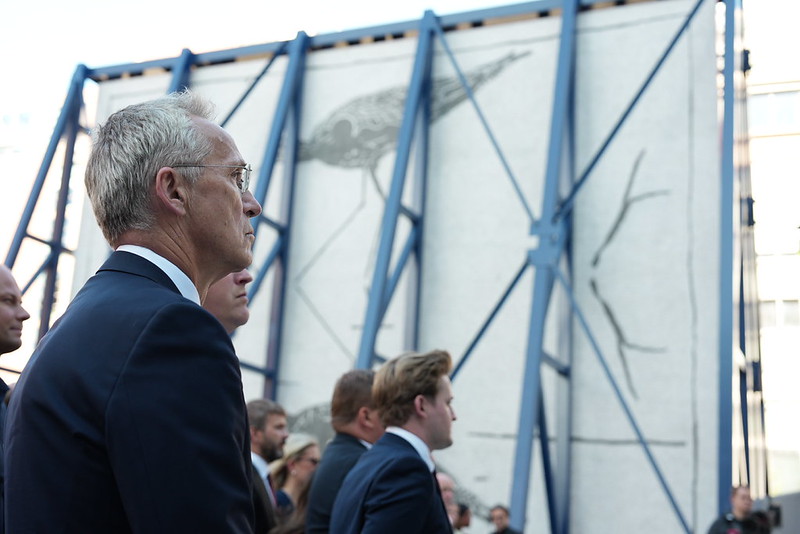
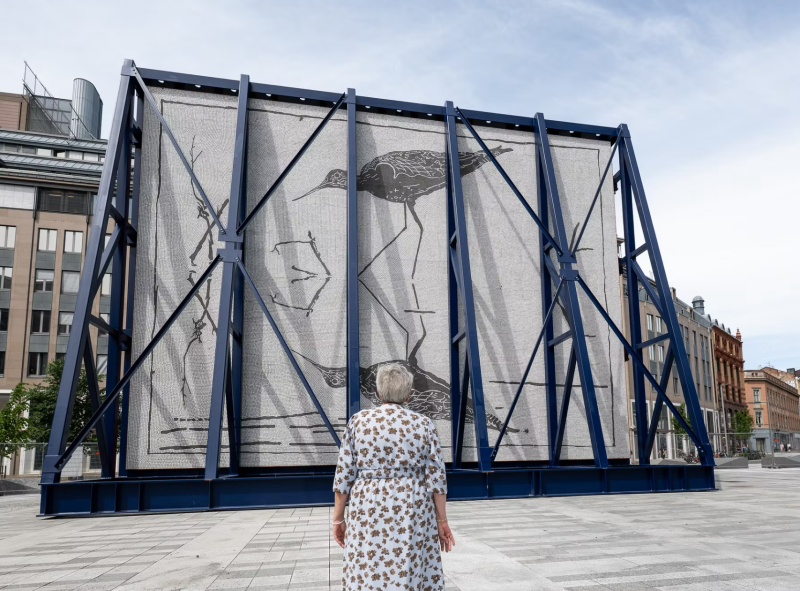
Støre also stressed, however, that the renovation and reopening of the government offices that Breivik bombed send a signal of defiance against terror, as does the new July 22 memorial and the earlier reopening of Utøya. An expanded July 22 Center at the government complex also reopened on Wednesday, now with more information about the twin attacks and a place where people can gather, talk, share memories and support one another.
The prime minister thinks the new July 22 “monument” also ties the government complex and Utøya together. While the government buildings once again housing six ministries are under heavy security, the outdoor areas are open to the public and meant to be a gathering place of sorts, full of artwork and even fountains to wade in on warm summer days.
Støre also stressed that despite all the terror trauma, this summer has shown how the vast majority of Norwegians band together in times of joy and trouble. “It’s been a summer of great contrasts,” he said, from jubilation and unity over the national football team’s success at the World Cup to all those rushing to help victims of the country’s largest fire in decades last weekend.
“Today, on July 22, 15 years after the attack, it’s good to come together again, talk about the people we lost, and show that we care about one another,” Støre said, “all of you who survived (several Utøya survivors are now serve in his government), those who still suffer, everyone whose lives changed forever. Everyone who still lives with July 22.”
NewsinEnglish.no/Nina Berglund
