

Thursday, May 24, 2012     News feed

Grocery branch probes high prices

October 19, 2011  

Thousands of Norwegians cross the border into Sweden every day to stock up on groceries and other goods that are as much as 40 percent cheaper than they are at home. Now grocery retailers themselves concede that Norwegians pay NOK 31 billion more for food than their Scandinavian neighbours every year, but they won’t accept the blame.
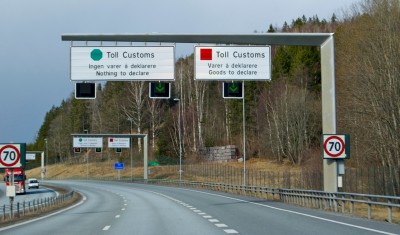
This is a familiar site to Norwegians who go shopping south of Oslo in Sweden to avoid Norway's high prices at the grocery store. PHOTO: Views and News

The grocery store owners commissioned their study of Norway’s high food prices in response to a government-backed study released earlier this year. The government study put a lot of the blame for high food prices on a lack of competition within the grocery store industry, where several retail chains are owned by the same company and wholesalers also have a lot of power, keeping choices low, product sizes small and prices high.

The new study released on Wednesday acknowledged that Norwegian consumers end up paying NOK 31.3 billion more for food than Swedes and Danes, or roughly NOK 15,000 more per household ini Norway.

The retailers’ organization Virke, formerly known as HSH, hired the Norwegian institute for agricultural economics (NILF) to detail price differences. Newspaper Aftenposten reported that they attributed NOK 8 billion of the excess amount to Norway’s agricultural policies that protect farmers through heavy subsidies and high tariffs on cheaper imported goods.

Another NOK 13 billion of the NOK 31.3 billion was attributed to higher prices and rates retailers pay to lease or buy their stores and maintain them, to hire workers and cover expensive distribution costs.

The remaining NOK 9.5 billion was “unclarified,” and the researchers from NILF admitted some of it can be blamed on a lack of competition among Norway’s various grocery store chains. They don’t think Norway’s higher prices can be blamed on the grocery store chains alone, even though their owners tend to be among the wealthiest in Norway.

Debate over high food prices will continue, with a hearing on the government report expected sometime after December 1. Meanwhile, stores in Swedish border towns like Svinesund and Töcksførs are likely to remain busy.

Views and News from Norway/Nina Berglund

Print Friendly

flattr this!


  • Gibcdi

    Its obscene the amount of money that we pay to grocery stores! Might as well hang me upside down and shake me for loose change. Having to drive to Sweden for groceries for økologiske or green products is an offense to the purported environmental policies that Norway claims to hold, as well as an affront to the supposed equality that the Scandinavian model claims it wants to support, and relatively costly in terms of its effects on health, with 6-10 people dying of heart disease and cancer.

    Food prices affect those with difficulties – the working poor (they exist here too!), the sick, some elderly, families who cant afford cars, freezer units, etc- in a disproportionate manner since not everyone, inspite of the system being fairer here than elsewhere, can afford to jaunt accross the border for a weekend shopping trip, cause gas taxes are also expensive, and sometimes just taking a trip can be taxing.

    While some premium for labor/rents is understandable, and there may be reasons to subsidize farmers for the sake of preserving a cultural legacy and some food autonomy, I dont understand why the US can have sales taxes on food of 0% and Norway’s is a staggering 14%. Non-progressive US understands that people need to eat. People dont get taxed on their foodstamps!

    Furthermore, most of the purportedly healthy items, e.g. mangos, bananas, avocados etc., cant be grown in the climate, and therefore are no threat to the viability of Norwegian farms. The point is that subsidizing farmers is ok if it brings the cost of food down, keeps people nominally employed and preserving tradition, but it is unforgivable to raise the cost of the rest of the food up so that farmer may “compete” in a land with 3-7% arable land. Depending on Norwegian agriculture for the feeding of its people, just led to a mass migration to the US in the 18th century, as well as really bland cuisine.

    When a Norwegian cucumber costs 20 NOK and a McDonald’s cheeseburger costs only 10 NOK, it is perhaps better to rethink the tax structure in order to save on healthcare and the like. Soylent green, anyone? Sorry for sounding like Andy Rooney but that’s just messed up.

    • kiwirob

      I’m back home in NZ on holiday, one of the first things I did was go to the local grocery store, I nearly broke down and cried, the amount of choice was simply staggering, the variety was many many times what I can get in Norway and the prices were significantly cheaper. I don’t understand why Norwegians don’t protest this issue or why the govt has just decided to increase the sales tax on groceries, daft, completely daft.