

As Norway’s struggling left-center government braces for a new conservative Trump presidency in the US, it also faces a new reality at home. A majority of young Norwegian men are voting for conservative parties, too, also in areas of the country where Labour and other left-leaning parties have dominated for decades.
A new public opinion poll released on Tuesday shows how the Labour Party and its government partner, the Center Party, have sunk to new lows. In Norway’s northernmost county of Finnmark, for example, Center now holds just 5.8 percent of the vote, only a third of the 18.4 percent it won in the last national election in 2021. Labour has also crashed in Finnmark, falling 11 percentage points to 20.4 percent as of last week.
Now topping the poll in Finnmark, conducted by research firm Norstat for state broadcaster NRK and local newspaper Altaposten, is Norway’s most conservative party, Progress. Its voter support has more than doubled, to 24.4 percent, and that has all but shocked political analysts. Some point to the overall unpopularity of the current government led by Labour’s Jonas Gahr Støre and Center’s Trygve Slagsvoll Vedum. Others point to specific issues in Northern Norway, not least large electrification projects that are likely to raise local utility rates. At the same time there’s strong opposition to wind power projects and their giant turbines.
The Conservative Party itself also jumped 3.2 points in Finnmark, to 10 percent, but it’s Progress’ strong showing that most reflects a new trend nationwide. It began surfacing more than a year ago, not long after a state commission had been formed to study the social and political situation for boys and men in Norway. Concerns had arisen over whether they’d fallen behind regarding gender equality: More women than men, for example, are still likely to win custody of children when couples break up, boys haven’t been doing as well in school as girls, boys’ and young men’s involvement in crime, drug use and violence is always higher, and suicide rates have risen among men.

When the men’s commission’s report was issued earlier this year, recommendations included a list of 35 improvements within public programs tied to physical health, mental health, education and social welfare. All this may have led to a sort of men’s political reawakening as well. It became clear that men often have different priorities than women. Election analyst Johannes Bergh told newspaper Dagsavisen earlier this year that ideological differences between men and women have expanded, also in Norway.
“It’s interesting that as gender equality has taken hold, gender differences when it comes to politics have become greater,” Bergh told Dagsavisen. “It’s not necessarily a problem, but it shows that gender becomes a more important dividing line in politics.” Voter apathy used to be more common among young men than women, Bergh added, but non-socialist parties in Norway have managed to mobilize more of them in recent years.
Two young men in Norway now also hold high-ranking roles in both the Progress and Conservative parties, and have been mobilizing other men via social media. Both play an important role on the non-socialist side of Norwegian politics, and look likely to become more and more influential.
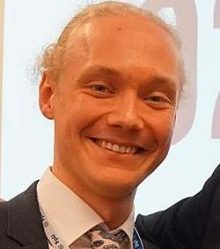
Simen Velle, age 23, is the young new star of the Progress Party (Fremskrittspartiet, Frp) and may even win a seat in Parliament next year. He’s been open about drug use as a teenager and even has been convicted for possession of hash, but claims that can help widen perspectives and highlight the problems young men struggle with. He also stresses “pocketbook issues” that resonate with many, just like they did with voters in the US who helped elect Trump after he’d stressed problems with the economy and immigration.
Ola Svenneby, age 27, is Velle’s counterpart at the Conservative Party (Høyre, H), and part of a new “non-socialist generation” in Norway. Like Velle, he’s an active communicator on social media with other young Norwegians. Political commentator Frithjof Jacobsen in newspaper Dagens Næringsliv (DN) has noted how both Svenneby and Velle “speak clearly, appear unabashedly self-confident and relaxed … and are good at getting across their message.” Both also seem more concerned about pushing through political change than simply plotting their own political careers, unlike many of their older political colleagues on both the left and the right.

Svenneby and Velle also seem to represent other young Norwegian men who, reported newspaper Aftenposten in June, “are becoming steadily more conservative.” Last year’s local elections in Norway resulted in nearly all Norwegian cities switching from Labour- to Conservatives-led local governments, part of what analyst Bergh called a “reaction” to a decade of concern for the climate and environment, diversity and equality. Now the economy, defense and personal freedom seem more important, not least after the past few years of rapidly rising prices. Again, as in the US, economic issues took precedence over social issues.
Newspaper Klassekampen editorialized after last year’s local elections that such issues also can explain why fully 58 percent of all men under age 25 voted for either the Conservatives or the Progress Party. Only 18 percent voted for either the Socialist Left, Reds, Labour or Center parties. The paper feared that young men simply don’t believe any longer that the left side of Norwegian politics is interested in addressing the challenges they face.
Most startling is another new poll, conducted by research firm Ipsos for state broadcaster NRK, that showed how 47 percent of Norwegian men aged 18-29 said they would have voted for Trump if they’d had voting rights in the US. Among them is Herman Winther, a 23-year-old philosophy student at the University of Oslo who didn’t like Trump at all in 2016 but now sees value in what he described to Aftenposten this week as “conservative realism.”
Progress Party officials, meanwhile, remain delighted with their surge in the polls, especially in Finnmark. Bengt Rune Strifeldt, who currently represents the party in Parliament, thinks it would be “fantastic” if he gets more party colleagues next year. “But there’s only one poll that’s important,” he told NRK, “and that’s the election next autumn.”
NewsinEnglish.no/Nina Berglund
