

NEWS ANALYSIS: Norwegian Defense Minister Tore O Sandvik ceremoniously signed Norway’s biggest and perhaps best-received defense deal ever on Thursday, formally agreeing to buy five new British frigates for GBP 10 billion. The deal has been hailed as everything from “solid” to “comforting,” and shows how much times have changed since Norway lost a frigate just seven years ago.

The world was more peaceful back in November 2018, when the Norwegian frigate Helge Ingstad was triumphantly returning to Bergen after NATO exercises. Not far from its home port, though, the frigate collided with a fully laden oil tanker that was leaving a well-known local terminal. The frigate ultimately sank, the accident became a huge embarrassment for the Norwegian Navy and its already-troubled frigate fleet was instantly reduced by 20 percent.
The vessel was later scrapped, a lengthy investigation followed, the officer on duty went on trial and was found guilty of negligence. Norway was left with just four frigates to patrol its lengthy coastline and contribute to NATO operations.
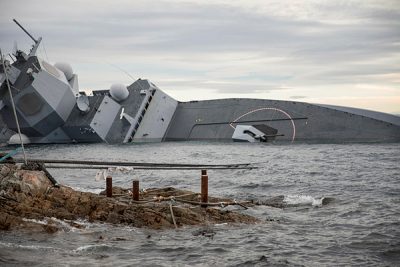
The entire “frigate fiasco,” as it was called, led to an argument in Parliament that seems petty at best now. The former Conservatives-led government wanted to replace the frigate, but failed to win support from the Labour-led opposition. A new frigate at the time would have cost an estimated NOK 5 billion that would have needed to come out of Norway’s already-large sovereign wealth fund known as the Oil Fund, and that was deemed unthinkable.
In the end, the salvage- and other costs of the sunken frigate were not covered by any extraordinary withdrawals from the Oil Fund, and Norway has had to get by with just four frigates, one of which is currently sailing in the Pacific with the British fleet. When Russia invaded Ukraine in 2022, however, the political mood shifted dramatically in Norway, all 10 political parties in Parliament joined forces and have regularly been pulling money out of the albeit even larger Oil Fund ever since. Tens of billions have been sent to Ukraine to boost its defense, and billions more are being spent to improve Norway’s own.
Now Norway’s Labour government, the leaders of which balked at paying NOK 5 billion for a new frigate in 2019, are set to pay more than 20-times as much for five new and reportedly much better frigates. Prices have soared, but even more significant is the hugely positive reaction in Norway to the new frigate deal.
“In security policy crisis times, it’s comforting that the two parties in Norway with the greatest security- and defense policy credibility are displaying strong agreement,” editorialized the national business newspaper Dagens Næringsliv (DN). “The Conservatives are supporting the Labour government’s choice of British frigates and Great Britain as a strategic partner.” And that agreement comes just before the Parliamentary election on Monday.
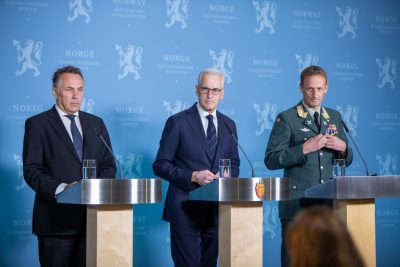
Norway’s largest newspaper Aftenposten also praised the frigate deal, calling it “a huge transaction that so far seems like the right one for Norway’s naval defense.” The paper further editorialized that it was “sensible to rely on close cooperation with a neighbour and longtime ally in Norway’s martime area.” Aftenposten also deemed it “wise” to acquire frigates that will be “just like” those in the British Navy’s fleet: “It will make maintenance more economical and cooperation closer.”
It’s been widely noted that a broad majority in the Norwegian Parliament also supports the deal, with only the Socialist Left and Reds parties voicing any criticism. They object to how the British ships from maritime supplier BAE Systems are equipped with some components from the Israeli company Elbit Systems, at a time when Israeli forces are believed to have killed more than 60,000 Palestinian civilians in Gaza. Others contend that Israel is a major player in the international weapons industry and difficult to avoid.
Norway’s new British frigates beat out offers from France, Germany and the US. Prime Minister Jonas Gahr Støre of the Labour Party noted how Great Britain isn’t just also a good NATO ally but also has “common interests and extremely close relations” with Norway. “For more than 75 years, Great Britain and Norway have stood together as NATO’s northerly and northeasterly flanks to keep Great Britain and Europe safe,” Støre said when first announcing the deal earlier this week. “This historic defense agreement strengthens our strategic partnership even more.”
There are also a lot of sheer practicalities involved, regarding language and cooperation on board, how much easier it will be for the British and Norwegian frigates to sail together, be maintained and even swap crews if needed. The so-called “Type 26” frigates are also specially developed to track down submarines and ward them off if necessary. That’s important at a time when Russia is believed to constantly be sending its submarines into the Arctic and North Atlantic areas patrolled by Norway and the UK.
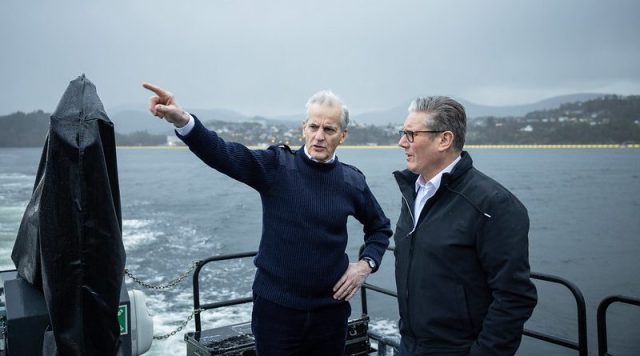
“Norway and Great Britain share security interests in the north,” Støre noted. “Geography is firm, we can’t choose it, but this strategic partnership will mark an historic strengthening of an historic cooperation.” British Prime Minister Keir Starmer, who has paid recent visits to Norway, called the deal a “strong vote of confidence” in British industry and its armed forces.
The British frigates were also the first choice of Norway’s defense chief, Eirik Kristoffersen. He has noted that the US frigates have had production problems and the German frigates were bigger than what Norway needed. The French frigates were also a strong contender, and France will continue to be viewed as another firm strategic partner for Norway.
French President Emmanual Macron made an official state visit to Norway in June and Støre, who speaks fluent French, said jokingly at the time that Macron “was a good salesman” on behalf of the French frigates. He’s confident France and Norway will remain close stratgegic allies even though Norway opted to buy British instead of French frigates: He and Macron also sealed a so-called “strategic partnership” tied not only to security and defense issues but also to preparedness, climate, competitiveness, higher education and research.
Newspaper DN reported, meanwhile, that the British frigate deal also sparked jubilation in the southern Norwegian town of Mandal, where Umoe Mandal already has been delivering frigate tower components to BAE. The Norwegian frigate purchase can mean more contracts for Umoe Mandal. It remains unclear when the first frigate to Norway can be delivered, but building them can start now. Great Britain’s deal with Norway is reportedly the largest export contract the British have entered into, in terms of monetary value.
NewsinEnglish.no/Nina Berglund
