

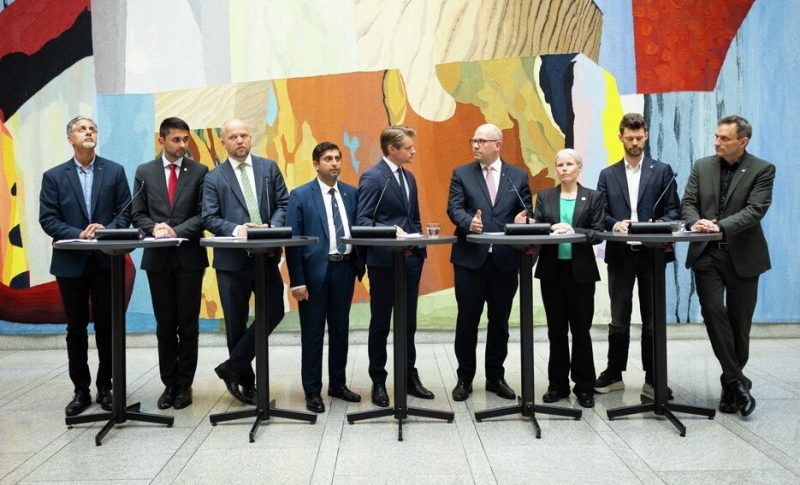
All nine political parties in the Norwegian Parliament came together on Wednesday to present a new long-term defense plan. It involves an extra NOK 11 billion on defense spending after all the top politicians involved managed to set priorities.
There’s been broad agreement on the need for enhanced defense even after all the inceased allocations in recent years. The new plan represents yet another “historic boost” as Norway invests more heavily in everything from ground-to-air defense systems and drones to six new submarines, not just the five proposed in 2024.
It amounts to the biggest increase in defense spending in the past 30 years. Norway will also get five new frigates and three new Army brigades in addition to the enhanced ground to air defense especially in the southeast, where most of the population lives.
“This is historic,” said Conservatives leader Ine Eriksen Søreide, a former defense- and foreign minister herself who now leads the defense- and foreign affairs committee in parliament. She was among all the other party leaders and committee members who gathered to announce the breakthrough on Wednesday.
The numbers are daunting, but boil down to the use of around NOK 1,635 billion on defense over the next 12 years. Norway’s Labour Party government had sought a broad compromise and got it, as parties from the far right to far left all agreed that the new “security policy situation makes it completely necessary to secure clear priorities through shifting political majorities,” Søreide said.
That especially includes the long-range air defense systems for “permanent protection” of Oslo and the rest of what’s called “Østlandet” in the southeast. The area not only has the largest concentration of the Norwegian population but is also home to the country’s most important institutions.
Naval protection all along Norway’s coast will include six new submarines “that will at all times operate on patrol” in Norwegian waters and Arctic areas.
Prime Minister Jonas Gahr Støre called the new defense agreement “an important signal” both to Norway’s allies and “others,” presumably potential enemies. As he’s stressed so many times before, Støre stated that “at a time with war in Europe, a sharpened security policy situation and a more unpredictable Russia, we must invest more in our defense and security.”
He also stressed that the agreement confirms that Norway “stands together on the defense of our country” as well as with its allies. Norway has also entered into a recent series of new defense pacts with individual allies within NATO, including Great Britain, Canada, Germany and, most recently, France.
One of the biggest challenges facing the defense department is staffing, with an ongoing lack of personnel and many new positions unfilled as of yet. At the same time, a military career is becoming more and more attractive to new recruits.
NewsinEnglish.no/Nina Berglund
