

NEWS ANALYSIS: Neither Donald Trump nor nagging conflicts ruined NATO’s summit in Ankara this week. Founding NATO members Norway and England also faced a major standoff at the World Cup during the weekend, but their prime ministers were smiling even after the UK was left out of a new Norwegian-initiated alliance within NATO.
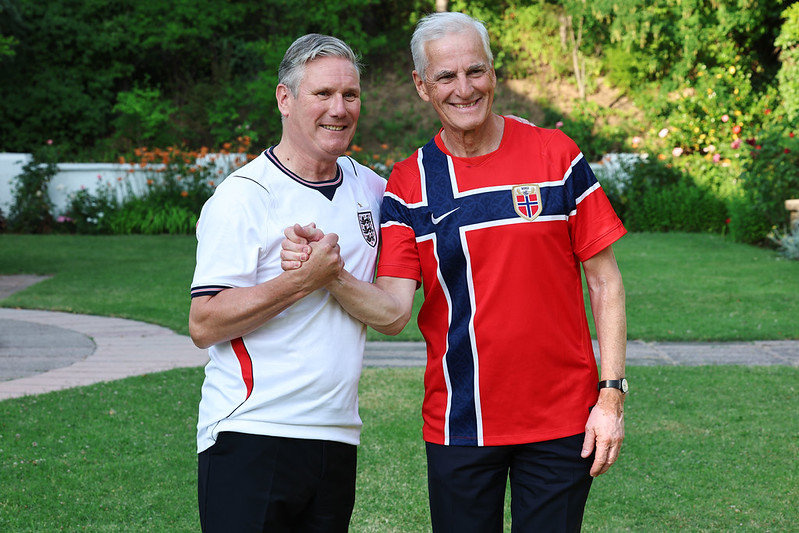
Norway’s Jonas Gahr Støre had been invited to the British Embassy in Ankara for bilateral talks with Keir Starmer, the outgoing British prime minister. Both men were smiling as they posed in their respective national football teams’ shirts, and they’ve also both stressed the UK’s and Norway’s close relations over the years. Norway and the UK signed a special defense agreement last December, and Norway has also entered into a new defense pact with France.
Just a month before the NATO Summit began, though, Støre’s government hosted another meeting in Bergen with select allies from the US, Finland, Sweden, Poland, Germany and the Netherlands. Oslo-based newspaper Dagens Næringsliv (DN) reported that the so-called “Bergen Group” was established on June 4th when Elbridge Colby, the US’ under secretary for policy at its Department of War (known as the Department of Defense before Trump renamed it), visited Norway.
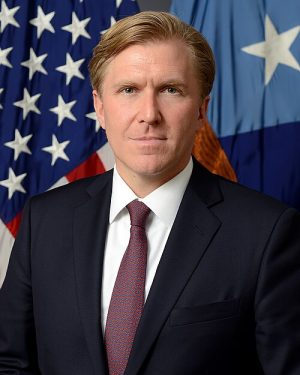
The conservative 46-year-old Colby, grandson of the US former CIA director William Colby, has long believed that China remains the greatest threat to the US, not Russia, and he has supported reductions of military aid to Ukraine. He thinks, as does Trump, that the US needs to shift attention away from Europe, NATO and Russia, and towards Asia and China, with the goal of reducing China’s influence in the area.
DN reported that neither Norway nor the US wanted much attention if any on the Bergen Group meeting, since its agenda was “sensitive.” Neither Great Britain nor France had been invited and are believed to have been disappointed, wrote DN columnist Sverre Strandhagen, but Norway already has special defense agreements with them, most recently with France, and both have other defense strengths of their own. Those meeting in Bergen still feel most threatened by Russia, and it was especially important for Norway when both Finland and Sweden could finally join NATO.
There’s also rising recognition of how Europe needs to boost Europe’s own defense needs, with less reliance on US funding, and concentrate on its own geographic area. No one wants new alliances within the NATO alliance, to avoid any image of potential splits, but the prosperous Nordic countries have been banding together in joint efforts to boost defense and security in the Arctic areas, and urging China to be tougher on Russia. That was also a topic when China’s second-most powerful man, Wang Yi, also recently visited Norway and several other Nordic countries. Wang’s visit came just weeks after Colby’s.
It’s all lifting Norway into a new and important position of its own, not least based on its own vast financial resources. Norway is among the wealthiest nations on earth after securing decades of its offshore oil returns in its huge sovereign wealth fund. Norway is expected to soon spend up to 5 percent of GNP on defense, is among the largest single contributors to Ukraine and reportedly is prodding along NATO allies to help “re-balance” the defense burden between Europe and the US. Estonia, Latvia and Lithuania, all of which also share a border with Russia, have dramatically boosted defense resources as has Poland.
In return, Trump seemed to behave himself at the NATO summit despite a tirade at the beginning during which he scolded his allies for not giving him more support tied to his attacks on Iran. He still didn’t get much if any, and his renewed demands to take over Greenland have not and were not met.
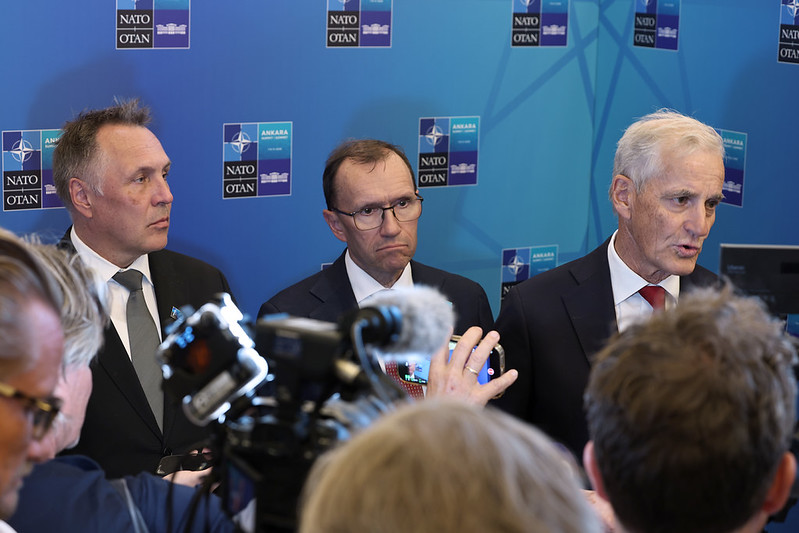
At the end of the two-day summit hosted by Turkey and its own demanding leader, NATO’s 32 members promised to contribute around EUR 70 billion to Ukraine this year and next year. The money will come from bilateral commitments and through a third of the EU’s EUR 90 billion loan to Ukraine, made possible after new government leadership in Hungary has taken over.
Norway’s Prime Minister Støre told Norwegian reporters after the summit that none of Trump’s earlier threats came up and Trump seemed to be in better humour. “He noted himself that several countries are well on the way to the goal sat last year, including Norway,” Støre said. “He commented that the countries lagging need to step up their pace, but that was made in a completely different tone.” He thinks it’s simply Trump’s style to raise the temperature before a meeting and then bring it down again.
“On the way out of the meeting, I had a short conversation with him, during which I repeated how important it is for the US to remain engaged,” Støre told news service NTB. “I have a clear impression that he took the point.” Trump indicated it remains possible to strike a peace deal with Russia.”
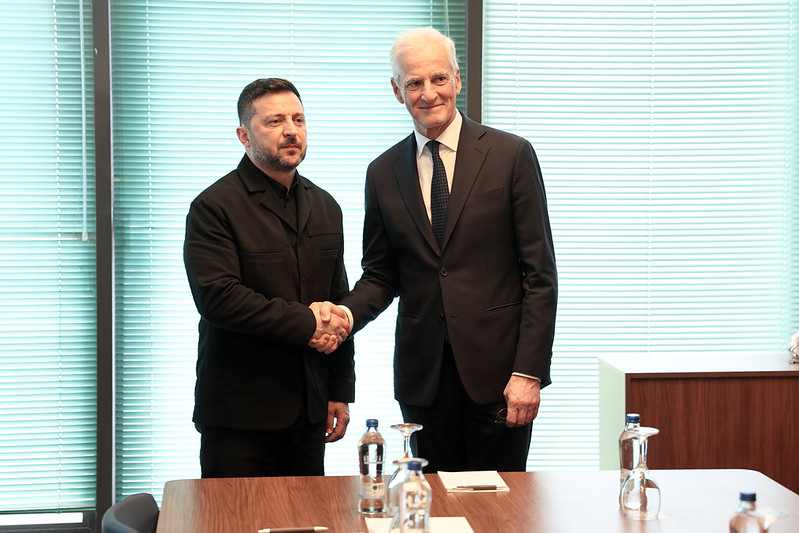
Trump also met with Ukrainian President Volodymyr Zelensky during the summit and even claimed Zelensky has been “very effective.” Zelensky also wants more ground to air defense after Russia’s rash of attacks on civilians in recent weeks and won a license from Trump to produce such important defense systems.
Earlier fears that a frustrated Russian President Vladimir Putin will attack a NATO ally, or challenged bordering neighbours like Norway, seem to have faded. Norwegian Foreign Minister Espen Barth Eide thinks it’s more likely Putin will resort to more hybrid threats like sabotage, adding that any attack on a NATO ally “would be very stupid.”
Norwegian commentators were generally positive after the NATO summit ended, and not just because the defense build-up can create at least 1,000 new jobs at defense firm Nammo and more at other defense contractors. “He (Trump) didn’t destroy NATO this time either,” editorialized DN on Friday, adding that the summit showed how the European countries and Canada “are well on their way to reducing their reliance on US military power,” and “that’s a good thing.”
Political editor and commentator Kjetil B Alstadheim at Norway’s largest newspaper Aftenposten seemed to agree. He was relieved that NATO Secretary General Mark Rutte is no longer calling Trump “daddy.” Rutte still keeps trying to flatter Trump, but Alstadheim thinks the best news was that Canada and Europe are boosting their own defense dramatically and working together through special agreements, closer cooperation and more standardization of military equipment. Canada is also joining a cooperation between Norway and Germany on new submarines that will be more alike, so they can operate better together.
Foreign Minister Eide had already denied that NATO was in any crisis. He was optimistic going into the summit and relieved when it was over. Norwegians themselves, meanwhile, continue to support NATO and don’t see any alternative. A recent public opinion poll conducted by research firm Infact for news servie Nettavisen indicated 45 percent think it’s a bad idea to replace NATO with a pure European defense organization. Only 22 percent support the idea and 33 percent were uncertain.
NewsinEnglish.no/Nina Berglund
