

A former boss of Norwegian state railway NSB is scoffing at new studies and plans for high-speed trains in Norway, believing them to be little more than political hyperbole. Even worse, Osmund Ueland thinks the studies are misleading the public.
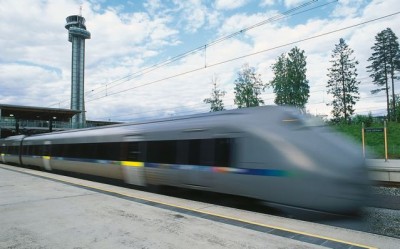
Ueland headed NSB during a turbulent period around a decade ago, and had to resign in the aftermath of a fatal accident in Østerdalen. He faced years of inadequate funding both for Norway’s railroad infrastructure (run by state agency Jernbaneverket) and its railway system. Despite a recent long overdue funding boost to cover sorely needed maintenance and improvements, Ueland cautions against believing that politicians will ever provide funds necessary for a high-speed train network in Norway.
“Everyone knows there will never be high-speed trains running all over Norway,” Ueland told news bureau NTB over the weekend. “The Norwegian people are being misled.”
He was referring to reports last week that Jernbaneverket, charged with studying high-speed trains (called lyntog in Norwegian), had come up with some preliminary conclusions. They included recommendations for various high-speed routes between Oslo and Trondheim, Bergen, Stavanger, Kristiansand, Gothenburg and Stockholm. Even though the routes would be run with trains traveling at speeds of around 330 kilometers per hour, the recommendations also call for stops along the way.
Consultants stand to profit the most
One example featured in newspaper Aftenposten was high-speed service from Oslo to the airport at Gardermoen and on to Hamar, Lillehammer, Otta, Oppdal, Trondheim and Trondheim’s airport at Værnes, with total travel time of two hours and 48 minutes. Another example called for high-speed service from Oslo south to Sarpsborg, Trollhättan and Gothenburg, Sweden in one hour and 40 minutes.
Highly unlikely, comments Ueland, debunking the four consultants’ reports that made up Jernbaneverket’s study. He seems to suggest that the only ones likely to benefit from the reports, which took two years to prepare, are the consultants themselves.
Ueland simply doesn’t believe the Parliament will ever approve the huge amounts of funding it would take to build such high-speed routes, pointing to a lack of political will just to build double tracks on existing routes to Halden, Skien and Lillehammer to improve commuter service and safety.
“Everyone also knows that a national transport plan is a completely non-committal document,” Ueland said, worrying that the studies of high-speed trains will further drag out development of double tracks.
Long political road ahead
Aftenposten reported that all the political parties in Parliament (Stortinget) with the exception of the Progress Party support high-speed trains for Norway, as long as they are profitable from a socio-economic point of view. And there’s the rub, since they may not be. Policies favouring districts and the consequences for settlements along the rail lines, roads and civilian aviation will play a major role in any decisions.
Tom Stillesby, who leads the high-speed study, will send conclusions on for political evaluation both in the Transport Ministry and in parliament. No exact routes have been chosen, with the consultants rather presenting 17 alternatives except for the pinpointing of Sarpsborg as the only high-speed stop in southeastern Norway and Porsgrunn emerging as a key connection on routes to the south and west of Oslo.
The idea remains for politicians to select one or more of the recommended routes. Ueland still thinks it’s all a dream. The plan, he maintains, would have had more credibility if construction of double tracks was already a priority, and underway.
Views and News from Norway/Nina Berglund
Please support our stories by clicking on the “Donate” button now:
